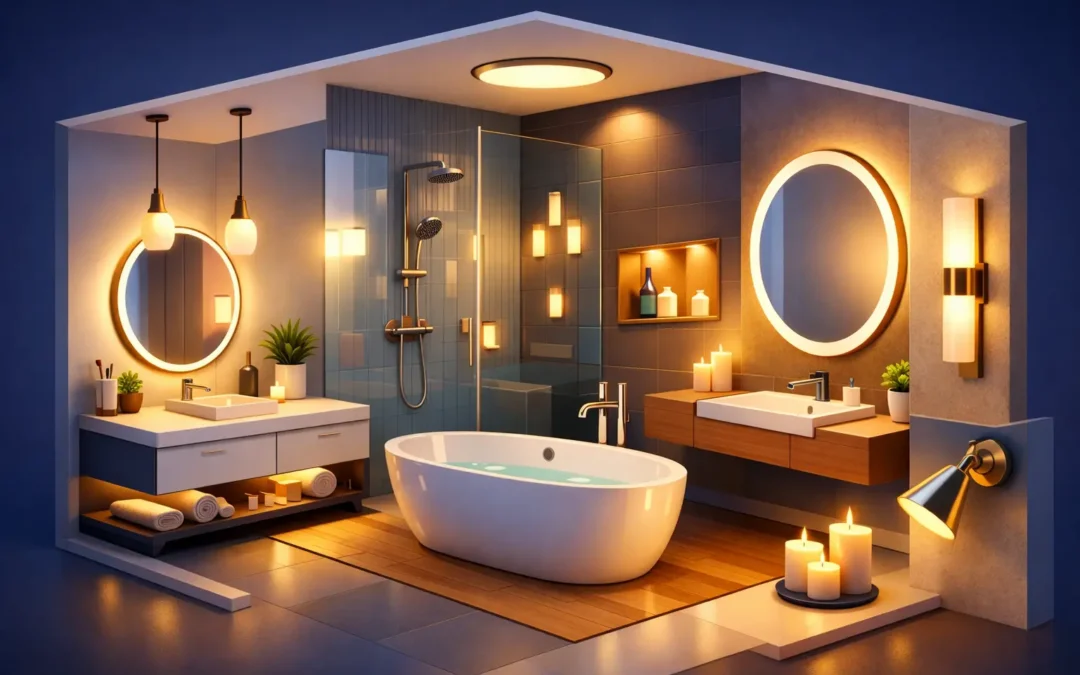
A bathroom can have beautiful tile, a new vanity, and quality fixtures, yet still feel dated or difficult to use if the lighting is wrong. The best bathroom lighting ideas do more than make a room look brighter. They help you shave, apply makeup, bathe children, clean thoroughly, and move safely through the room at night.
For homeowners planning a bathroom remodel, lighting should be decided early, before drywall is closed and tile is installed. That gives you more flexibility with wiring, switch locations, fixture placement, and the type of light you want in each part of the room. A thoughtful plan also prevents the common mistake of relying on one ceiling fixture to do every job.
Start With Layered Bathroom Lighting
The most comfortable bathrooms use layers of light rather than a single bright fixture. Each layer has a different purpose: ambient light fills the room, task light helps at the mirror, accent light adds character, and low-level lighting supports safe nighttime use.
This approach does not mean every bathroom needs a complicated lighting system. A smaller hall bath may only need a good vanity light, a ceiling fixture, and a properly rated shower light. A larger primary bathroom may benefit from separate vanity lights, recessed ceiling lights, shower lighting, and a dimmable fixture near a soaking tub.
The right combination depends on the room’s size, ceiling height, natural light, and how your household uses the space. A bathroom with one small window needs a different plan than a bright room with large windows and light-colored finishes.
1. Put Light at Both Sides of the Mirror
Side-mounted sconces are one of the best improvements you can make at a vanity. Fixtures installed on both sides of the mirror send light across the face more evenly than a single light mounted overhead. That reduces the shadows under the eyes, nose, and chin that make grooming harder.
For many vanities, placing sconces around eye level works well. The exact height depends on the mirror, fixture style, and the people using the bathroom, so it is worth planning before electrical boxes are installed. In a shared bathroom with a wide mirror, two pairs of sconces or a combination of side lighting and an overhead fixture may be the better choice.
There is a trade-off. Wall sconces need clear wall space, which can be limited by medicine cabinets, tall mirrors, windows, or narrow vanities. When that space is not available, a well-designed vanity bar can still provide strong task lighting.
2. Choose a Vanity Light That Spreads Light Evenly
An overhead vanity fixture is practical, especially for compact bathrooms. Look for a fixture with a frosted or diffused shade that spreads light across the counter rather than creating harsh points of glare. A light that is too small for the vanity often looks unfinished and leaves the ends of the counter dim.
As a general design guideline, the fixture should relate to the width of the mirror and vanity without overpowering them. A long, low-profile light works well above a wide single mirror, while individual fixtures can better suit separate mirrors over a double vanity.
Avoid selecting a fixture based on appearance alone. Some decorative lights use exposed bulbs that look great in photos but can be uncomfortable when you are standing directly beneath them. Function matters most at the mirror.
3. Use Recessed Lights for Clean, General Illumination
Recessed lights provide useful ambient light without taking up visual space. They are especially effective in bathrooms with lower ceilings, busy tile patterns, or a clean modern design. Properly spaced recessed lights can brighten the floor, toilet area, and open areas of the room without casting your body into a shadow at the vanity.
They should support vanity lighting, not replace it. A recessed light directly above the sink may create shadows on your face, even if the room itself appears bright. Think of ceiling lights as the foundation and mirror lighting as the detail work.
For a remodel, recessed lights are also a good opportunity to update older wiring and replace oversized, dated ceiling fixtures. An experienced contractor can help determine practical placement based on framing, plumbing, ventilation ducts, and the final layout.
4. Add a Wet-Rated Light in the Shower
A shower deserves its own light, particularly when it has a glass enclosure, dark tile, or no nearby window. A recessed fixture rated for wet locations is a clean, dependable choice. It improves visibility and makes the shower feel more open without adding a bulky fixture overhead.
This is one area where the fixture rating matters. Bathrooms have moisture, but the shower is exposed to direct water. Using the wrong fixture can create a safety issue and lead to premature failure. Electrical work should be planned and installed to meet current code requirements for the location.
A single shower light is usually enough for a standard shower. Larger walk-in showers may need more coverage, but too many downlights can make the area feel overly bright and clinical.
5. Install Dimmers Where You Want Flexibility
Dimmers are a small upgrade that homeowners appreciate every day. Bright light is helpful when cleaning, getting ready for work, or helping children in the bathroom. Softer light is better for an evening bath, early mornings, and middle-of-the-night trips.
Consider dimmers for vanity lights, main ceiling lights, and decorative fixtures. In a primary bathroom, separate dimmers for the vanity and general lighting provide more control than placing everything on one switch.
Be sure the dimmer is compatible with the type of bulbs or integrated LED fixtures you select. Not every LED bulb dims well, and mismatched components can flicker, buzz, or fail to dim smoothly.
6. Use Warm-to-Neutral Light Color
Light color affects how your bathroom finishes and skin tone appear. For most homes, bulbs in the warm-to-neutral range create a clean look without feeling blue or overly harsh. Many homeowners prefer around 2700K to 3000K for a welcoming bathroom, while 3000K to 3500K can feel a little crisper in a modern space.
Very cool lighting may make white cabinets and gray tile look blue, and it can feel more commercial than relaxing. On the other hand, lighting that is too warm can make a room feel yellow and may not provide the clarity some people want for grooming.
The best answer depends on your tile, wall color, countertop, and personal preference. Before buying every fixture, test a few bulb colors in the actual room if possible.
7. Light a Freestanding Tub With Care
A freestanding tub creates a natural focal point, and the lighting above it can reinforce that feature. A decorative ceiling fixture, a pair of wall sconces, or carefully placed recessed lights can make the area feel intentional and calm.
Safety and clearance should guide the final choice. Fixtures near a tub must be suitable for the location, and electrical placement has rules that should not be treated as a design afterthought. In many cases, a striking pendant directly over the tub is less practical than homeowners expect because of height, cleaning, and code considerations.
A softer decorative fixture nearby, combined with dimmable recessed lighting, often creates the same effect with fewer complications.
8. Add Night Lighting for Safer Movement
Low-level lighting is especially helpful in family homes and for homeowners planning to age in place. A small toe-kick light under the vanity, a motion-activated light near the toilet, or a softly lit switch can guide someone through the bathroom without turning on bright overhead fixtures.
This is a practical detail that can make an upgraded bathroom feel more thoughtful. It is also useful for guests who do not know the layout of the room.
9. Consider Backlit Mirrors, but Do Not Rely on Them Alone
Backlit mirrors offer a clean, contemporary appearance and can provide a soft glow around the vanity. They work particularly well in modern bathrooms with floating vanities, large-format tile, and minimal hardware.
However, backlighting alone is often too indirect for detailed grooming. If you choose a backlit mirror, consider pairing it with ceiling lighting or side sconces. The result will be more functional while keeping the modern look.
10. Match Fixture Scale to the Room
Large statement fixtures can be attractive, but a small bathroom has limited visual space. An oversized chandelier or heavy vanity light can make the room feel crowded. In contrast, a fixture that is too small can disappear against a wide vanity or tall ceiling.
Finish also matters. Brushed nickel, chrome, matte black, brass, and mixed metals can all work, but they should relate to the faucet, cabinet hardware, and shower trim. They do not have to match perfectly, though the choices should look deliberate.
11. Let Tile and Mirror Choices Influence the Plan
Bathroom lighting should be coordinated with the finishes rather than chosen at the end. A dark vanity and charcoal tile may need more light than a white vanity with reflective surfaces. A tall framed mirror may limit where sconces can go, while a pair of recessed medicine cabinets can change the entire vanity wall layout.
This is why lighting decisions are easier when they are part of the remodeling plan from the start. At Thiel Construction, careful planning helps homeowners weigh design preferences against real jobsite conditions, budget, and long-term use.
12. Do Not Forget Ventilation and Electrical Planning
Lighting is only one part of a well-functioning bathroom ceiling plan. The exhaust fan, heating features, attic access, framing, and existing electrical circuits can all affect what is possible. In older Central Valley homes, opening a ceiling during a remodel may also reveal wiring or ventilation issues worth correcting while the room is already under construction.
A professional installation protects the finished work. It helps ensure that fixtures are securely mounted, properly rated for moisture, switched in a convenient way, and placed where they will actually improve the room.
The best bathroom lighting is the kind you barely have to think about. It makes the room safer at night, clearer in the morning, and more comfortable every time you use it. Plan for how your household lives now, then choose fixtures that will still serve the space well years from now.
Recent Comments