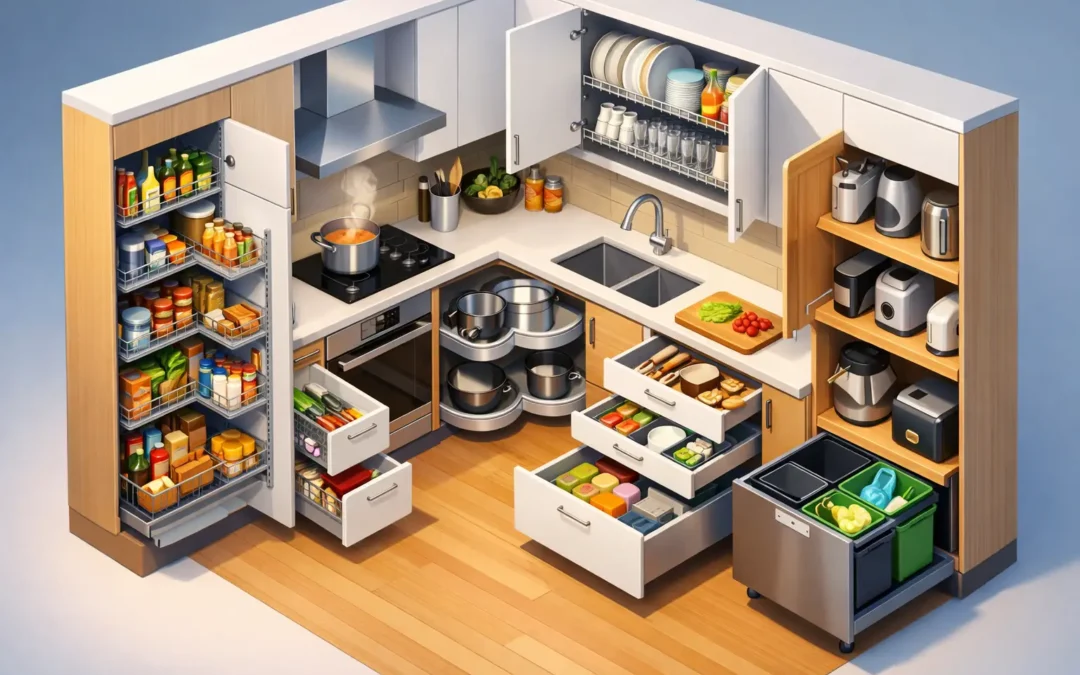
A kitchen can have beautiful countertops, new flooring, and updated appliances, yet still feel dated or difficult to use if the kitchen cabinets are poorly planned. Cabinets set the rhythm of the room. They determine where groceries land, how easily pans are reached, whether small appliances have a home, and how much visual clutter stays in sight.
For homeowners planning a kitchen update, cabinets deserve more attention than a quick color selection. The right choices can make an older Modesto-area kitchen feel larger, work better for a busy family, and hold up to years of daily use. The wrong choices can leave you with wasted space, drawers that bind, and finishes that show wear sooner than expected.
Start With How Your Kitchen Is Used
Before choosing a door style or finish, look at the habits that happen in the kitchen every day. A family that cooks most nights needs a different cabinet plan than a household that primarily uses the kitchen for quick breakfasts and entertaining. The goal is not to add cabinets everywhere possible. It is to put useful storage where it belongs.
Think about the path between the refrigerator, sink, cooktop, and prep space. If dishes are stored far from the dishwasher, unloading becomes a daily inconvenience. If pots and pans are kept across the room from the range, a kitchen can feel inefficient even when it is newly remodeled. Small decisions in layout often have a bigger effect than decorative upgrades.
A practical cabinet plan also accounts for what you already own. Large stockpots, countertop mixers, baking sheets, water bottles, and food-storage containers all need realistic space. Measuring these items before cabinet selections are finalized helps avoid beautiful storage that does not serve its purpose.
Kitchen Cabinets: Stock, Semi-Custom, or Custom?
There is no single best cabinet category for every home. The right option depends on the condition of the room, the desired layout, the budget, and how long you plan to stay in the home.
Stock cabinets are manufactured in standard sizes and usually offer the most economical starting point. They can be a good fit when the existing kitchen layout works well and the room has relatively straightforward dimensions. The trade-off is limited sizing, finish options, and flexibility. Fillers may be needed around walls or appliances, which can reduce the tailored appearance homeowners want.
Semi-custom cabinets provide more choices in sizes, finishes, door profiles, and storage accessories. They often make sense for a kitchen remodel where homeowners want a more personal result without the cost of fully custom construction. Lead times and pricing vary, so selections should be coordinated early with the project schedule.
Custom cabinets offer the greatest flexibility. They can be built for uneven walls, unusual corners, tall ceilings, specialty storage, or a specific design vision. Custom millwork is especially valuable when standard cabinet sizes would leave awkward gaps or fail to use available space. It is typically the higher-cost option, but it can deliver better function and a more finished appearance in the right kitchen.
The best value is not always the least expensive cabinet. A lower initial price can become costly if installation requires extensive modifications, if boxes are weak, or if the layout leaves major storage problems unresolved. Good planning helps homeowners invest where it matters most.
Choose Materials for Daily Wear
Cabinet construction is easy to overlook because much of it is hidden behind doors and drawers. It is also where durability begins. Cabinet boxes should be sturdy, properly assembled, and appropriate for the weight they will carry. Drawers loaded with cookware and dishes need dependable hardware and strong drawer construction, not just an attractive door front.
Solid wood doors remain popular for their natural character and repairability. They can be painted or stained and work with traditional, transitional, and many modern designs. Because wood moves slightly with changing temperature and humidity, quality construction and finishing matter.
Engineered materials can also be an excellent choice when used correctly. Plywood cabinet boxes are known for strength and screw-holding ability. Furniture-grade medium-density fiberboard, often called MDF, can create a smooth painted finish and stable door profile. Particleboard is commonly used in budget cabinetry and can perform adequately in dry, low-stress applications, but it is generally less forgiving when exposed to water.
In Central Valley homes, the area around the sink, dishwasher, and refrigerator water line deserves special attention. A small leak can damage cabinet materials long before it becomes obvious. Quality installation includes protecting vulnerable areas, checking plumbing connections, and making sure cabinet bases are properly supported and level.
Storage Features That Earn Their Keep
The most useful kitchen cabinets do not simply provide more shelves. They make everyday items easier to see, reach, and put away. Deep drawers for pots, pans, and dishes are often more practical than lower cabinets with fixed shelves. Instead of kneeling and reaching into a dark back corner, homeowners can pull the contents forward.
A well-designed kitchen may also benefit from pull-out trash and recycling bins, tray dividers for baking sheets, a pantry with adjustable shelving, and organizers sized for utensils or spices. These features should be selected based on real habits, not because they look impressive in a showroom.
Corner cabinets are a common trouble spot. Lazy Susans, pull-out corner systems, or carefully designed blind-corner storage can improve access, although each has cost and capacity trade-offs. In some layouts, it is more practical to simplify the corner and devote the budget to drawers or pantry storage that will be used more often.
Do not forget the space above and below the main cabinet run. Taller upper cabinets can add valuable storage in kitchens with adequate ceiling height, while a well-planned island can provide drawers, seating, or a landing area for groceries. Every added cabinet should preserve comfortable walkways and keep appliance doors from colliding.
Door Style and Color Should Suit the House
Cabinet style has a strong influence on whether a kitchen feels connected to the rest of the home. Shaker-style doors remain a dependable choice because their clean lines work across many home styles. Flat-panel doors create a more contemporary appearance, while raised-panel profiles often complement traditional homes.
White and light-painted cabinets can brighten a kitchen, especially one with limited natural light. They may also show scuffs and cooking residue more readily. Medium wood tones bring warmth and can be more forgiving of daily marks, while darker cabinets can add depth but may make a smaller kitchen feel heavier.
Color trends are useful for inspiration, but they should not drive every decision. A kitchen is a long-term investment, and the cabinet color needs to work with the flooring, countertops, backsplash, wall color, and the home’s overall character. If you enjoy a bolder color, using it on an island or lower cabinets can provide personality without overwhelming the room.
Installation Is Where Good Cabinets Become a Good Kitchen
Even high-quality cabinets will not perform well if they are installed carelessly. Walls and floors in older homes are rarely perfectly straight or level. Professional installation involves measuring carefully, shimming where needed, securing cabinets correctly, aligning doors and drawers, and preparing the cabinet layout for countertops, tile, plumbing, and appliances.
This coordination matters during a full remodel. Cabinet heights affect countertop installation. Appliance specifications affect opening sizes. Backsplash thickness can affect clearances. Electrical outlets, under-cabinet lighting, plumbing valves, and ventilation all need to be considered before the work is complete. Addressing these details early prevents expensive adjustments later.
For homeowners who are updating only part of the kitchen, cabinet refacing, new doors, or selective cabinet repairs may be worth considering. These options can improve appearance at a lower cost when the existing boxes are sound and the layout still works. They are less effective when cabinets are water-damaged, storage is inadequate, or the room needs a major functional change.
A kitchen remodel should make life easier long after the dust is cleaned up. Choose cabinet materials that fit the budget, storage that supports your routines, and installation workmanship that protects the investment. With thoughtful planning and experienced craftsmanship, the cabinets become more than a backdrop – they become the part of the kitchen that works for you every day.
Recent Comments