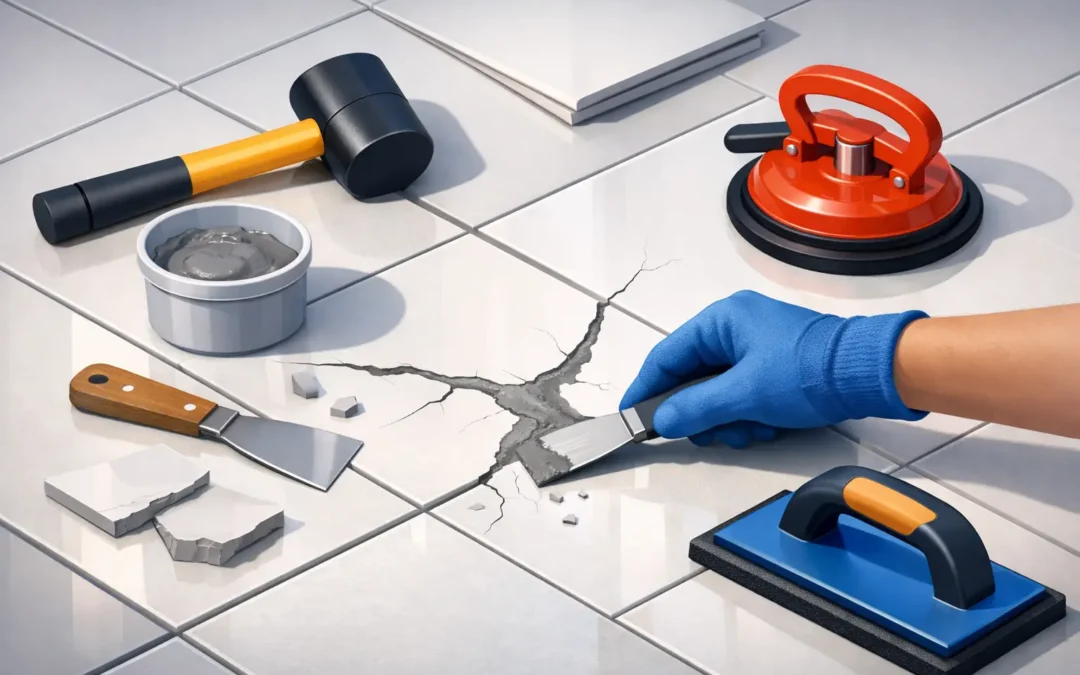
A cracked tile near the kitchen sink or in the middle of a bathroom floor can look like a small problem. Sometimes it is. But before you repair cracked floor tile with filler or replace it outright, it is worth finding out why it cracked. A new tile installed over an unresolved problem may crack again, leaving you with the same repair and a larger bill later.
For homeowners, the best approach is practical: determine whether the damage is limited to one tile, check for movement or moisture beneath it, then choose a repair that matches the condition of the floor. A proper repair protects the appearance of the room and helps preserve the investment you have made in your home.
First, Find Out What Caused the Tile to Crack
Tile is durable, but it is not flexible. When the surface below it shifts, settles, or bends, the tile may absorb that pressure and crack. In many cases, the crack itself is only the visible symptom.
A single cracked ceramic or porcelain tile can result from a dropped pan, a heavy appliance, or a hard impact. If the tile is near a doorway, beside a refrigerator, or in a busy family bathroom, this is a reasonable possibility. A clean chip or short crack with no damage to nearby grout often points to impact damage.
Long cracks that run through several tiles, or cracks that continue in a fairly straight line across the room, deserve more attention. They can indicate movement in the concrete slab, a wood subfloor that flexes, inadequate underlayment, or missing movement joints around the perimeter of the room. Central Valley homes can also experience seasonal soil movement, so a cracked tile floor should not be dismissed when damage keeps returning.
Moisture is another concern, particularly in bathrooms, laundry rooms, kitchens, and entryways. Loose tiles, darkened grout, soft flooring near the tile, or a musty odor may point to a leak or water damage below the surface. Replacing the visible tile without addressing moisture can trap a much more costly repair underneath.
When a Simple Tile Repair Makes Sense
A single-tile replacement is usually a good solution when the surrounding tiles are solid, the grout joints are intact, and there is no evidence of movement or water damage. It is also the best repair when the cracked tile has sharp edges or pieces are missing. Filler products can make a small crack less noticeable, but they rarely match the strength, texture, and color of the original tile.
Before removing anything, press gently around the damaged tile and nearby tiles. A hollow sound when tapped with a tool handle, noticeable movement, or crumbling grout can mean the bond beneath the floor has failed. In that case, replacing only one tile may not solve the issue.
If you have leftover tile from the original installation, set it aside for the repair. This is the easiest way to maintain a consistent color and size. Tile lots can vary, and older styles may be discontinued. If no spare is available, a contractor may be able to source a close match, borrow a tile from a less visible location, or recommend a repair strategy that blends naturally with the existing floor.
How to Repair Cracked Floor Tile by Replacing It
Replacing one floor tile takes patience more than force. The goal is to remove the damaged piece without chipping the surrounding tile or damaging the substrate below.
Protect the Surrounding Tile
Start by removing the grout around all four sides of the cracked tile. A grout saw, oscillating tool with a grout-removal blade, or rotary tool can work, depending on the joint width and tile material. This step matters because grout connects the tiles at their edges. Trying to pry out the broken tile before clearing the grout can crack the tiles next to it.
Wear eye protection and gloves. Tile fragments are sharp, and dust can spread quickly indoors. Cover nearby surfaces and vacuum debris as you work.
Break Out the Damaged Piece Carefully
For a badly cracked tile, begin near the center. Drill a few shallow holes in the middle if needed, taking care not to drill deeply into the floor below. Then use a small hammer and cold chisel to break the tile into manageable pieces. Work from the center outward, never from the edge inward.
Remove the fragments slowly. The closer you get to the perimeter, the lighter your touch should be. A rushed removal is one of the most common reasons a one-tile repair turns into a multi-tile repair.
Prepare a Flat, Clean Base
Once the old tile is out, scrape away old thinset mortar until the surface is clean and reasonably flat. This is not a step to skip. A new tile set on uneven mortar may sit too high, rock underfoot, or crack from unsupported areas.
Check the exposed base for moisture, cracks, soft spots, or loose material. A small hairline crack in concrete may not always prevent a repair, but it can be a sign that a crack-isolation membrane or a more complete evaluation is needed. On wood subfloors, look for movement, water staining, or damaged backing material.
Set the Replacement Tile
Dry-fit the tile first. It should sit level with the surrounding floor and leave even grout joints on each side. Apply the appropriate thinset mortar to the substrate using a notched trowel sized for the tile. For larger tiles, applying a thin layer of mortar to the back of the tile as well can improve coverage.
Press the tile into place with a slight back-and-forth motion, then use spacers to keep the joints even. Check that the tile is flush with its neighbors. Allow the mortar to cure according to the product instructions before grouting.
Once cured, apply grout that matches the existing joints as closely as possible. After the grout firms up, clean the tile face with a damp sponge. Avoid walking on the repair until both the mortar and grout have had adequate time to cure.
Can You Fill a Cracked Tile Instead?
For a hairline crack in an otherwise stable tile floor, an epoxy or color-matched repair kit can be a reasonable cosmetic option. This approach is most successful on smooth, lightly damaged tiles in low-traffic areas. It may improve the appearance of the crack, but it does not restore the tile to its original strength.
Filling is less suitable for tiles that are loose, deeply cracked, chipped at an edge, or installed in wet areas where water could work into the opening. It can also be hard to make a repair disappear on textured tile, natural stone, or tile with a glossy patterned finish. In those situations, replacement usually produces a cleaner and longer-lasting result.
Signs the Problem Is Larger Than One Tile
Some floor tile repairs call for an experienced assessment rather than a quick replacement. Pay attention if more tiles begin cracking, grout continues separating, or the repaired tile becomes loose within a few months. These are signs that the issue may be below the tile surface.
A professional should also inspect the floor when cracks follow a line across the room, the floor feels uneven, there is a known plumbing leak, or tiles are tenting upward. Tenting happens when tiles push against one another and lift from the floor, often because there is no room for normal expansion and contraction. Forcing those tiles back down will not correct the underlying pressure.
During a bathroom or kitchen remodel, this is the right time to correct subfloor issues, improve waterproofing, and install tile with the proper preparation materials. That added work has a cost, but it helps prevent repeated repairs and protects the rooms where moisture damage can spread quickly.
Protect Your Floor After the Repair
A few habits can help a repaired tile floor last. Use felt pads under furniture, especially chairs that move often. Do not drag appliances across tile. Clean grout and tile with products suited to the material, and reseal natural stone or cement-based grout when appropriate.
Most importantly, act when you notice new cracking. A prompt inspection can keep a small tile repair from becoming a subfloor, leak, or full-floor replacement project. If the cause is not clear, experienced local repair help can provide the peace of mind that the finished floor is not only attractive, but properly supported for years of everyday use.
Recent Comments