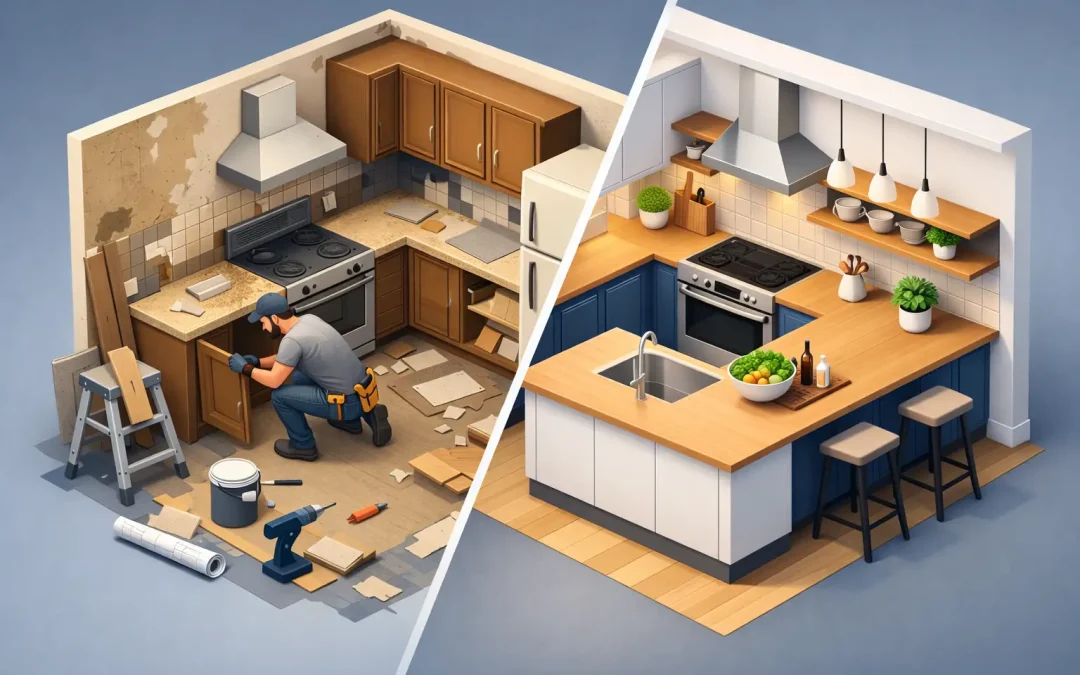
An outdated kitchen usually tells on itself fast. The cabinets are worn, the lighting is dim, the layout makes cooking harder than it should be, and every surface reminds you the room is stuck in another decade. If you are figuring out how to remodel an outdated kitchen, the goal is not just to make it look newer. It is to make the space work better for the way your household actually lives.
A good kitchen remodel starts with priorities, not products. Homeowners often get pulled straight into countertop colors and backsplash patterns, but the smartest first step is deciding what is really not working. In some kitchens, the biggest problem is appearance. In others, it is storage, traffic flow, poor lighting, damaged finishes, or a layout that wastes space. Once you know what needs to change, it becomes much easier to spend money where it will matter most.
Start with what makes the kitchen feel outdated
Not every old kitchen needs a full gut remodel. Some spaces look tired because of surface-level issues like dated cabinet doors, old tile, worn laminate counters, or fluorescent box lighting. Other kitchens are outdated in a deeper way, with cramped walkways, limited prep space, poor ventilation, and appliances placed where they do not make sense.
That difference matters because it affects scope and budget. If the bones of the kitchen still work, you may be able to keep the existing footprint and focus on new cabinetry, counters, fixtures, and finishes. If the kitchen feels hard to use every day, then layout changes may be worth the investment. Moving plumbing, gas, or electrical can raise project cost, but in the right kitchen, it can solve the problems that cosmetic updates never will.
A practical remodel balances both sides. You want the kitchen to feel current, but you also want it to function better five or ten years from now.
How to remodel an outdated kitchen without overspending
The fastest way to lose control of a remodel is to treat every choice like a separate decision. Cabinets, tile, lighting, flooring, paint, and appliances all affect one another. A budget works better when you set the big priorities first and build around them.
Most homeowners do best by dividing the project into three categories: must-haves, nice-to-haves, and items that can wait. Must-haves are the things tied to function, safety, or clear wear and tear. That might include damaged cabinets, failing drawers, poor lighting, old wiring, or countertops that no longer hold up. Nice-to-haves are often upgrades that improve appearance or convenience, such as under-cabinet lighting, a pot filler, or upgraded trim details. Then there are items that can wait for a later phase if needed.
This approach keeps the project grounded. It also helps when you are comparing material options. For example, custom cabinetry may be the right investment in one home, especially if the kitchen has awkward dimensions or needs every inch of storage used well. In another home, semi-custom cabinets may provide a better balance of value and appearance. The right answer depends on layout, goals, and budget.
Focus on layout before finishes
One of the biggest mistakes in kitchen remodeling is putting beautiful new materials into a layout that still does not work. If the refrigerator door blocks a walkway, if the sink has no landing space, or if the cooktop is cramped into a corner, the kitchen will still feel frustrating after the remodel.
A better layout does not always mean a bigger kitchen. Often, it means using the existing space more efficiently. That could involve extending cabinetry to improve storage, adding deeper drawers instead of lower cabinets with shelves, creating a better work triangle, or opening up the room enough to improve sightlines and movement.
In many older Central Valley homes, kitchens were built for a different style of living. They may have less prep space, less storage, and more visual separation from the rest of the house than families want today. Thoughtful updates can make the room feel more open and usable without forcing unnecessary structural changes.
If you are deciding where to spend money, layout improvements usually return more daily value than purely decorative upgrades.
Choose materials that look current and hold up
A remodeled kitchen should still perform under real life. That means busy mornings, spills, heat, cleaning, and constant use. Style matters, but durability matters just as much.
Cabinetry sets the tone for the whole room. Painted shaker cabinets remain a strong choice because they work in many home styles and do not date quickly. Wood tones can also look excellent, especially when used with a clean profile and balanced against simpler counters and tile. What matters most is choosing a cabinet style that fits the home instead of chasing a trend that may feel tired in a few years.
Countertops need the same kind of thinking. Natural stone has character and long-term appeal, but some homeowners prefer lower-maintenance options that still give a high-end look. Backsplash tile is another area where restraint usually pays off. A classic tile choice often ages better than a highly specific pattern that dominates the room.
Flooring should tie the space together and stand up to traffic. In an outdated kitchen, replacing old flooring can have a major impact because it changes the visual foundation of the room. It also gives you a chance to address transitions, uneven surfaces, or damage that may have been ignored for years.
Lighting can make an old kitchen feel new
Many outdated kitchens are not just dark. They are lit poorly. A single overhead fixture or old fluorescent light leaves shadows where you need visibility most and does very little to make the room feel inviting.
A well-remodeled kitchen uses layers of light. General lighting brightens the room overall. Task lighting helps at countertops, sinks, and cooking areas. Accent lighting can add warmth and depth. Under-cabinet lighting is a good example of a practical upgrade that improves both appearance and daily use.
Fixtures also matter. New pendant lights or recessed lighting can update the room immediately, but placement is what makes the difference. Lighting should support the way the kitchen is used, not just decorate it.
Do not ignore storage and small details
One reason older kitchens feel frustrating is that they were not built around how people store things now. Small appliances, food storage containers, serving pieces, and trash pullouts all need a home. Without good storage planning, even a newly remodeled kitchen can feel cluttered.
This is where details earn their value. Deep drawers for pots and pans, tray storage, spice pullouts, pantry improvements, and better cabinet organization can make the kitchen easier to keep clean and easier to use. These choices are not flashy, but they often have more everyday impact than a decorative upgrade.
The same goes for trim, hardware, and installation quality. Straight lines, clean tile work, properly fitted cabinets, and finished edges are what make a kitchen feel professionally done. Craftsmanship shows up in the details long after the excitement of new materials wears off.
Plan for the right level of remodel
If you are thinking about how to remodel an outdated kitchen, it helps to be honest about the level of change the space needs. Some kitchens need a focused refresh. Others need a full remodel because too many underlying problems are stacked together.
A refresh may be enough when the layout works and the updates are mostly visual. A full remodel is usually worth considering when the kitchen has worn-out materials, poor function, limited storage, outdated electrical or plumbing, or multiple issues that would be inefficient to patch one by one.
The right project is the one that improves your home without creating regret later. Spending too little can leave you with a kitchen that still falls short. Spending in the right places gives you better function, better appearance, and better long-term value.
For homeowners in Modesto, Riverbank, and Turlock, that usually means choosing upgrades that fit both the house and the way the family uses it. A kitchen should feel current, but it should also feel solid, practical, and built to last.
Work with a plan, not just a wish list
A successful kitchen remodel comes down to good decisions made in the right order. Start with function. Set a realistic budget. Choose materials that will hold up. Pay attention to lighting, storage, and layout. Then make sure the work itself is done with care.
That is where experience matters. A well-planned remodel can modernize an outdated kitchen without wasting money on changes that do not improve daily life. When the design, budget, and workmanship all line up, the result is not just a nicer-looking room. It is a kitchen that finally feels like it belongs in your home.
Recent Comments