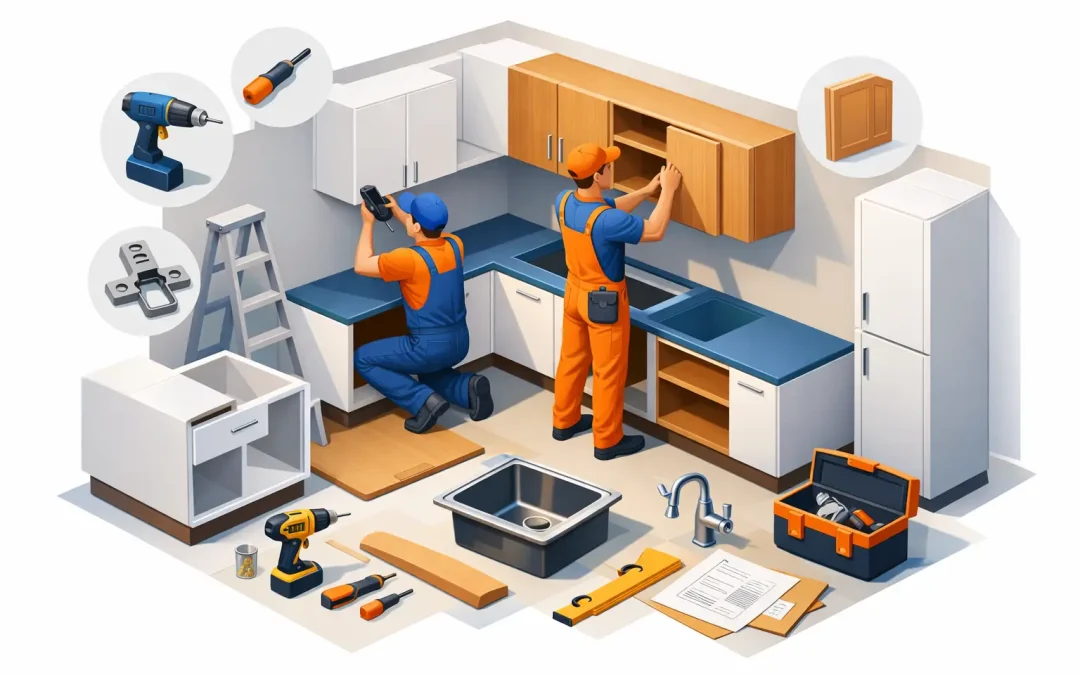
If you have ever looked at a finished kitchen and thought the cabinets just went in one by one, the reality is a little different. A solid kitchen cabinet installation process starts long before the first screw goes into the wall. Measurements, layout planning, wall conditions, floor level, and appliance spacing all affect whether the final result looks clean and works the way it should.
For homeowners, that matters because cabinets are not just decorative boxes. They set the tone for the whole kitchen, control storage, and influence how countertops, backsplash, lighting, and appliances come together. When cabinet installation is done correctly, drawers open smoothly, doors line up, countertops sit flat, and the room feels intentional. When it is rushed, small errors show up everywhere.
Why the kitchen cabinet installation process matters
Cabinet installation is one of those stages that can make a remodel look expensive and well-built, or obviously patched together. Even quality cabinets can look disappointing if the walls are out of square and nobody takes time to correct for it. On the other hand, a careful installer can make a challenging room look sharp by planning around real-world conditions.
Older homes often add another layer of complexity. Floors may slope, corners may not be square, and walls may bow slightly. In many Central Valley homes, especially those that have seen years of settling or multiple remodels, this is common. That is why a dependable installation process focuses on fit and function, not just speed.
Before cabinets arrive
The installation stage usually begins with prep work, not cabinet boxes. The room should be ready for cabinets, which means demolition is complete, rough plumbing and electrical are in the right locations, and wall surfaces are in suitable condition. If the layout changed, this is the time to confirm that outlets, water lines, drains, and appliance connections match the cabinet plan.
Measurements need to be checked again, even if cabinets were ordered weeks earlier. A good installer confirms the actual field dimensions because framing, drywall, flooring, and finish work can change available space. This is especially important around refrigerators, ranges, dishwashers, windows, and sink bases.
Flooring also affects the plan. Sometimes cabinets are installed on top of finished flooring, and sometimes flooring is installed up to the cabinet bases. Either method can work, but the decision needs to be made early because it affects cabinet height, appliance fit, and trim details.
Layout and reference lines
One of the most important parts of the kitchen cabinet installation process is establishing level reference lines. Installers do not simply start in a corner and hope everything works out. They find the high point of the floor and mark level lines on the wall for base cabinets and upper cabinets.
This step sets the standard for the rest of the job. Since floors are often not perfectly level, base cabinets may need shimming to keep the tops even. If that work is skipped, countertop installation becomes harder and gaps become more noticeable. For upper cabinets, a level reference line helps keep the cabinet run straight, even if the ceiling above is uneven.
Stud locations are also marked before installation begins. Cabinets need to be secured properly into framing, not just drywall. This is one of those details homeowners may never see, but it directly affects long-term performance and safety.
Installing upper cabinets first
In many kitchens, upper cabinets are installed before base cabinets. This gives the installer better access to the wall and reduces the risk of damaging lower units while working overhead. It is a practical sequence, especially in tighter kitchens where maneuvering large cabinet boxes can be awkward.
Each cabinet is positioned to the layout line, checked for level and plumb, then fastened securely. Adjacent cabinets are clamped together so the face frames or fronts align cleanly before being screwed together. The goal is to create one straight, consistent run rather than a row of separate pieces that only look connected from a distance.
This stage also involves decision-making around fillers and spacing. Very few kitchens are so perfectly sized that every cabinet lands exactly wall to wall without adjustment. Fillers allow for doors and drawers to open properly near walls and help absorb slight field differences without making the layout look off-center.
Base cabinet installation and leveling
Once the uppers are in place, base cabinets are set. This tends to be the most detail-sensitive portion of the install because base cabinets affect countertops, sink placement, and appliance openings.
The installer starts at the high point of the floor and works outward, shimming cabinets as needed to keep the tops level across the run. Cabinets are also checked front to back and side to side. A cabinet can look fine at a glance and still be just far enough out of level to create trouble later.
Sink bases and corner cabinets deserve extra attention. The sink base has to align with plumbing locations, but it also needs to work with neighboring cabinets and countertop seams. Corner cabinets must be placed accurately so blind corners, lazy susans, or drawer access function the way they were designed. If these pieces are off early, the whole run can drift.
Appliance openings are measured repeatedly during this stage. A dishwasher opening that is even slightly narrow can become a frustrating problem after countertops go in. The same goes for ranges and refrigerators, where spacing affects not only fit but also ventilation and finished appearance.
Details that separate a clean job from a sloppy one
Cabinet installation is full of small adjustments that have a big visual impact. Fillers, scribes, toe kicks, end panels, moldings, and trim pieces all help bridge the gap between factory-made cabinetry and the actual shape of the room.
For example, walls are rarely perfectly straight. A scribe strip allows an installer to trim a filler or panel to match the wall, which reduces uneven gaps. Crown molding at upper cabinets may need similar fitting work, especially if the ceiling has dips or waves. These are the parts of the job where craftsmanship shows.
Door and drawer adjustments come later, but they matter too. Even after the boxes are installed correctly, hinges and drawer fronts usually need fine-tuning so reveals are even and operation feels smooth. Homeowners often notice this immediately. A kitchen with aligned doors and consistent gaps simply feels better built.
Common issues that can affect the process
Not every installation follows the same timeline. Some projects move quickly because the kitchen is square, the cabinets are stock sizes, and all rough-ins are correct. Others require problem-solving.
Wall damage behind old cabinets can slow prep. Flooring height changes can affect appliance clearance. Custom vent hoods, under-cabinet lighting, or stacked upper cabinets can add complexity. If cabinets arrive with damage or missing parts, work may pause while replacements are ordered.
This is where experience matters. A good contractor does not pretend every kitchen is simple. They explain what is happening, what the options are, and which decisions protect the quality of the finished project without pushing unnecessary extras.
DIY versus professional installation
Some homeowners consider installing cabinets themselves to save money. In a small laundry room or a basic garage setup, that may be reasonable if the installer is patient, has the right tools, and understands layout work. In a full kitchen, the margin for error gets smaller fast.
Cabinets are heavy, rooms are imperfect, and mistakes can carry forward into countertop installation, tile work, and appliance fit. A cabinet that is off by a quarter inch may not sound like much until every door line, filler, and finished edge starts to show it.
Professional installation usually brings better efficiency, cleaner adjustments, and fewer downstream issues. That does not mean every kitchen needs a high-end custom approach, but it does mean the installation should match the value of the cabinets and the investment in the home. For many homeowners, that balance of workmanship and budget is exactly where an experienced local contractor brings the most value.
What homeowners should expect during installation
A well-run cabinet installation should feel organized, not chaotic. You should know the sequence of work, when the kitchen will be usable again, and what decisions still need your approval. Communication matters just as much as the technical work.
It is reasonable to expect some noise, dust, and limited kitchen access during this phase. It is also reasonable to expect the installer to protect surrounding finishes, verify key dimensions, and address visible alignment issues before calling the job ready for countertops or final trim.
If you are planning a kitchen remodel in Modesto, Turlock, or Riverbank, it helps to work with someone who understands both the craftsmanship side and the practical side of installation. Thiel Construction approaches cabinet work the way homeowners want most remodeling work handled – clearly, carefully, and with attention to the details that affect daily use.
The best cabinet installation does not call attention to itself after the job is done. It simply makes the kitchen feel like it was built the right way from the start.
Recent Comments