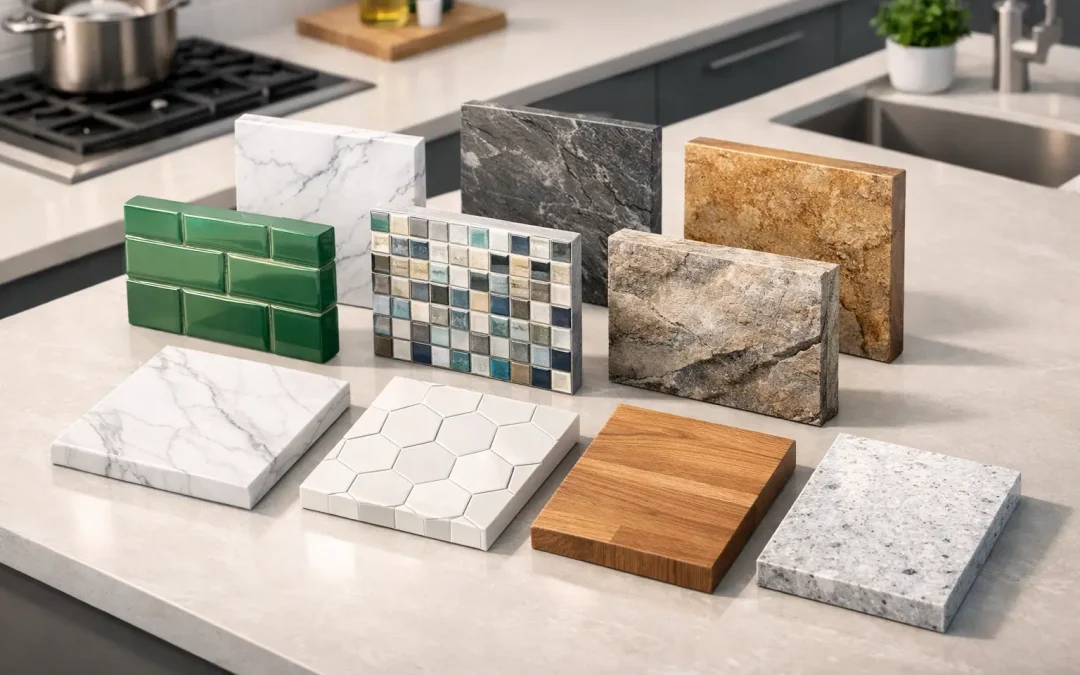
Picking a backsplash gets harder the moment you realize it has to do more than look good. It sits behind the busiest surfaces in your kitchen, catches grease, water, sauce splatter, and steam, and still needs to make the room feel finished. When homeowners ask about the best kitchen backsplash materials, the right answer usually depends on how you cook, how much maintenance you want, and what kind of budget you are working with.
A backsplash is one of those details that can quietly make the whole kitchen feel more custom. It can also become the surface you regret most if you choose something that stains easily, is difficult to clean, or clashes with your countertops after the job is done. That is why material matters just as much as color or pattern.
How to choose the best kitchen backsplash materials
Start with daily use, not just appearance. A kitchen that sees heavy cooking needs a backsplash that cleans up fast and holds up well near the range and sink. If you want a low-maintenance kitchen, porous materials or highly textured surfaces may not be the best fit, even if they look great in a showroom.
It also helps to think about the rest of the remodel. Countertop pattern, cabinet color, grout lines, and lighting all affect how the backsplash will read once installed. In many kitchens, the best result is not the boldest material. It is the one that balances the room and works well for years.
Ceramic tile
Ceramic tile remains one of the most practical choices for a reason. It is affordable, widely available, and flexible enough to work in traditional, farmhouse, transitional, or modern kitchens. If you want a clean look without overspending, ceramic is often the first material worth considering.
It is also easy to maintain. Glazed ceramic resists stains and wipes down well, which makes it a smart option behind cooktops and prep areas. The trade-off is that lower-cost ceramic can chip more easily than some denser materials, and grout lines will still need occasional cleaning and sealing depending on the product used.
For many homeowners, ceramic tile offers the best mix of value and appearance. You can keep it simple with a classic subway layout or add personality through shape, color, or pattern without driving the budget too high.
Porcelain tile
Porcelain tile is often grouped with ceramic, but it generally performs better in busy kitchens. It is denser, less porous, and more resistant to moisture and wear. If you want tile with a little more toughness, porcelain is a strong upgrade.
Design-wise, porcelain gives you a wide range of looks. It can mimic natural stone, concrete, marble, or handmade tile while offering easier care than the real thing in many cases. That makes it appealing for homeowners who want a high-end look with fewer maintenance demands.
The main downside is cost. Material and installation can run higher than basic ceramic, especially with specialty sizes or patterns. Still, if durability is a priority, porcelain is one of the best kitchen backsplash materials available.
Glass tile
Glass tile has a clean, reflective quality that can brighten a kitchen and make smaller spaces feel more open. It works especially well when you want light to bounce around the room, which can be helpful in kitchens with limited natural light.
It is nonporous and generally easy to wipe clean, so it performs well near sinks and cooking surfaces. The challenge is installation. Glass shows adhesive issues, uneven setting, and alignment problems more than many other materials, so proper installation matters a lot.
Another consideration is style longevity. Some glass mosaics can feel dated faster than simpler tile options. If you like glass, a more restrained color and pattern usually gives you better long-term value than a trendy mix of bold shades.
Natural stone
Natural stone backsplashes have a warmth and variation that manufactured products try to copy. Marble, travertine, slate, and other stones can add texture and character that feel custom and substantial. In the right kitchen, stone creates a rich, timeless finish.
The trade-off is maintenance. Many natural stones are porous and can absorb oil, food splatter, or moisture if not sealed and maintained properly. Marble, in particular, can etch or stain more easily than homeowners expect. Travertine and textured stone can also be harder to clean because of pits and uneven surfaces.
That does not mean stone is a poor choice. It just means it is better for homeowners who understand the upkeep and are comfortable with a surface that may develop some wear over time. If you love natural material and do not mind the care, stone can be worth it.
Quartz slab or full-height backsplash
A slab backsplash, often using the same material as the countertop, creates a clean and upscale look with very few seams. Quartz is especially popular for this because it is nonporous, low maintenance, and available in a wide range of colors and patterns.
This option is ideal if you want a sleek kitchen with easy cleanup. Fewer grout lines means less scrubbing, and a full-height slab behind the range can look especially sharp in contemporary or transitional designs. It also helps smaller kitchens feel less visually busy.
Cost is the biggest factor. Slab material and fabrication are usually more expensive than tile, and careful measuring is essential. Still, for homeowners who want a polished finish and low maintenance, quartz slab is one of the strongest long-term choices.
Stainless steel
Stainless steel is most common in professional-style kitchens, but it can work well in residential homes too. It is heat-resistant, easy to sanitize, and very practical behind a cooktop. If function comes first, stainless deserves consideration.
The look is more specialized, which is why it is not for every home. It pairs best with modern, industrial, or utility-focused kitchens. It can also show fingerprints, smudges, and scratches more than tile or stone, so while it is easy to clean, it may not always look spotless unless you stay on top of it.
Used selectively, especially in a cooking zone, stainless steel can be a smart solution. It does not need to cover the whole kitchen to be effective.
Peel-and-stick products
Peel-and-stick backsplash panels appeal to homeowners looking for a quick, lower-cost update. They can improve appearance in the short term, especially in rentals or light-use kitchens, and installation is much simpler than traditional tile.
For a long-term remodel, though, they usually fall short. Heat, moisture, edge lifting, and wear can become problems over time, particularly near ranges and sinks. They also tend to have a less convincing finish up close.
If your goal is a lasting upgrade that adds value to the home, this is usually not the first recommendation. It can serve as a temporary fix, but it is not often the best investment for a full kitchen improvement.
Brick and brick veneer
Brick backsplashes bring texture and character, especially in farmhouse, rustic, or older homes with architectural charm. Real brick and thin brick veneer can create a strong visual focal point that feels grounded and authentic.
The challenge is cleanup. Brick has texture, joints, and porosity that make grease and dust harder to remove than on smoother surfaces. In a kitchen, that matters. Sealing helps, but it does not turn brick into a wipe-and-go surface.
For homeowners who want warmth and do not mind some upkeep, brick can look excellent. It is simply better to go into that decision with realistic expectations about maintenance.
What works best for most homeowners
If you want the safest balance of durability, appearance, and value, ceramic tile, porcelain tile, and quartz slab tend to rise to the top. These materials work well in everyday kitchens, offer broad design flexibility, and hold up without demanding too much maintenance.
Natural stone can be beautiful, but it is more of a lifestyle choice. Glass can be striking, but it needs careful design and installation. Stainless steel is highly practical, but stylistically narrower. Brick offers character, but not easy cleanup. The best choice is not universal. It depends on whether your priority is budget, low maintenance, resale appeal, or a more custom look.
In many kitchen remodels around Modesto, homeowners get the best result by keeping the backsplash coordinated rather than overly busy. A well-chosen material that complements the cabinets and counters usually ages better than a trend-heavy design. That is especially true if you plan to stay in the home for years and want something that still feels right later.
A backsplash should make your kitchen easier to live with, not just nicer to photograph. Choose the material that fits the way you actually cook, clean, and use the room, and you will be much happier with the finished space.
Recent Comments