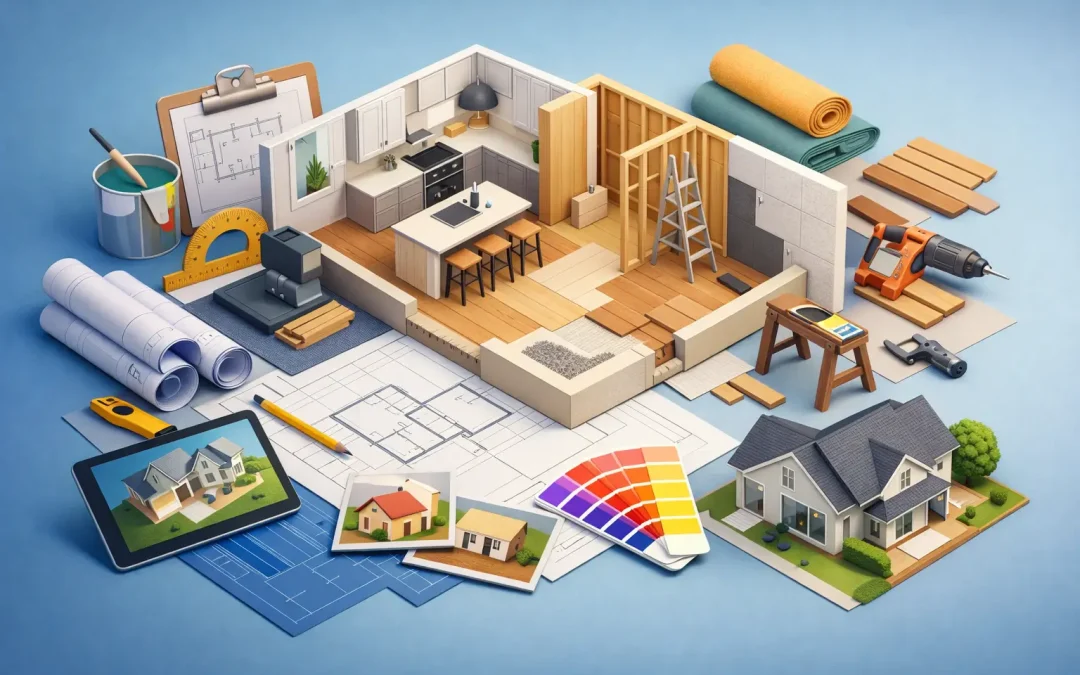
Most remodel problems start long before demolition. They start when a homeowner says, “We’ll figure it out as we go.” A good residential remodeling planning guide helps you avoid that trap by making the big decisions early – before costs rise, schedules slip, and small changes turn into expensive ones.
If you are planning to update a kitchen, renovate a bathroom, add living space, or tackle several home improvements at once, the planning stage matters as much as the build itself. Good planning does not mean overcomplicating the project. It means knowing what you want, understanding what your home needs, and setting a budget and scope that make sense for how you live.
Start with the real reason for the remodel
Before you look at finishes or layouts, get clear on why you are remodeling. Some homeowners want a more modern look. Others need better storage, safer access, more functional space, or repairs to aging materials. Those reasons lead to different priorities, and priorities shape every other decision.
A kitchen remodel driven by resale may focus on broad appeal, durable surfaces, and practical upgrades. A kitchen remodel for a growing family may put more value on workflow, pantry space, and seating. Neither approach is wrong, but they are not the same. If you do not define the goal up front, it becomes easy to spend money in places that do not serve the result you actually want.
This is also the point where honesty helps. If the home has deferred maintenance, water damage, outdated electrical, or worn-out fixtures, those issues should not be treated as side notes. Cosmetic upgrades look good, but they do not replace sound construction and proper repairs.
Build your residential remodeling planning guide around scope
The fastest way for a remodel to go off course is for the scope to stay vague. Homeowners often start with a simple idea like “redo the bathroom” or “open up the kitchen,” but those phrases can cover a wide range of work.
A bathroom remodel might mean replacing tile, vanity, lighting, and fixtures. It might also include moving plumbing, expanding a shower, correcting subfloor damage, or improving ventilation. A kitchen project might be a cabinet and countertop update, or it might involve structural changes, electrical upgrades, custom millwork, and new flooring throughout nearby rooms.
The more clearly the project is defined, the easier it is to price accurately and schedule realistically. That is why planning should separate must-haves from nice-to-haves. If your budget tightens or an existing condition is uncovered, you will already know what stays and what can wait.
Set a budget with room for the house to surprise you
Every homeowner wants a clear number, and that is reasonable. But remodel budgeting works best when it includes both known costs and a cushion for unknowns. Older homes, especially, can reveal issues once walls, floors, or fixtures are opened up.
That does not mean every project will run into major trouble. It means smart planning respects the possibility. A realistic budget usually accounts for labor, materials, permits when needed, design decisions, demolition, disposal, and a contingency for hidden conditions or owner-requested changes.
This is where trade-offs matter. You may be able to invest in custom cabinetry and hold the line on backsplash tile. You may choose a better shower system but keep the existing layout to avoid moving plumbing. In many remodels, the best result is not spending the most money. It is spending with purpose.
For homeowners in older Central Valley homes, this matters even more. A house can look straightforward on the surface and still need framing repairs, updated plumbing components, or electrical corrections once work begins. Planning for that possibility protects the project instead of derailing it.
Make layout decisions before material decisions
It is easy to get excited about countertops, tile, flooring, and paint colors. Those selections matter, but layout usually has the bigger impact on daily life. If the room does not function well, better materials will not fix the problem.
In kitchens, think about movement, storage, lighting, and where people naturally gather. In bathrooms, think about access, vanity space, shower size, and how the room handles moisture. In additions or larger remodels, think about how the new work connects to the rest of the home so it feels intentional rather than patched on.
This stage is also where practical design guidance pays off. A layout that looks good on paper still has to work with plumbing lines, existing framing, code requirements, appliance clearances, and how your family actually uses the space. Good planning balances wish-list ideas with buildable solutions.
Choose materials for real life, not just the showroom
Materials should look good, but they should also match the way the home is used. A beautiful finish that scratches easily or requires constant maintenance may not be the right choice for a busy household. The right material is often the one that gives you the look you want without creating frustration later.
For kitchens, durability and cleanability usually matter as much as appearance. For bathrooms, moisture resistance and proper installation matter just as much as style. Flooring, cabinetry, tile, and countertops all have a range of price points, but the better question is not just what they cost. It is how they will hold up in your home.
This is another area where it depends. Some homeowners want a custom, one-of-a-kind finish and are willing to pay for that craftsmanship. Others want a clean, updated result with strong value. Both can be smart decisions when they fit the budget and the goals of the remodel.
Understand permits, timelines, and living through the work
One of the most overlooked parts of remodeling is the disruption. Even a well-run project affects routines. Kitchens may be partially out of service. Bathrooms may be limited. Dust, noise, deliveries, and work crews all become part of daily life for a while.
That is why a residential remodeling planning guide should include logistics, not just design. Think about where you will cook, how you will store belongings, which rooms need to stay accessible, and whether the project should happen in phases. If you are remodeling while living in the home, preparation matters.
Permits and inspections may also be part of the process depending on the work. Structural changes, electrical updates, plumbing modifications, and additions often require more formal review than surface-level finish updates. That process takes time, but it also protects the work and helps ensure the remodel is done properly.
A realistic timeline should account for planning, material ordering, approvals, demolition, construction, and final details. Custom items and specialty materials can extend lead times. Change orders can do the same. The smoother projects are usually the ones where decisions are made early and communication stays consistent.
Pick a contractor who plans, not just builds
A lot of stress can be avoided by working with a contractor who values preparation as much as workmanship. Remodeling is not just about swinging a hammer. It is about identifying issues before they become bigger, guiding homeowners through choices, and building in a way that respects both the budget and the home itself.
Ask direct questions. How is scope documented? What happens if hidden damage is found? How are changes handled? What parts of the project are custom, and what parts are standard? A dependable contractor should be able to explain the process in plain language without making it feel complicated.
This matters whether you are planning a full kitchen remodel, a bathroom update, an addition, or smaller repair-driven work. In many cases, homeowners benefit from working with a contractor who can handle both the visible upgrade and the less glamorous but necessary repair work behind it. That combination often leads to better long-term value.
Know when to remodel now and when to phase it
Not every project needs to happen all at once. If the budget is tight or the home has multiple priorities, phasing can be the smart move. You might repair damaged areas now, complete a bathroom this year, and update the kitchen later. You might install cabinetry and countertops first, then finish surrounding improvements in a second stage.
The key is to phase with intention. Work should be sequenced so you are not paying twice for labor or undoing finished surfaces later. A thoughtful plan can improve the home now while still keeping larger goals in reach.
For many homeowners, the best remodel is not the biggest one. It is the one that solves the right problems, uses quality materials, respects the budget, and is built correctly the first time. If you treat planning as part of the investment instead of a delay before the fun starts, you give the whole project a stronger foundation.
A remodel should leave you with more than a nicer-looking space. It should make the home work better for your life, feel worth the money you spent, and hold up well long after the project is finished.
Recent Comments