A vanity that looks perfect in the showroom can feel oversized the minute it lands in a real bathroom. Too wide, and the room feels cramped. Too small, and you lose storage, counter space, and the visual balance that makes the room feel finished. That is why knowing how to choose bathroom vanity size matters before you order anything.
The right size is not just about what fits against the wall. It has to work with your plumbing, door swing, traffic flow, storage needs, and the way your household actually uses the bathroom every day. In many remodels, vanity size becomes one of the decisions that affects almost everything else, from mirror placement to lighting to how comfortable the room feels once the job is done.
How to choose bathroom vanity size for your layout
Start with the room, not the vanity. Homeowners often shop by style first, but the best results come from measuring the available space and understanding the layout limitations before falling in love with a cabinet.
Measure the width of the wall where the vanity will sit, then account for nearby toilets, tubs, showers, and door openings. A vanity may physically fit in a 60-inch space, but that does not mean it will function well if it crowds the toilet or blocks a door casing. You want enough breathing room around each fixture so the bathroom feels comfortable instead of packed in.
Depth matters just as much as width. Many standard vanities are around 18 to 21 inches deep. In a smaller hall bath or older home with tighter dimensions, even a few extra inches can make the walkway feel narrow. A shallower vanity can make a big difference in powder rooms or compact guest bathrooms where every inch counts.
Height is another factor people overlook. Standard vanity heights used to run lower, but comfort-height vanities are now more common because they feel better for most adults. That said, a kids’ bathroom or a bath used by family members with specific accessibility needs may call for a different approach. The best vanity height is the one that fits the people using it most.
Match the vanity size to the bathroom type
Not every bathroom needs the same vanity. A powder room has different priorities than a primary bath, and a guest bath usually sits somewhere in between.
In a powder room, space is usually limited and storage needs are light. A smaller vanity often makes sense, especially if you want to keep the room open and easy to move through. In that setting, the goal is usually visual balance and just enough countertop for hand soap and daily use.
A hall or guest bathroom often needs a little more flexibility. It may serve visitors, kids, or both. In these bathrooms, a vanity that offers moderate storage without dominating the room usually works best. You want enough counter space for daily routines, but not so much bulk that the bathroom feels tight.
In a primary bathroom, the vanity typically does more work. This is where larger single vanities or double vanities become worth considering. If two people use the space every morning, extra width can improve function in a real way. More drawer space, more countertop, and separate sink areas can reduce the usual crowding.
The trade-off is that larger is not always better. A double vanity sounds appealing, but if it forces everything else in the room too close together, it can hurt the layout more than it helps. Sometimes one well-designed single vanity with smart storage serves the space better.
Standard vanity widths and when they make sense
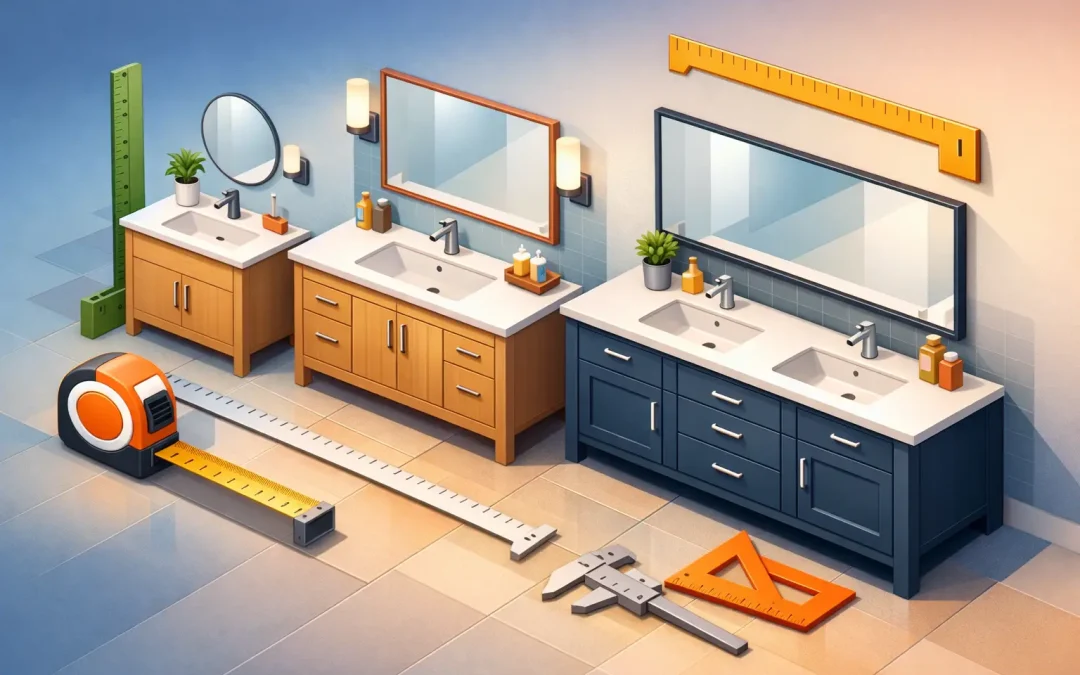
Most bathroom vanities fall into a few common size ranges. Smaller vanities around 24 to 30 inches wide are often a good fit for powder rooms and compact bathrooms. Mid-size vanities in the 36 to 48-inch range work well in many guest baths and smaller primary baths. Larger vanities from 60 inches and up are common in primary bathrooms, especially when homeowners want double sinks.
Those sizes are only starting points. The best width depends on how the room is arranged and how much storage you need. A 48-inch vanity can feel generous in one bathroom and undersized in another. The surrounding layout makes the difference.
If you are replacing an existing vanity, it is tempting to use the exact same size. That can be the right move, especially if you want to avoid relocating plumbing and controlling costs. But it is still worth reassessing. In some remodels, a slightly wider or slightly shallower vanity improves function without requiring major changes.
Storage should drive part of the decision
One of the biggest reasons homeowners regret a vanity choice is storage. The cabinet looked good, but it did not hold enough of what the bathroom needed.
Think about what needs to live in that vanity. Towels, cleaning supplies, toiletries, hair tools, extra toilet paper, and everyday personal items all compete for space. If the bathroom has no linen closet nearby, vanity storage becomes even more important.
Drawers are often more useful than large open cabinets because they keep smaller items organized and easier to reach. A wide vanity with poor storage design may actually function worse than a slightly smaller one with better drawer layout. This is where custom or semi-custom planning can make a real difference, especially in older homes where room dimensions are not always standard.
Countertop space counts too. If the vanity is so small that everything ends up sitting on top, the bathroom can feel cluttered fast. On the other hand, if you oversize the vanity just to gain counter space you rarely use, you may give up needed floor space for no real benefit.
Consider plumbing and installation realities
Vanity size is not just a design choice. It is also a construction decision.
If the sink location stays the same, installation is usually simpler and more cost-effective. Once you start shifting plumbing to fit a different vanity width or sink configuration, the job can become more involved. That does not mean it should not be done, only that the budget and scope need to reflect it.
This comes up often when homeowners want to switch from a single sink to a double sink. The vanity may fit the wall, but the plumbing, electrical, mirrors, and lighting all need to support the change. In some cases, it is a great upgrade. In others, the extra sink adds cost without improving how the room functions.
Older homes in Modesto and surrounding areas can bring another layer of reality. Walls may not be perfectly square, plumbing locations may be less forgiving, and previous repairs may have left surprises behind. That is one reason it helps to choose vanity size with installation in mind, not just appearance.
How to avoid a vanity that feels too big
A vanity can technically fit and still feel wrong. This usually happens when it overwhelms the room visually or leaves poor clearance around nearby fixtures.
Look at how much open floor space remains once the vanity is in place. Think about standing at the sink, opening drawers, and walking past someone else using the bathroom. If the room starts to feel tight on paper, it will probably feel tighter in real life.
Floating vanities, open-leg designs, and lighter finishes can help a bathroom feel less heavy, even when the cabinet itself is not especially small. In a tighter room, that visual breathing room can matter as much as the actual dimensions.
It also helps to think about proportions. A very wide vanity in a short wall section or under a small mirror can look off-balance. The best remodels usually feel intentional because the vanity, mirror, lighting, and surrounding wall space all work together.
How to choose bathroom vanity size with double sinks
Double sinks make sense when two people regularly use the bathroom at the same time and there is enough room to support them properly. They are most practical in wider primary bathrooms where the vanity can be large enough to give each sink usable counter space.
If you are squeezing double sinks into a vanity that is too short, both users end up with less room than they would have had with a single sink. That is a common mistake. Two small sink areas with almost no landing space can be more frustrating than one larger, better-planned station.
This is one of those decisions where lifestyle should lead. If one person gets ready at a time, a double vanity may not be the best use of square footage or budget. If both people use the room every morning, it may be worth prioritizing.
A good vanity size should feel right years from now
Trends change, but function tends to age well. The best vanity size is the one that supports daily use, fits the room naturally, and gives you enough storage without crowding the space.
Before you buy, measure carefully, think through how the bathroom is used, and be honest about what the room can realistically handle. A well-sized vanity does more than fill a wall. It helps the entire bathroom work better.
If you are planning a remodel, this is one of those choices that is worth slowing down for. Get the size right, and the rest of the room usually comes together much more easily.
Recent Comments