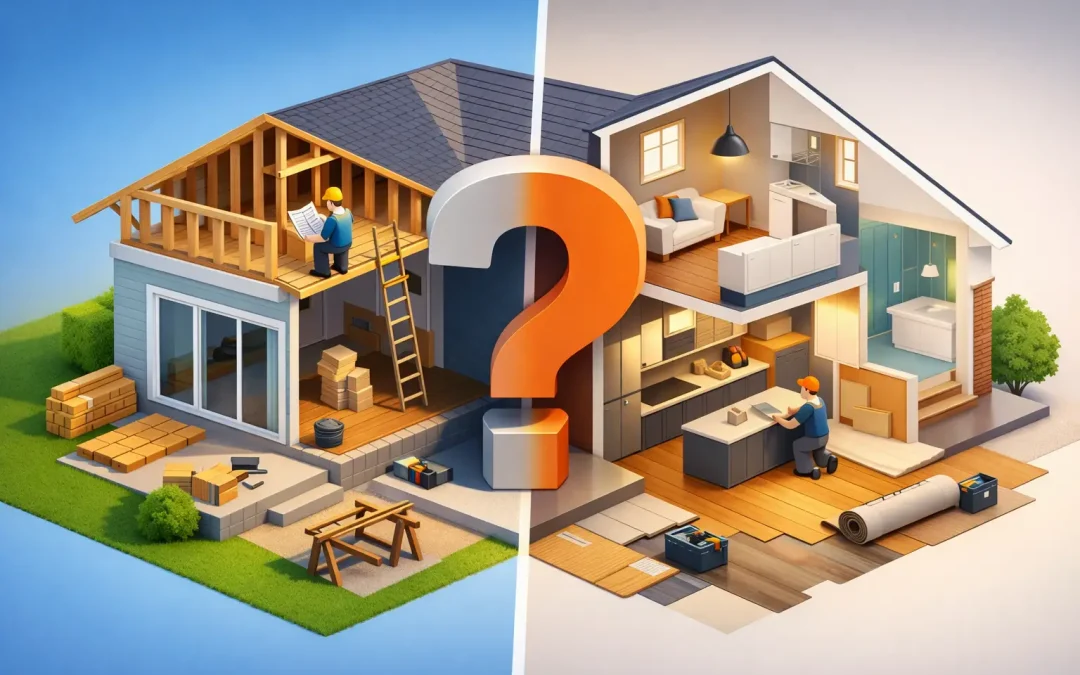
You feel it every day – the kitchen is too tight, the bathroom is dated, or the house simply does not work the way your family lives anymore. When that frustration builds, the big question usually follows: should you invest in a home addition or remodel? The right answer depends on what is not working now, what you want the home to do better, and how much change your property can realistically support.
For many homeowners, this decision is not really about square footage first. It is about function. If your home already has enough space but uses it poorly, a remodel may solve more than you expect. If the problem is that you truly do not have enough room for another bedroom, a larger kitchen footprint, or a dedicated office, an addition may be the smarter investment.
When a home addition or remodel makes the most sense
A remodel is usually the better fit when your home’s structure is basically right, but the layout, finishes, or storage are falling short. This is common in older homes where the rooms are separated too much, the cabinetry wastes space, or the bathroom was built for a different era. In those cases, reworking what is already there can dramatically improve daily life without expanding the building envelope.
A home addition becomes worth considering when the house is missing a room or function that cannot be created by rearranging existing space. Maybe you need a primary suite, a family room that actually fits everyone, or more kitchen area than the current footprint can handle. If you have already looked at reconfiguring walls and still cannot get where you need to go, adding square footage starts to make sense.
The key is to separate wants from constraints. Wanting a bigger kitchen is one thing. Realizing your current kitchen cannot gain storage, seating, or workflow improvements without taking space from another room is another. That is where an experienced contractor can help you see whether the answer is better design or more square footage.
Start with the problem, not the project
Homeowners often start by saying they want an addition because the house feels small. Sometimes that is true. Other times, the house feels small because the layout is inefficient. Long hallways, undersized storage, closed-off rooms, and poorly planned cabinetry can make a home feel cramped even when the total square footage is reasonable.
That is why the first step should be identifying exactly what is not working. Is it storage? Traffic flow? Privacy? Lack of natural light? A kitchen that shuts the cook off from the rest of the house? If you can define the problem clearly, the project path gets clearer too.
For example, a bathroom remodel may solve congestion with a better vanity layout, improved built-ins, and a larger shower footprint created by shifting walls. A kitchen remodel may open the room, improve cabinet function, and create better seating without adding onto the home. On the other hand, no amount of finish work will create a true guest suite if there is nowhere to put one inside the current structure.
Cost is not just about the upfront number
One of the biggest differences between an addition and a remodel is cost, but it is not as simple as saying one is cheap and one is expensive. A remodel can be more affordable because the basic structure, foundation, and roof are already there. But if the project involves major structural changes, outdated plumbing, electrical upgrades, or hidden damage behind walls, the budget can move quickly.
An addition often carries a higher starting cost because you are building new square footage. That typically means foundation work, framing, roofing, insulation, windows, exterior finishes, and tying all of it into the existing home. It also tends to involve more permitting and more coordination. Still, if your goal cannot be achieved any other way, the added cost may be justified by how much better the home functions afterward.
Value matters here too. A well-planned remodel can have a strong return because it modernizes the spaces buyers look at first, especially kitchens and bathrooms. An addition can also add value, but only if it feels like a natural extension of the house. If it creates an awkward layout, overwhelms the lot, or looks disconnected from the original structure, the payoff may not be as strong as expected.
Your lot and structure may make the decision for you
Not every property is a good candidate for an addition. Lot size, setbacks, utility locations, rooflines, and the existing foundation all play a role. In some neighborhoods around Modesto and nearby communities, homeowners have enough yard space to expand comfortably. In others, zoning limits or lot constraints make an addition difficult or less practical.
The structure of the house matters too. Adding onto a home is not just about attaching a new room. The new space needs to connect properly to the existing foundation, roof, exterior finishes, and interior flow. A good addition should look and feel like it belongs there, not like it was forced into place.
If your house has room to reconfigure inside, remodeling may give you a cleaner and more cost-conscious path. If the lot supports expansion and your long-term needs call for more space, an addition may be worth the investment. This is one of those areas where real-world construction experience matters more than guesswork.
Remodeling has one major advantage: it can improve the whole house
A remodel does more than update surfaces. When done well, it can improve how multiple rooms connect and function together. That matters because daily frustration often comes from transitions between spaces, not just one room by itself.
Opening a kitchen to a dining area can change how the family gathers. Reworking a bathroom can improve storage, lighting, and accessibility all at once. Updating cabinetry and millwork can make a room look better while solving practical problems. These changes may not add square footage, but they often make the home feel more useful, more comfortable, and easier to maintain.
This is especially true for homeowners who plan to stay in the home for years. If your goal is comfort, efficiency, and a more modern feel, a thoughtful remodel can go a long way without the scope of a full addition.
Additions solve needs a remodel cannot
There are times when remodeling is simply not enough. A growing family may need another bedroom. A multigenerational household may need more privacy. A homeowner working remotely may need a true office instead of a corner of the living room. In those cases, the need is not just better finishes or better storage. The need is more space.
That is where an addition earns its place. A properly planned addition can give you the room your home is missing while preserving the neighborhood, schools, and property you already value. For many homeowners, that is a better option than moving, especially when interest rates, home prices, and moving costs make relocation less appealing.
The trade-off is disruption. Additions usually take longer, involve more exterior and structural work, and require tighter planning. They can be a very smart investment, but they need to be approached with clear expectations.
How to make the right call
The best decision usually comes from three questions. First, can your current square footage be redesigned to solve the problem? Second, does your property support an addition in a way that makes sense visually, structurally, and financially? Third, are you planning for your life now, or for the next ten years?
If the issue is layout, storage, or outdated finishes, remodeling is often the better first move. If the issue is a real lack of living space, an addition may be the only answer that truly fixes it. Either way, planning should start with a realistic budget, a clear priority list, and a contractor who is honest about trade-offs.
That honesty matters. Sometimes the right answer is a full remodel. Sometimes it is a smaller upgrade that solves most of the problem for less money. Sometimes it is an addition with a remodel tied into it, so the new space and existing home work together instead of competing.
At its best, this is not about choosing the bigger project. It is about choosing the one that gives you the best everyday result for your home, your budget, and your future plans. A good contractor will help you see the difference before construction starts, not after.
If you are weighing changes to your home, slow down enough to define what better really means. More space is helpful, but better function, solid workmanship, and a plan that respects your budget are what make the investment pay off long after the dust settles.
Recent Comments