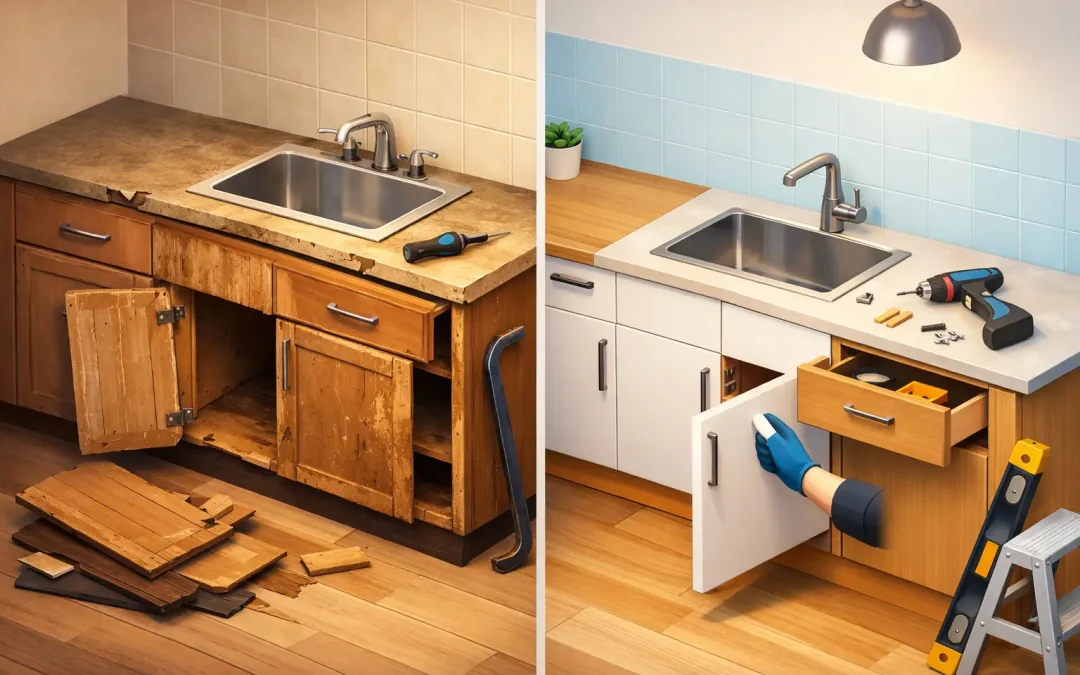
A lot of homeowners ask the question after they have already painted the boxes twice, replaced the hinges, and adjusted the doors for the third time this year: when should cabinets be replaced? The short answer is when the cabinets are no longer doing their job well, no longer fit how you use the space, or will cost too much to keep patching together. The better answer depends on condition, layout, budget, and what you want from the room long term.
Cabinets are one of those parts of the home that can look tired long before they completely fail. That is why it helps to separate cosmetic wear from real functional problems. Scuffed finish, outdated stain color, or old hardware may make the room feel dated, but those issues alone do not always justify a full replacement. Structural damage, poor storage, water exposure, and bad layout usually point in a different direction.
When should cabinets be replaced instead of repaired?
If the cabinet boxes are swollen, soft, cracked, or pulling away from the wall, replacement is usually the safer choice. Water damage is one of the biggest warning signs. In kitchens and bathrooms, moisture gets into particleboard and low-grade materials over time. Once that core starts to break down, painting over it or changing the doors does not solve the real problem.
Another clear sign is failing joinery. If drawers no longer slide properly, bottoms are sagging, shelves are bowing, or face frames are separating, the cabinets may be reaching the end of their useful life. One loose hinge is a simple fix. A whole run of cabinets that will not stay aligned is something else.
Pest damage also changes the equation. If cabinets have been compromised by termites, dry rot, or long-term moisture, it is often more cost-effective to remove them, inspect the surrounding area, and start clean. Repairing visible surfaces while leaving hidden damage behind usually leads to more work later.
Age matters too, but not by itself. Older cabinets built from solid wood may still be worth keeping if they are structurally sound. On the other hand, builder-grade cabinets from 15 or 20 years ago can wear out faster if they were made with thin materials or installed poorly.
Signs your cabinets are hurting the room
Sometimes cabinets should be replaced even if they are technically still standing. This usually comes down to function.
A kitchen can have decent-looking cabinets and still be frustrating to use every day. Maybe the drawers are too shallow, the corner storage is wasted, or the doors block walkways when opened. Maybe there is not enough pantry space, and countertop appliances have taken over because the storage was never designed for how your family actually cooks.
In bathrooms, older vanities often miss the mark on storage and durability. A cabinet that traps moisture, leaves no room for cleaning supplies, or forces everyone to share one shallow drawer may be worth replacing simply because the room no longer works well.
Layout limitations are often the deciding factor in a remodel. If you are already changing countertops, flooring, lighting, or plumbing fixtures, keeping cabinets that no longer fit the new plan can hold the whole project back. In that case, replacement is not just about aesthetics. It is about making sure the room functions as a complete system.
When refinishing or refacing makes more sense
Not every outdated cabinet needs to be torn out. If the cabinet boxes are solid, level, and in good shape, refinishing or refacing can be the smarter move.
Refinishing works best when you like the layout and the doors are worth saving. Paint or stain can completely change the look of the room at a lower cost than replacement. This is often a good fit for homeowners who want an update without moving plumbing, changing footprints, or opening up walls.
Refacing can be a middle ground. You keep the existing cabinet boxes but replace doors, drawer fronts, and exterior finishes. It gives the room a more dramatic visual change than refinishing, but it still depends on the underlying cabinet structure being solid.
The trade-off is that neither option fixes a bad layout. If your storage is inefficient, your sink base is failing, or the cabinets are the wrong size for your appliances, cosmetic upgrades can only do so much.
What damage means replacement is likely the better investment
Water damage and swelling
This is one of the most common reasons cabinets need to go. Swollen side panels, soft sink bases, peeling laminate, and bubbling finish usually mean moisture has already moved below the surface. In kitchens and bathrooms, that kind of damage rarely gets better on its own.
Poor construction or cheap materials
Some cabinets were not built to last. Thin backs, stapled joints, flimsy drawer boxes, and particleboard interiors often start failing sooner than homeowners expect. If repairs keep adding up, replacing them once may cost less than repeatedly trying to reinforce weak materials.
Major layout changes
If you are removing a wall, relocating appliances, adding an island, or reworking traffic flow, old cabinets may not fit the new plan. Trying to piece existing units into a different layout often creates awkward gaps and inconsistent heights.
Mold, rot, or hidden deterioration
Cabinets can hide problems behind backs, under sinks, and along walls. If there is mold, rot, or long-term leak damage, replacement gives you access to repair the surrounding area correctly. That is especially important if you want the new work to last.
When should cabinets be replaced for resale?
If you are preparing to sell, the answer depends on the price point of the home and the condition buyers will see immediately. Cabinets do not have to be brand new to support resale value, but they should look clean, operate well, and match the quality level of the rest of the home.
If the cabinets are visibly damaged, badly outdated, or make the room feel smaller and less functional, replacement can improve buyer perception. Kitchens and bathrooms carry a lot of weight in resale decisions. Buyers may tolerate older finishes, but they tend to notice warped doors, water damage, missing hardware, and poor storage.
That said, replacement is not always necessary just because the style is not current. In some homes, a professional paint job, updated hardware, and a few practical improvements can deliver a better return than a full tear-out. The smartest move is usually the one that fits the house and the neighborhood, not the most expensive option.
Budget matters, but so does timing
Homeowners often wait until cabinets are completely failing before replacing them. That can work, but it can also create more disruption and expense. A cabinet base that has been absorbing leaks for years may damage flooring or wall framing. A drawer stack that barely functions today may become unusable during a busy holiday season when the kitchen is under more strain.
If you know a larger remodel is coming within the next year or two, it may make sense to hold off on temporary fixes and plan the project properly. If a full remodel is not in the budget yet, focused repairs can buy time, especially when the cabinet boxes are still solid.
This is where an honest assessment helps. Good contractors will tell you whether your cabinets are worth saving or whether repair money would be better put toward replacement. In older homes around Modesto, Riverbank, and Turlock, it is common to find cabinets that look serviceable at first glance but have hidden wear from years of moisture, settling, or repeated patchwork repairs.
How to decide without overbuilding
The best decision usually comes down to three questions. Are the cabinets structurally sound? Does the layout still work for your household? Will repair costs keep chasing a problem that replacement would solve more cleanly?
If the answer is yes, yes, and no, keeping them may be the right move. If the answer is no, no, and yes, replacement usually makes more sense.
It also helps to think about how long you plan to stay in the home. If this is your long-term house, better storage, stronger materials, and a layout that fits your daily routine can be worth the investment. If you are making selective updates, you may choose a simpler option that improves appearance and function without expanding the scope too far.
A well-planned cabinet replacement should not feel like starting over for the sake of it. It should solve real problems, fit your budget, and leave the room easier to live with every day. If your cabinets are worn out, water-damaged, or simply working against the space, replacing them is less about chasing a new look and more about protecting the value and usefulness of your home.
Recent Comments