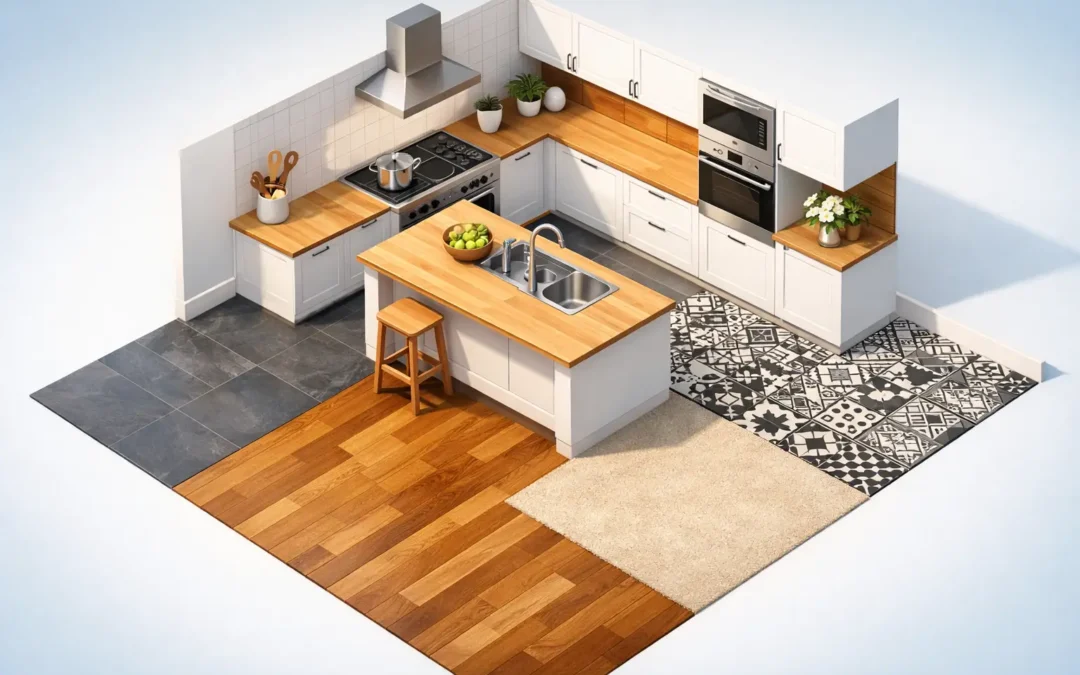
A kitchen floor looks great on day one in almost any showroom. The real test starts when chairs scrape, water splashes near the sink, the dog runs through after breakfast, and someone drops a heavy pan. That is why choosing the best kitchen flooring options is less about trends and more about how your home actually works.
For most homeowners, the right floor needs to handle moisture, daily traffic, and easy cleanup without pushing the budget too far. It also needs to fit the style of the kitchen and the way the rest of the house feels. A floor that looks perfect in a photo can become a frustrating choice if it stains easily, feels hard underfoot, or shows every bit of wear.
What matters most when comparing the best kitchen flooring options
Before looking at materials, it helps to think through the conditions in your kitchen. A busy family kitchen has different demands than a low-traffic space in a smaller household. If you cook often, have kids, entertain a lot, or move between indoor and outdoor spaces, durability and cleanup matter more than having the newest look.
Water resistance is usually at the top of the list. Kitchens are not as wet as bathrooms, but they still deal with spills, leaks, and mopping. Scratch resistance matters too, especially with pets, stools, and dropped utensils. Comfort should not be overlooked either. Some floors are much easier to stand on during long cooking sessions.
Budget is another practical factor. The material cost is only part of the story. Some floors are affordable to buy but expensive to install or maintain. Others cost more upfront but hold up well for many years, which can make them the better value over time.
Luxury vinyl plank is one of the most practical choices
Luxury vinyl plank, often called LVP, has become a popular option for good reason. It handles moisture well, offers a softer feel than tile, and comes in a wide range of styles that mimic wood or stone. For many households, it hits the sweet spot between price, appearance, and day-to-day performance.
One of the biggest advantages is forgiveness. LVP is easier on your feet than tile, quieter than many hard surfaces, and generally simple to clean. It also tends to resist staining and scratching better than some homeowners expect. In a kitchen that sees constant use, that makes a difference.
The trade-off is that not all vinyl products are created equal. Lower-quality material can show wear faster, feel less solid, or look overly artificial. Proper subfloor preparation also matters. If the floor underneath is uneven, the finished result can reflect those imperfections.
For homeowners who want a wood-look floor without the maintenance concerns of real hardwood, this is often one of the best kitchen flooring options to consider first.
Tile remains a strong choice for durability
Porcelain and ceramic tile have long been trusted in kitchens because they hold up well to water, heavy traffic, and everyday wear. If installed correctly, tile can last for many years and still look sharp. It is also available in styles ranging from clean and modern to rustic and traditional.
Porcelain is generally denser and more water-resistant than ceramic, which makes it a stronger performer in demanding areas. Both can work well in kitchens, but porcelain usually offers better long-term toughness.
The main downside is comfort. Tile is hard underfoot and can feel cold, especially in the winter. It is also less forgiving when dishes fall. Grout lines need occasional maintenance, and lighter grout can discolor over time if not sealed and cleaned properly.
That said, tile is still one of the best options for homeowners who want a premium, durable finish and do not mind a firmer surface. In many Central Valley homes, tile also makes sense because it stays cooler than some other materials during hot weather.
Engineered hardwood offers warmth with some caution
Many homeowners love the look of real wood in a kitchen. It adds warmth, character, and a natural feel that many manufactured products try to imitate. Engineered hardwood is often the better route over solid hardwood because it handles changes in temperature and humidity more reliably.
This material has a real wood surface over a layered core, which helps with stability. It can be a good fit in kitchens that are part of an open floor plan where homeowners want one flooring style flowing through multiple rooms.
Still, wood and water are not close friends. Even engineered hardwood can be damaged by standing moisture or repeated spills left unattended. Scratches and dents are also part of the equation, especially in active households.
If appearance is the top priority and you are comfortable with a little more care, engineered hardwood can be a strong choice. If low maintenance is the goal, other materials may be more practical.
Laminate has improved, but it depends on the product
Laminate flooring used to have a mixed reputation in kitchens, but newer products perform much better than older versions. Some now offer improved water resistance, more realistic textures, and durable wear layers that stand up well to foot traffic.
Laminate is often attractive for budget-conscious remodels because it can deliver a high-end look at a more manageable cost. It also tends to resist scratches well, which is useful in family homes.
The concern is moisture. Even water-resistant laminate is not the same as fully waterproof flooring. If water gets into seams or sits too long, swelling can become a problem. That means laminate can work in kitchens, but it is not always the safest bet for households with frequent spills or a history of leaks.
When chosen carefully and installed properly, laminate can be a good value. It just requires a realistic understanding of its limits.
Natural stone brings character and higher upkeep
Stone flooring has a distinct look that is hard to replicate. Materials like slate, travertine, and marble can make a kitchen feel custom and high-end. No two pieces are exactly alike, which gives the space depth and variation.
The trade-off is maintenance and cost. Natural stone is usually more expensive to purchase and install, and some types need regular sealing. Certain stones are also more prone to staining or etching than homeowners expect.
Stone is durable, but it is not carefree. It is also hard underfoot, similar to tile, and can require a stronger subfloor depending on the material. For some homes, the beauty is worth the added attention. For others, a porcelain tile that mimics stone may be the smarter choice.
Sheet vinyl is worth a second look
Sheet vinyl does not get the same attention as plank flooring, but it still has practical advantages. It is often budget-friendly, easy to clean, and more resistant to water penetration because there are fewer seams.
For utility-focused kitchens or modest updates, it can be a very workable solution. It also feels softer underfoot than tile and can be installed in many patterns and styles.
Its main limitation is perception. Some homeowners simply prefer the look of plank or tile. It can also be more difficult to repair invisibly if damaged. Still, for the right budget and the right kitchen, it remains a solid option.
How to choose the right floor for your kitchen
The best material depends on what you are trying to solve. If your current floor is worn out and you want something durable with minimal upkeep, LVP or porcelain tile will often rise to the top. If your kitchen opens into living spaces and you want a warmer, more unified look, engineered hardwood may make more sense.
It also helps to think beyond the material itself. Installation quality matters just as much as product choice. An excellent floor can underperform if the subfloor is uneven, moisture issues are ignored, or transitions are handled poorly. Good planning protects the investment.
For homeowners in Modesto, Riverbank, and Turlock, climate and lifestyle can shape the decision too. Hard surfaces like tile may feel especially practical during hot summers, while families who spend long hours cooking may appreciate the comfort of vinyl underfoot. There is no single winner for every kitchen, only the best fit for the way you live.
Best kitchen flooring options by priority
If your top priority is water resistance, porcelain tile and quality luxury vinyl plank are hard to beat. If comfort matters most, vinyl usually feels better during daily use. If appearance and long-term home value lead the decision, tile and engineered hardwood often stand out.
If budget is tight, laminate or sheet vinyl may offer the best balance. If you want a custom, high-end look and do not mind maintenance, natural stone can deliver that result. The point is not to chase the most expensive floor. It is to choose one that matches your kitchen, your habits, and your budget without creating regrets a year later.
A good kitchen floor should make daily life easier, not just photograph well. When you choose with durability, maintenance, and real household use in mind, the right answer usually becomes a lot clearer.
Recent Comments