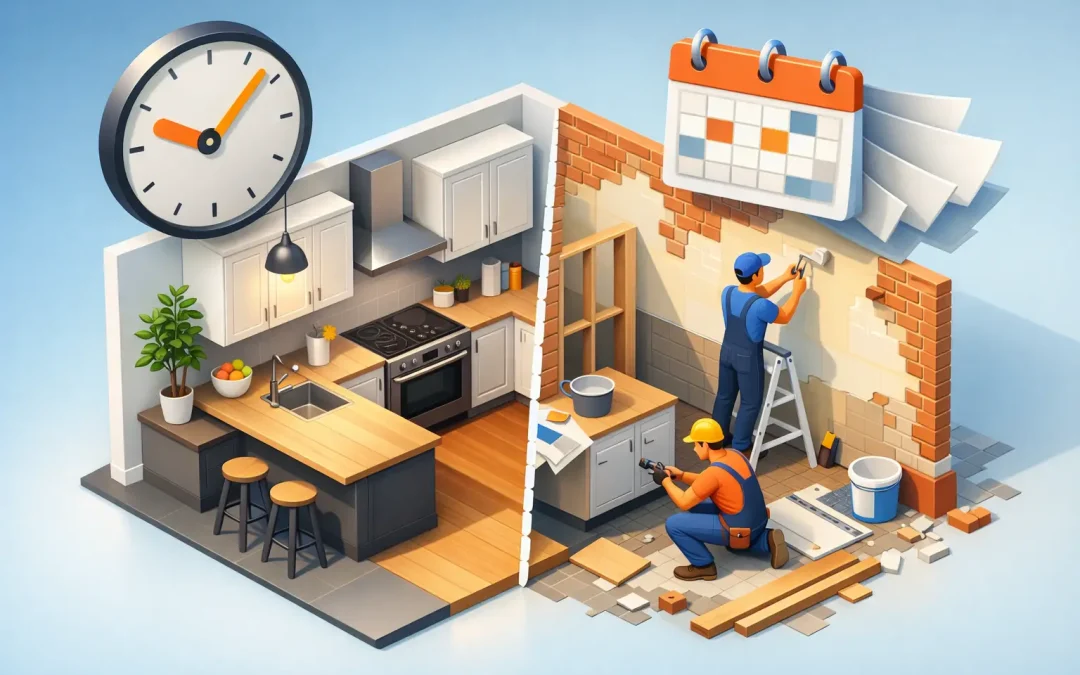
If you’re trying to plan meals, family routines, and a temporary place to wash dishes, one question matters fast: how long does a kitchen remodel take? The honest answer is that most kitchen remodels take anywhere from several weeks to a few months, depending on the size of the job, the materials you choose, and how much work is happening behind the walls.
That range can feel frustrating when you’re trying to plan around real life. But a kitchen remodel timeline becomes much easier to understand once you break it into phases. Some kitchens need mostly cosmetic updates. Others involve layout changes, electrical upgrades, plumbing work, inspections, or custom cabinetry. Those details make a big difference in how long the project will last.
How long does a kitchen remodel take for most homes?
For a straightforward kitchen update, many homeowners can expect about 6 to 10 weeks of on-site construction after materials are ready. A larger or more complex remodel often lands closer to 10 to 16 weeks. If the project includes moving walls, relocating plumbing or gas lines, waiting on specialty products, or correcting older construction issues, it can take longer.
The key point is that the construction phase is only part of the total timeline. Before demolition even starts, there is usually planning, material selection, measuring, ordering, and permitting. When homeowners ask how long does a kitchen remodel take, the full answer usually starts before the first cabinet comes out.
A realistic total timeline from first planning meeting to final touch-up often falls between 2 and 5 months. Smaller projects may move faster. High-detail remodels with custom finishes may take longer, especially if products are ordered rather than pulled from local stock.
The kitchen remodel timeline, phase by phase
A good remodel stays on schedule because each phase is lined up properly. When one part is rushed or materials are missing, delays start stacking up.
Planning and design
This phase can take 1 to 4 weeks, sometimes more if you’re still deciding on layout, cabinet style, countertops, backsplash, lighting, or appliances. If you already know what you want, planning moves faster. If you’re comparing multiple options or trying to work within a specific budget, this part takes more time.
This phase matters more than many homeowners expect. Clear planning helps avoid expensive changes after the work begins. It also gives your contractor time to identify problem areas early, such as outdated wiring, uneven floors, or limited space for appliance clearances.
Material ordering
Material lead times vary quite a bit. Stock cabinets and common tile may arrive quickly, while custom cabinets, special-order stone, or certain appliances can add weeks. In many cases, ordering takes place during the planning phase, but the job may not begin until the critical materials are confirmed.
This is one of the biggest reasons two kitchens that look similar on paper can end up with very different schedules. A simple design with readily available materials may move quickly. A custom kitchen with selected finishes from several suppliers may need more patience.
Demolition
Demolition usually takes 2 to 5 days. That said, demo can uncover hidden conditions that affect the schedule. Water damage, dry rot, old plumbing repairs, unpermitted past work, or wall framing issues are common surprises in older homes.
A dependable contractor will not cover over problems just to keep the calendar moving. Fixing them properly may add time, but it protects your investment and helps prevent bigger issues later.
Rough plumbing, electrical, and framing
Once the kitchen is opened up, rough-in work begins. This phase often takes 1 to 2 weeks, depending on how much is changing. If the sink, dishwasher, range, lighting, or outlets are staying in the same place, the work may be fairly quick. If the layout is changing, the timeline expands.
Framing adjustments may also be needed for soffit removal, pantry changes, or opening up walls. In some homes around Modesto and the Central Valley, older construction can require updates to meet current code, especially when electrical systems are involved.
Inspections and drywall
If permits are required, inspections usually happen after rough-in work. The timing depends partly on local scheduling. After approval, insulation or drywall repair and texture work can move forward. This stage often takes several days to a week, including drying time.
Drying and curing times are easy to underestimate. Even when crews are working efficiently, some parts of the job simply cannot be rushed without affecting quality.
Cabinets and countertops
Cabinet installation often takes about 3 to 7 days. Countertops usually come after cabinet installation and final measurements. If you’re using granite, quartz, or another fabricated surface, there is often a gap between template day and installation day.
This is another place where timing depends on preparation. When walls are straight, floors are level, and materials arrive as expected, installation goes smoothly. If adjustments are needed, the schedule can shift.
Flooring, backsplash, and finish work
Flooring may happen before or after cabinets depending on the product and the installation plan. Backsplash, trim, hardware, painting, finish plumbing, and finish electrical usually take 1 to 2 weeks combined.
This final stage brings the kitchen together visually, but it also includes punch-list details that matter in daily use. Aligning doors, adjusting drawers, sealing surfaces, installing fixtures correctly, and checking every connection all take time.
What can make a kitchen remodel take longer?
Some delays are avoidable. Others are simply part of remodeling an existing home.
Layout changes are one of the biggest timeline factors. Keeping the sink, stove, and refrigerator in roughly the same locations usually saves time and money. Moving gas lines, water lines, drain lines, or major electrical circuits adds labor and coordination.
Custom work can also lengthen the schedule. Custom cabinets, built-in storage, specialty tile patterns, and detailed millwork often produce a better finished result, but they require more precise fabrication and installation.
Home condition matters too. Once walls and floors are opened, underlying problems may show up. Water damage around sinks, out-of-level subfloors, outdated electrical panels, or previous repairs done incorrectly can all add time. That does not mean the project is going off track. It means the work is being done right.
Finally, homeowner changes during construction can extend the timeline. Changing tile, switching appliance sizes, adding features, or revising the layout after the work starts often affects both schedule and cost.
How to keep your kitchen remodel on schedule
The best way to avoid delays is to make as many decisions as possible before demolition. That includes cabinets, counters, fixtures, appliances, lighting, flooring, paint colors, and backsplash selections. Waiting until the middle of the project to choose materials is one of the fastest ways to slow things down.
It also helps to work with a contractor who handles scheduling realistically. Promising an overly aggressive timeline may sound good at the start, but it often leads to frustration later. A better approach is a clear schedule with room for inspections, lead times, and the unexpected conditions that come with real homes.
Good communication matters just as much as craftsmanship. Homeowners should know what phase is happening, what decisions need to be made next, and whether any issues have been uncovered. That kind of steady communication keeps the job moving and helps you feel more confident while your kitchen is out of service.
Is a small kitchen remodel faster?
Usually, yes, but not always by as much as homeowners expect. A small kitchen has less square footage, but it still requires many of the same steps as a larger one. Cabinets still need to be installed properly. Plumbing and electrical still need to be coordinated. Countertops still need to be templated and fabricated.
Where smaller kitchens often save time is in material quantity, demolition, and finish installation. But if the small kitchen is in an older home with tight access or hidden repair issues, that time savings can disappear quickly.
The real answer homeowners should plan around
If you’re asking how long does a kitchen remodel take, a practical planning range is this: expect several weeks for construction and allow a few months from first decisions to final completion. A cosmetic refresh may wrap up faster. A full remodel with layout changes and custom finishes will take longer.
The goal should not be the shortest possible timeline at any cost. The better goal is a well-planned project, quality workmanship, and a kitchen that functions well for years. A rushed remodel can create expensive problems. A carefully managed one gives you a better result, even if it takes a little more time.
If you’re preparing for a kitchen project, start by defining what must change, what would be nice to improve, and where your budget needs to stay. That gives your contractor a solid starting point and gives you a much better chance of ending up with a kitchen that feels worth the wait.
Recent Comments