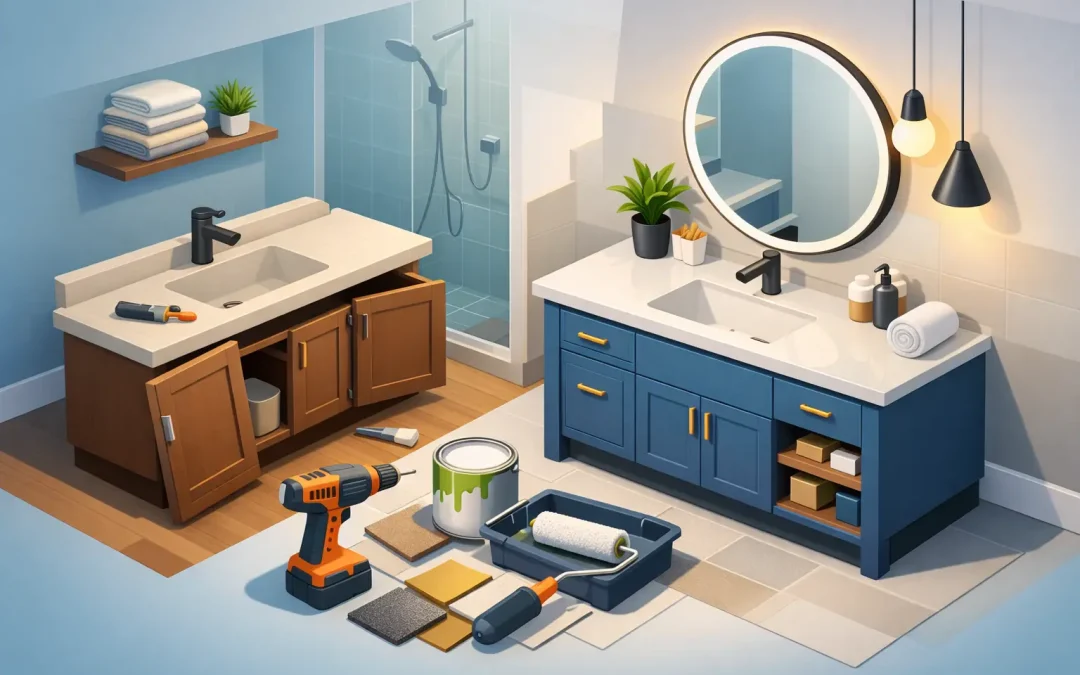
A bathroom vanity can make the whole room feel dated faster than almost anything else. If the cabinet is worn, the top is stained, or the sink area never seems to work well, learning how to update bathroom vanity features can give the space a noticeable lift without always committing to a full remodel.
The right approach depends on what is actually wrong with the vanity. Sometimes a fresh finish, new hardware, and better lighting are enough. Other times, the cabinet box is swollen from moisture, the layout is awkward, or the countertop is beyond saving. That is where it helps to think like a contractor before buying anything.
How to update bathroom vanity without wasting money
The biggest mistake homeowners make is replacing pieces in the wrong order. They buy a new mirror, then realize the vanity height should change. They install a new faucet, then discover the sink openings do not match the top they want. A good update starts with the bones of the project.
First, look at the vanity cabinet itself. Open the doors and check for soft spots, water damage, peeling veneer, and drawer issues. If the cabinet structure is solid, refinishing or refacing may be worth it. If the base is failing, a cosmetic update usually turns into money spent on a short-term fix.
Next, consider how the vanity functions day to day. A beautiful cabinet will not solve a lack of storage, a cramped counter, or a sink placement that makes the room feel tight. If your bathroom is used by a family, practical improvements matter as much as appearance.
Budget matters too. In many homes, the smartest plan is to keep plumbing in the same location. Moving drain and water lines can push a simple vanity update into a much larger project. If your current layout works reasonably well, using that footprint can keep costs under control while still delivering a strong visual improvement.
Decide whether to refresh, rework, or replace
There are really three levels of vanity updates, and each one makes sense in different situations.
Refresh the vanity if the cabinet is solid
If the vanity box is in good condition, a surface-level upgrade can go a long way. Painting or refinishing the cabinet, swapping old knobs and pulls, replacing the faucet, and installing a new mirror can make an older vanity feel current. A new countertop or sink can also transform the look without changing the room layout.
This option works best when the cabinet size is right, the doors and drawers operate well, and there is no major water damage. It is usually the most budget-friendly path, especially for guest bathrooms or powder rooms.
Rework the vanity if function is the real problem
Sometimes the vanity is not falling apart, but it does not serve the room well. Maybe it is too shallow, too low, or missing useful storage. In that case, modifying the setup may be more practical than simply painting it.
That could mean changing drawer configurations, adding side storage, upgrading to a better top, or adjusting surrounding finishes so the vanity feels integrated instead of patched in. This middle-ground approach is often a good fit for homeowners who want a meaningful upgrade without tearing the entire bathroom apart.
Replace the vanity if the old one is at the end of its life
If the cabinet has swollen particleboard, failing joints, repeated moisture issues, or a poor layout, replacement is usually the better investment. The upfront cost is higher, but you avoid spending money on labor and materials that only hide bigger problems.
A new vanity also lets you correct common issues like low counter height, poor drawer access, limited storage, and outdated sink styles. For many older homes, that can improve both everyday use and resale appeal.
The features that make the biggest visual difference
When homeowners ask how to update bathroom vanity areas effectively, they are often trying to avoid replacing everything. That is reasonable, but not every change gives the same result.
The countertop is one of the most noticeable surfaces in the room. If your current top is cultured marble with heavy wear, discoloration, or an outdated shape, replacing it can change the entire feel of the bathroom. Quartz and stone options are popular because they are durable and easier to keep looking clean.
Cabinet color matters just as much. Dark cherry and orange-toned oak can make a bathroom feel older, especially when paired with dated flooring or wall color. A clean painted finish in white, warm gray, soft greige, or muted wood tones often gives the room a more current look. That said, very light colors show dirt and wear more easily in busy family bathrooms, so there is always a trade-off.
Hardware is a smaller detail, but it ties the vanity together. New pulls and knobs can modernize the cabinet quickly, especially if the old hardware is brass, heavily ornate, or visibly worn. The finish should also relate to the faucet, light fixture, and mirror frame so the room feels coordinated.
The sink and faucet combination has a big effect on style and usability. An undermount sink often looks cleaner and is easier to wipe down than an old drop-in model. Faucet height and reach also matter more than many people expect. A faucet that splashes constantly will make even a nice vanity annoying to use.
Do not ignore the wall, mirror, and lighting
A vanity update rarely looks complete if the surrounding elements stay frozen in another decade. The wall above the vanity, the mirror, and the light fixture all contribute to the final result.
A builder-grade plate mirror can make a vanity feel plain even if the cabinet itself is attractive. Replacing it with a framed mirror or a properly sized custom option often adds definition and balance. Size matters here. A mirror that is too small looks like an afterthought, while one that is too large can overpower the vanity.
Lighting is just as important. Many older bathrooms have a single fixture that casts uneven shadows. Better vanity lighting improves the room visually and makes daily tasks easier. If you are already opening walls or changing finishes, this is a good time to address electrical updates.
Paint and backsplash choices should support the vanity, not compete with it. If the countertop has movement or pattern, simpler wall finishes usually work better. If the vanity design is clean and understated, a tile backsplash or more defined wall color can help the space feel finished.
When DIY makes sense and when it does not
Some vanity updates are very manageable for a capable homeowner. Painting cabinetry, changing hardware, swapping mirrors, and even replacing certain faucets can be reasonable DIY tasks if you have the right tools and patience.
The trouble starts when the project involves plumbing adjustments, countertop templating, tile repair, cabinet modifications, or hidden water damage. Bathrooms are small spaces, which means mistakes are harder to hide. A slightly off-center vanity top, a poorly sealed sink edge, or a cabinet installed out of level will be obvious every day.
Moisture is another reason to be careful. If the old vanity has signs of leaks, the problem may go beyond the cabinet itself. Flooring damage, wall issues, or plumbing problems can turn a simple update into repair work. That is often where professional help saves money in the long run.
For homeowners in Modesto, Riverbank, and Turlock, this is especially common in older homes where bathrooms have been updated in stages over the years. What looks like a basic vanity swap can reveal uneven walls, outdated plumbing connections, or flooring transitions that need a cleaner solution.
How to choose an updated vanity that still fits your home
The best vanity update is not always the trendiest one. It should fit the age of the home, the scale of the bathroom, and the level of finish in nearby spaces.
If the rest of the house is warm and traditional, an ultra-modern floating vanity may feel out of place. If your bathroom is small, oversized double-sink cabinets can crowd the room and reduce useful floor space. It depends on how the bathroom is used and what the home already wants to be.
Storage deserves special attention. Open shelving may look good in photos, but many homeowners prefer drawers, concealed storage, and easier cleanup. Likewise, vessel sinks can be stylish, but they raise splash concerns and can make the counter less practical in an everyday bathroom.
A smart vanity update should balance appearance, maintenance, and durability. That usually means choosing materials and layouts you will still like after the first week, not just finishes that catch your eye in a showroom.
If you are unsure where to spend and where to save, start with the pieces that take the most wear. A well-built cabinet, durable top, and quality faucet typically matter more than decorative extras. A dependable contractor can also help you decide whether your existing vanity is worth upgrading or whether replacement is the better value.
A bathroom does not need to be huge to feel better built, better organized, and more current. Sometimes the right vanity update is the project that makes the whole room finally work the way it should.
Recent Comments