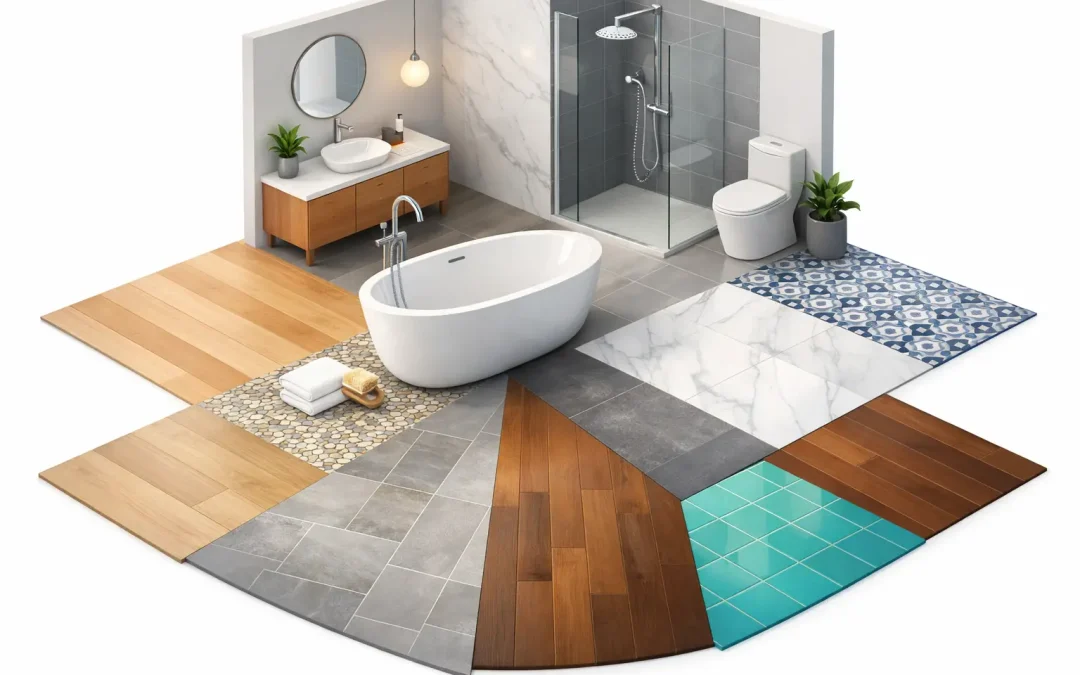
A bathroom floor usually fails in predictable ways. The grout starts staining, the corners stay damp, the surface gets slippery, or the material simply looks tired long before the rest of the room does. That is why choosing the best bathroom flooring options is less about picking a style from a sample board and more about matching the material to how your bathroom is actually used.
For most homeowners, the right choice comes down to four things: water resistance, durability, comfort underfoot, and budget. A busy family bathroom has different demands than a guest bath that gets light use. A primary bathroom may need a warmer, more finished look, while a rental or resale-minded update may put value and easy maintenance first. The good news is that there are several solid options, each with clear strengths and a few trade-offs worth understanding before you commit.
Best bathroom flooring options for real homes
Some flooring materials look great in a showroom but do not hold up the same way in everyday use. In a bathroom, small issues become expensive ones if moisture gets past the surface. That is why proper installation matters just as much as the product itself.
Porcelain tile
Porcelain tile remains one of the strongest choices for bathroom floors, and for good reason. It is highly water-resistant, very durable, and available in a wide range of colors, sizes, and finishes. If you want a floor that can handle years of foot traffic, wet towels, and regular cleaning without much fuss, porcelain is hard to beat.
It also gives homeowners a lot of design flexibility. You can get the look of natural stone, wood, or concrete without taking on the same maintenance concerns. Matte and textured finishes are especially useful in bathrooms because they provide better slip resistance than polished tile.
The main drawback is comfort. Tile can feel cold and hard underfoot, especially in the morning. It also requires quality prep work. If the subfloor is not level or the installation is rushed, you can end up with cracked tile or grout issues later.
Ceramic tile
Ceramic tile is often grouped with porcelain, and it shares many of the same benefits. It is water-resistant, easy to clean, and available at a lower price point in many cases. For homeowners who want a clean, durable finish without pushing the budget too far, ceramic can be a practical middle ground.
That said, ceramic is generally a little less dense and less durable than porcelain. In a standard bathroom, that may not matter much. In a heavily used family space, porcelain usually offers better long-term performance. If you are comparing the two, the decision often comes down to budget, style, and how much wear the room will see.
Luxury vinyl plank and luxury vinyl tile
Luxury vinyl has become one of the most popular bathroom flooring materials because it checks a lot of boxes at once. It is water-resistant or waterproof depending on the product, softer underfoot than tile, and typically more affordable to install. It also comes in convincing wood and stone looks that can modernize an older bathroom without the higher cost of natural materials.
For many homeowners, this is one of the best bathroom flooring options when budget, comfort, and appearance all matter. It is especially useful in homes where you want a warm, updated look without dealing with the colder feel of tile.
The trade-off is that not all vinyl products are equal. A cheaper product may dent more easily, show wear sooner, or have weaker locking edges. Bathrooms also need careful perimeter sealing and sound installation practices to keep moisture from working its way underneath. When done right, luxury vinyl can perform very well. When done poorly, it can fail around seams and edges.
Natural stone
Natural stone has a high-end look that many homeowners love in a primary bathroom. Slate, marble, travertine, and other stone materials add character and visual depth that manufactured products try to imitate. If resale appeal and custom appearance are priorities, stone can make a strong impression.
It also comes with more maintenance. Most stone needs sealing, and some types are more porous than others. Marble, for example, can etch or stain more easily. Travertine has a softer, more rustic look but needs regular care to stay in good condition. Stone can also be cold and more expensive to install.
This option makes the most sense when appearance is the top priority and you are comfortable with the added maintenance. It is not usually the best choice for every bathroom in the house, but it can be the right fit in the right space.
Sheet vinyl
Sheet vinyl does not always get much attention, but it still has practical value. Because it comes in large rolls with fewer seams, it can offer very good moisture protection in a bathroom. It is also one of the more budget-friendly options and feels softer underfoot than tile.
The limitation is appearance and customization. While sheet vinyl has improved over the years, it generally does not deliver the same upscale look as tile or luxury vinyl plank. Repairs can also be more difficult if a section gets damaged. Still, for a straightforward bathroom update where cost control matters, it can be a smart choice.
Engineered wood and solid hardwood
Wood flooring in a bathroom usually raises a red flag, and in most cases that is fair. Solid hardwood is not one of the best bathroom flooring options for spaces with regular moisture exposure. Water can seep into seams, causing swelling, cupping, and long-term damage.
Engineered wood performs better than solid hardwood because it is built in layers and handles humidity changes more consistently. Even so, it is still not ideal for most full bathrooms. In a powder room with light use, it may be workable. In a bathroom with a shower or tub, it is generally a risk unless the room is carefully managed and the homeowner is prepared for more maintenance.
Laminate flooring
Laminate has improved in recent years, and some newer products are marketed as water-resistant. Even so, bathrooms remain a difficult environment for laminate. The surface may resist moisture for a time, but if water gets into the seams or edges, the core can swell.
That does not mean laminate never belongs near a bathroom, but it is usually not the first recommendation for a full bath. If your goal is durability and peace of mind, tile or quality luxury vinyl is typically the safer investment.
How to choose the best bathroom flooring options for your space
The right flooring depends on who uses the bathroom and what matters most in that room. A hall bathroom used by kids needs durability and easy cleaning. A guest bathroom may allow more freedom to prioritize style. A primary bathroom often needs a balance of comfort, appearance, and long-term value.
If moisture protection is your top concern, porcelain tile and quality vinyl products are usually the strongest contenders. If comfort matters just as much as water resistance, luxury vinyl often has the advantage. If you want the most upscale, custom finish, natural stone can deliver that look, but it asks more from your budget and maintenance routine.
It also helps to think beyond the surface itself. Slip resistance matters, especially for children, older adults, or anyone with mobility concerns. A glossy floor may look sharp in photos but feel less secure when wet. Texture, grout lines, transition details, and subfloor condition all affect how the finished floor performs.
In homes around Modesto, Turlock, and Riverbank, it is also smart to consider how bathroom flooring fits the rest of the remodel. A floor should not just survive moisture. It should work with the vanity, wall finishes, lighting, and overall style of the home so the room feels complete rather than pieced together.
Installation matters as much as the material
Even the best product can disappoint if the prep work is poor. Bathrooms need a stable subfloor, proper underlayment where required, and careful attention around toilets, tubs, showers, and wall edges. Those are the points where water problems usually start.
This is where experience pays off. A contractor who understands remodeling can help you compare not just material prices, but long-term value. In many cases, spending a little more on the right flooring and proper installation costs less than repairing water damage or replacing a failed floor a few years later.
If you are weighing style against practicality, the best choice is usually the one that handles daily use without becoming a maintenance problem. A good bathroom floor should look right, feel solid, and hold up to real life. When you choose with that in mind, the room stays easier to maintain and more enjoyable to use every day.
The smartest flooring choice is the one that still feels like a good decision after years of wet feet, busy mornings, and regular cleaning.
Recent Comments