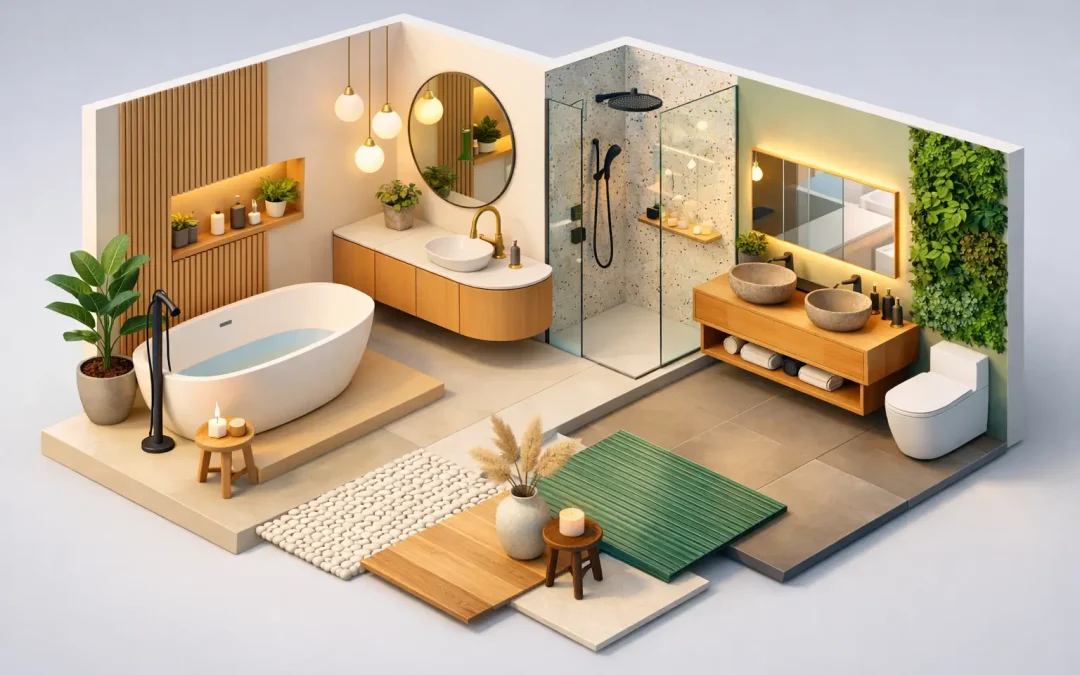
If your bathroom still has builder-grade lighting, a cramped vanity, or tile choices that felt dated five years ago, bathroom design trends 2026 point in a better direction. Homeowners are moving away from cold, showroom-perfect spaces and choosing bathrooms that feel warmer, work harder, and hold up to real daily use. That shift matters if you are planning a remodel and want results that still look right years from now.
Bathroom design trends 2026 are getting more livable
The biggest change is not one single finish or color. It is the overall mindset. Bathrooms are being designed less like display pieces and more like high-use rooms that need comfort, storage, durability, and easy maintenance.
That means softer color palettes, better lighting, smarter layouts, and materials that look refined without being fussy. It also means more homeowners are asking whether a trend will age well before they commit to it. That is a smart question. A bathroom remodel is not a seasonal update. It is an investment in your home and your routine.
Warm colors are replacing the all-white look
For years, bright white bathrooms dominated remodeling projects. They still have a place, especially in smaller rooms where light reflection helps. But in 2026, the cleaner look is being balanced with warmth.
Expect to see more off-whites, creamy neutrals, light taupe, clay tones, muted greens, and natural wood finishes. These colors create a room that feels calmer and less clinical. They also do a better job of hiding the everyday dust, water spots, and wear that show up quickly in a pure white space.
The trade-off is that warm palettes need to be coordinated carefully. Too much beige can make a bathroom feel flat. The better approach is contrast – a warm vanity with lighter countertops, or soft wall color paired with crisp tile and metal accents.
Natural texture matters as much as color
A bathroom can be simple without feeling plain. One of the strongest design moves heading into 2026 is layering texture through materials instead of relying on busy patterns.
Wood-look cabinetry, handmade-style tile, matte finishes, fluted vanity details, and stone-inspired surfaces all help create visual interest. This works especially well in primary bathrooms where homeowners want a more settled, custom look.
Texture also helps a remodel feel more expensive without requiring luxury-level square footage. A small hall bathroom with thoughtful tile, a solid vanity, and balanced lighting often feels better than a large room filled with trendy but short-lived details.
Statement lighting is becoming standard
Lighting used to be treated like an afterthought in bathroom remodels. That is changing fast. In 2026, lighting is part of the design from the beginning, not just a fixture selected at the end.
Layered lighting is the goal. Overhead light still matters, but task lighting at the mirror is just as important. Sconces, vertical vanity lights, and backlit mirrors are popular because they improve visibility and make the room feel more finished.
This trend is not only about style. It is also practical. Poor lighting can make shaving, makeup, and daily routines frustrating. Better lighting improves the room immediately, even if the footprint stays the same.
The only caution is scale. Oversized fixtures can overpower smaller bathrooms, while underpowered lighting leaves the room dull. A good remodel balances appearance with actual function.
Larger showers continue to lead bathroom remodels
Tub-shower combos are still useful in many homes, especially where resale or family use matters. But when homeowners have the space, larger walk-in showers continue to be one of the most requested upgrades.
In bathroom design trends 2026, these showers are cleaner and simpler than earlier spa-inspired versions. Frameless or minimal-frame glass, large-format tile, recessed niches, linear drains, and low-threshold entries are all common. The look is open, but the practical appeal is just as strong. Larger showers are easier to use, easier to clean when designed well, and often a better fit for aging in place.
That said, not every bathroom should lose its tub. In many family homes, keeping at least one bathtub is the right move. Good design is not about forcing the same layout into every house. It depends on who uses the space now and what will matter later.
Vanities are doing more work
One reason bathrooms feel cluttered is simple – many older vanities were never designed for the amount of storage people actually need. That is why vanities in 2026 are getting more tailored.
Homeowners want drawers instead of deep cabinets where items disappear. They want built-in organizers, electrical access inside drawers, and enough counter space to use the room comfortably. Floating vanities remain popular for a clean modern look, but furniture-style vanities in stained wood tones are also gaining ground because they add warmth and character.
Custom or semi-custom vanity design can make a major difference in a modest-sized bathroom. A few inches of better planning around drawer depth, sink placement, or toe-kick clearance often improves the room more than a decorative upgrade ever could.
Tile is getting simpler, but not boring
Tile trends are shifting away from overdesigned feature walls and high-contrast patterns used everywhere at once. The 2026 approach is more selective.
Large-format tile continues to grow because it creates a cleaner look with fewer grout lines. That can help a bathroom feel larger and cut down on maintenance. At the same time, smaller tile still has a place in shower floors, niches, and accent areas where scale and slip resistance matter.
What is changing is how tile is combined. Rather than mixing several bold choices in one room, many homeowners are choosing one strong tile moment and letting the rest of the materials support it. That usually creates a bathroom that feels more custom and less crowded.
Black finishes are cooling off a bit
Matte black fixtures had a strong run, and they are not disappearing. But they are no longer the default choice for every remodel. In 2026, warmer metals and softer finishes are taking more of the spotlight.
Brushed nickel, champagne bronze, and muted brass finishes are showing up in bathrooms that want a timeless look with a little more warmth. These finishes pair especially well with wood vanities and neutral tile.
This is one area where maintenance should factor into the decision. Some darker or more polished finishes show water spots and fingerprints more easily. The best choice is not just what looks good in a photo. It is what fits your household and how much upkeep you want.
Wellness features are staying, but getting practical
The luxury-bathroom trend is maturing. Homeowners still want comfort, but they are becoming more selective about where they spend money.
Instead of packing the room with every premium upgrade, many are choosing one or two features that truly improve daily life. That might mean a better exhaust fan, a heated floor in a cold bathroom, a handheld shower addition, or a built-in bench. These upgrades can make the room more comfortable without pushing the project into unnecessary cost.
The best wellness feature is often the one that solves a real problem. If your bathroom is always damp, ventilation matters more than a decorative upgrade. If storage is limited, a custom linen cabinet may improve the room more than a trendy fixture.
Sustainable choices are becoming more normal
Sustainability in bathroom remodeling is moving out of the specialty category and into standard planning. That does not mean homeowners are sacrificing style. It means they are paying closer attention to water use, product lifespan, and materials that can handle years of daily wear.
Water-saving faucets and toilets, LED lighting, durable surfaces, and quality installation all support a bathroom that performs better over time. This matters in places like Modesto and across the Central Valley, where efficient water use is not just a nice idea. It is a practical consideration for long-term homeownership.
The key here is balance. The cheapest product is not always the most efficient choice if it wears out early. Good value comes from selecting materials and fixtures that hold up and do their job well.
The best bathroom trends for 2026 are the ones that fit your house
A trend only works when it matches the home, the budget, and the people using the space. A sleek floating vanity may look great in one bathroom and feel out of place in another. A freestanding tub may be beautiful, but not if it takes away storage or walking room.
That is where experience matters. A well-planned remodel should account for layout, moisture control, lighting, tile transitions, storage needs, and the small details that homeowners notice every day once the project is finished. Design should improve function, not compete with it.
For most homeowners, the smartest path is not chasing every new look. It is choosing a few current ideas that make the room feel updated, then building around timeless materials and sound construction. That is what gives you a bathroom that still feels right after the trend cycle moves on.
If you are thinking about a remodel, use bathroom design trends 2026 as a filter, not a rulebook. The right bathroom should look current, feel comfortable, and make daily life easier every time you walk in.
Recent Comments