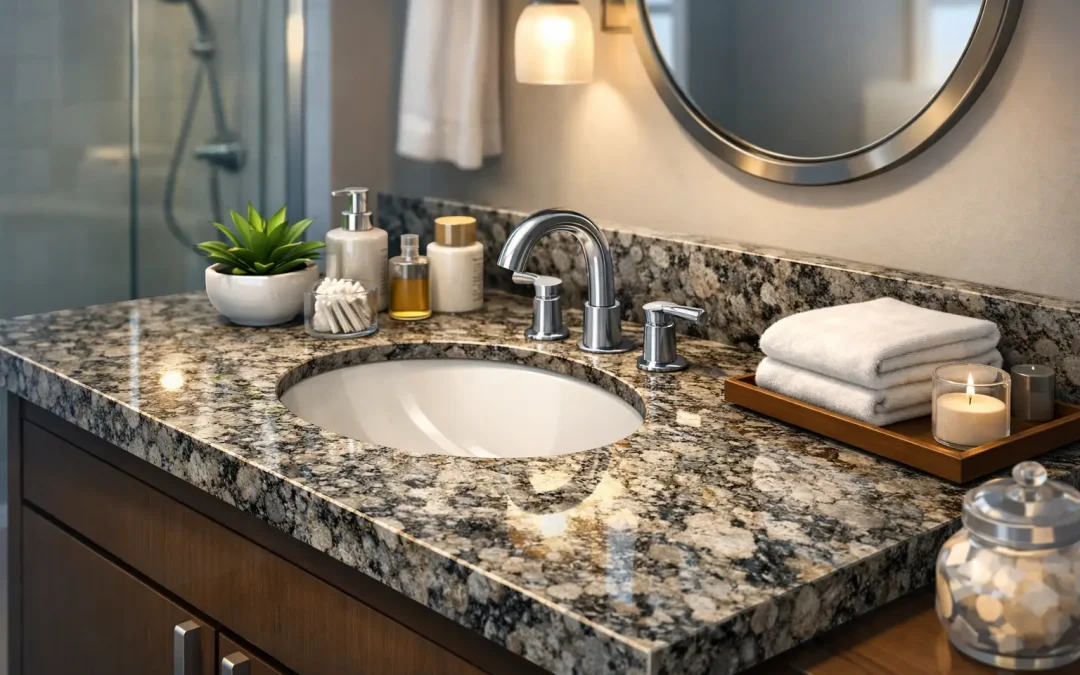
A bathroom counter has to do more than look nice for the first week after installation. It has to handle toothpaste, soap, makeup, hair tools, water around the sink, and the daily wear that comes with a busy household. If you’re asking is granite good for bathroom counters, the short answer is yes – for many homes, it is. But like most remodeling decisions, the better answer is that it depends on your budget, your style, and how much maintenance you want to take on.
Granite remains a popular choice because it gives a bathroom a solid, upgraded feel without looking trendy for a year and dated the next. It is durable, attractive, and available in a wide range of colors and movement patterns. At the same time, it is not the lowest-maintenance option on the market, and it is not automatically the best fit for every bathroom.
Is granite good for bathroom counters in real life?
In real-world use, granite performs very well in bathrooms. It stands up to normal household wear, resists scratching better than many other materials, and handles heat from styling tools better than laminate or some solid-surface products. For homeowners remodeling an older bathroom, granite often provides that noticeable jump in quality that makes the whole room feel more finished.
Bathrooms are also generally easier on stone than kitchens. You are not chopping food directly on the surface, sliding heavy pots around, or exposing the counter to acidic cooking ingredients every day. That lighter duty matters. A granite vanity top in a guest bath may look excellent for years with very little visible wear.
Where homeowners sometimes get tripped up is assuming granite is maintenance-free. It is durable, but it is still a natural stone. Some slabs are denser than others, and most benefit from sealing to help protect against moisture and staining. In a bathroom, that usually is not a major burden, but it should still be part of the decision.
Why homeowners choose granite
One of granite’s biggest strengths is durability. A properly installed granite countertop resists everyday scratches and chips better than many lower-cost materials. That makes it a strong option for family bathrooms where counters take a beating from toothbrush holders, grooming tools, and general traffic.
Appearance is another major reason granite stays in demand. Because it is a natural material, each slab has its own pattern, color variation, and texture. That gives the bathroom a more custom look than manufactured tops with repeated patterns. If you want a vanity that feels substantial and adds resale appeal, granite usually checks that box.
It also works well across different design styles. A lighter granite can suit a bright, clean bathroom with painted cabinetry, while a darker slab can pair nicely with rich wood tones or a more traditional look. For many remodels, granite lands in the middle ground homeowners want – more upscale than basic options, but still familiar and practical.
The trade-offs to know before you choose it
Granite is a strong material, but it is not perfect. The biggest drawback for some homeowners is maintenance. Compared with quartz, granite typically needs more attention over time because it should be sealed periodically. If you want a countertop you never have to think about, granite may not be your first choice.
Staining can also be a concern if the stone is not sealed well or if spills are left sitting. In a bathroom, this could mean makeup, nail products, hair dye, or certain soaps and lotions. The risk is usually manageable, but it is real.
Another factor is consistency. Since granite is natural, the slab you fall in love with in the showroom may have variations that need to be worked around during fabrication. That is not a flaw – it is part of the appeal – but homeowners who want a perfectly uniform look sometimes prefer engineered materials instead.
Cost matters too. Granite is usually not the cheapest bathroom countertop option. Depending on the slab, edge profile, sink cutout, and installation complexity, the price can move quickly. For a primary bathroom where you want a lasting upgrade, that can be money well spent. For a simple hall bath refresh on a tight budget, it may feel like more material than the space really needs.
How granite compares to other bathroom countertop options
Quartz is the comparison homeowners ask about most often. Quartz is engineered, non-porous, and generally easier to maintain. It does not need sealing, and it offers a more consistent appearance. If low maintenance is your top priority, quartz often wins.
Granite, though, has an edge for homeowners who prefer the natural character of real stone. No printed pattern can fully recreate the depth and variation of a good granite slab. Some people also like that granite has been a trusted countertop material for years and does not feel like a passing design choice.
Compared with laminate, granite is a clear step up in durability, appearance, and long-term value. Laminate can still make sense for a budget-conscious project, but it does not deliver the same lifespan or premium finish.
Solid-surface counters are easy to clean and can be a practical option, but they usually do not offer the same visual impact or hardness as granite. Tile counters can work in some bathrooms, though grout lines add maintenance and create a less streamlined look.
Is granite a good fit for every bathroom?
Not always. In a powder room or guest bath, granite can be an excellent way to add style without much risk of heavy wear. In a primary bathroom, it also performs well, especially when installed and sealed correctly. The key is making sure the slab and finish match how the space is used.
For example, a busy family bathroom used by kids may benefit from a darker or more patterned granite that hides water spots and daily mess better than a very light, uniform slab. A rarely used guest bath gives you more freedom to prioritize appearance over practicality.
Bathroom size matters too. In a small vanity area, a bold granite pattern can either create a custom designer look or make the space feel visually busy. In larger bathrooms with double vanities, granite often has room to show off more of its natural movement.
What to expect for upkeep
Granite maintenance is straightforward, but it is not something to ignore. Daily cleaning is simple – use a soft cloth and a cleaner made for natural stone, or mild soap and water. Harsh chemicals can dull the finish or affect the sealer over time.
The bigger maintenance item is sealing. How often granite needs sealing depends on the specific stone and how heavily the bathroom is used. Some tops may go years before needing attention, while others benefit from more regular care. A good installer should explain what your slab needs and how to tell when it is time.
It also helps to wipe up standing water, makeup spills, and hair products rather than letting them sit. That is not because granite is fragile. It is because even durable materials last longer and look better when treated properly.
Installation makes a big difference
A lot of whether granite works well comes down to installation quality. A poorly supported top, bad seam placement, sloppy sink cutouts, or improper sealing can create problems that homeowners blame on the material. In reality, the workmanship is often the issue.
That is why bathroom countertops are not just about picking a slab. You also want accurate measurements, proper fabrication, and clean installation around sinks, backsplashes, and cabinetry. An experienced contractor can also help you choose a slab that works with your cabinet color, tile, lighting, and overall budget instead of just selling you on the most dramatic stone in the yard.
For homeowners in Modesto and the surrounding area, this is especially important in older homes where walls, cabinets, and floors are not always perfectly square. Custom fitting matters.
So, is granite good for bathroom counters?
Yes, granite is good for bathroom counters if you want a durable, attractive natural stone surface and you are comfortable with basic maintenance. It offers strong day-to-day performance, solid resale appeal, and a more custom look than many entry-level materials.
It may not be the best choice if you want zero upkeep, need the lowest possible price point, or prefer a perfectly consistent pattern. In those cases, quartz or another material may fit better.
The right countertop is the one that matches how you actually live. If you want a bathroom that feels upgraded, holds up well, and brings real material value to the space, granite is still a very solid choice. The best next step is to look at actual samples, compare them against your cabinet and tile selections, and choose the option that makes sense for your home rather than just following what is popular.
Recent Comments