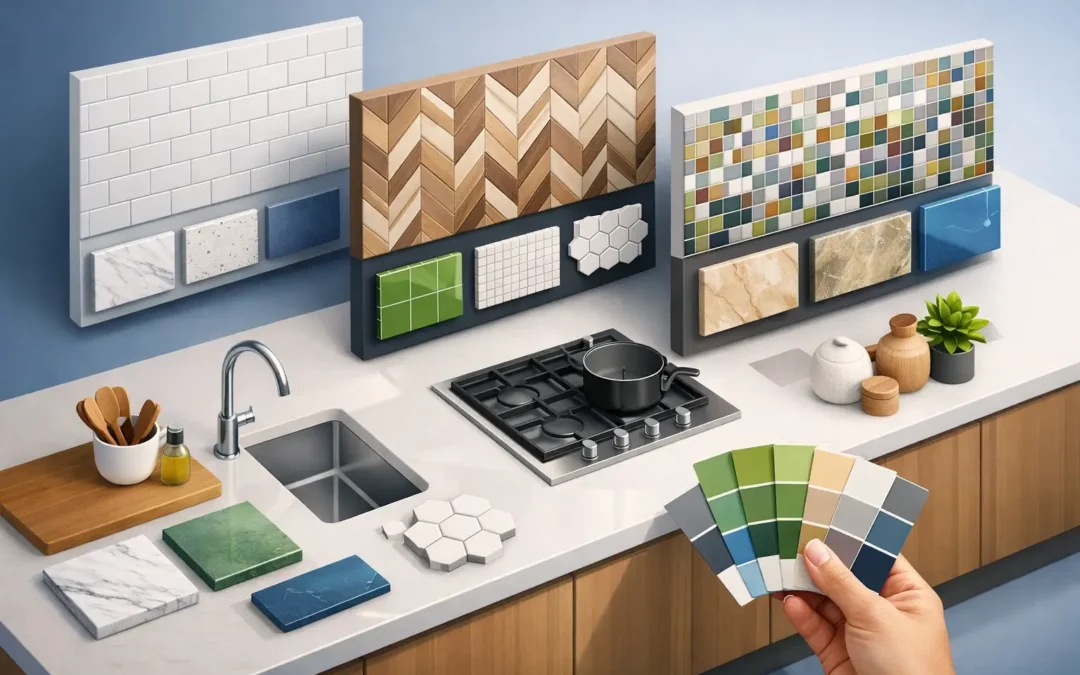
A backsplash can make a kitchen look finished, but it also has a job to do. It protects the wall behind your sink and range, stands up to splashes and heat, and ties together your cabinets, countertops, flooring, and paint. If you are wondering how to choose kitchen backsplash without ending up with something trendy that feels dated in a year, the best place to start is with the parts of your kitchen that are hardest to change.
Start with the fixed finishes
Most homeowners choose backsplash too early. They see a tile they love, then try to force the rest of the kitchen around it. In most remodels, the smarter order is cabinets first, countertops second, backsplash third.
Cabinets and counters usually take the biggest share of the budget and have the strongest visual impact. If your cabinets are warm white and your countertops have creamy veining, a bright white subway tile may feel too sharp. If your cabinets are a cool gray and your counters have crisp white and charcoal tones, a beige stone backsplash can look out of place.
This is where good planning saves money. A backsplash should support the kitchen, not compete with it. If your countertop has a lot of movement or bold pattern, a simpler tile often works better. If your countertop is more understated, the backsplash can carry a little more personality.
How to choose kitchen backsplash by material
Material matters just as much as color. Homeowners often focus on appearance first, but maintenance and durability should carry equal weight, especially in a busy family kitchen.
Ceramic and porcelain tile are the most practical choices for many homes. They are durable, widely available, and easier on the budget than some natural materials. Porcelain is especially strong and works well if you want a clean, low-maintenance surface.
Glass tile can brighten a kitchen and reflect light nicely, which helps in smaller or darker spaces. The trade-off is that it can show smudges, and installation needs to be precise because imperfections are easier to spot.
Natural stone offers warmth and character, but it usually needs more upkeep. Some stones are porous and may require sealing to help resist stains. If you cook often and want easy cleanup, that added maintenance may not be worth it.
Slab backsplashes, often made from the same material as the countertop, have become more popular for good reason. They create a clean, custom look with fewer grout lines to maintain. They also tend to cost more upfront, so they make the most sense when the budget allows and the design calls for a more streamlined finish.
Match the backsplash to how you use the kitchen
A kitchen that gets used hard every day should be designed differently than a kitchen that is mostly for light cooking and entertaining. That is one of the biggest factors in how to choose kitchen backsplash well.
If you cook often, wipe surfaces down daily, and have kids in and out of the kitchen, you will probably be happier with a tile that has a smooth surface and grout that is easy to keep clean. Intricate mosaics can look beautiful, but all those grout joints take more effort over time.
Behind a range, grease is usually the real test. Textured tile may add depth, but it can also trap cooking residue. In many homes, a flatter tile or slab backsplash makes maintenance much easier.
If your kitchen sees lighter use, you may have more flexibility to choose a finish based mainly on appearance. Even then, it is smart to think a few years ahead. The backsplash you love on day one should still feel practical after hundreds of meals and cleanups.
Color and pattern should support the whole room
Backsplash color does not have to match everything exactly, but it should make sense with the room as a whole. Look at your cabinet tone, counter pattern, wall paint, flooring, and hardware together. Then decide whether the backsplash should blend in or stand out.
A blended backsplash creates a calm, timeless look. This usually means staying within the same color family as the cabinets or countertop. It is a strong choice if you want the kitchen to feel clean and classic, or if resale value is top of mind.
A contrasting backsplash brings more visual interest. Dark tile with light cabinets, or a patterned tile in an otherwise simple kitchen, can work well when done carefully. The key is restraint. If your counters are busy, your backsplash should usually be quieter. If your cabinets are bold, the backsplash often looks best when it supports rather than competes.
In many Central Valley homes, natural light can be strong for much of the year. That affects how tile color reads in real life. A sample that looks soft gray in the store may feel much brighter or cooler in your kitchen. Always view samples in your own space before making a final decision.
Choose the right scale and layout
Tile size changes the feel of a kitchen more than many people expect. Small tile creates texture and detail, while larger tile feels quieter and more modern. Neither is automatically better. It depends on the size of the kitchen and the amount of visual movement already in the room.
Subway tile remains popular because it is flexible, affordable, and easy to fit into many styles. But layout matters. A standard brick pattern feels classic. A stacked pattern looks more contemporary. Herringbone adds movement and can make a simple tile feel more custom, though it usually increases labor cost.
Larger rectangular or square tiles reduce grout lines and can make cleanup easier. They also suit kitchens with a more streamlined design. If your kitchen is small, larger tile can help it feel less busy.
Mosaic tile works best when you want texture or a focal point, but it should be used with intention. In some kitchens, a mosaic insert behind the range is enough. Covering every wall with a highly detailed pattern can overwhelm the space.
Don’t overlook grout
Grout is one of the most overlooked parts of backsplash selection, and it has a major effect on both appearance and maintenance. A high-contrast grout can emphasize the tile pattern and give the backsplash a more graphic look. Matching grout creates a softer, more unified appearance.
There is no universal right answer here. White grout with white tile looks crisp at first, but it may require more upkeep to stay that way. A medium gray grout is often more forgiving in a working kitchen. If you want the tile shape to stand out, contrast helps. If you want a cleaner visual field, closer color matching usually works better.
This is also a place where professional installation matters. Even beautiful tile can look off if spacing is inconsistent or lines wander. Good craftsmanship shows up in the details.
Budget for the full installation, not just the tile
One of the most common mistakes homeowners make is choosing backsplash based on tile price alone. The material is only part of the total cost. Layout complexity, tile size, edge details, wall condition, cuts around outlets, and prep work all affect the final price.
A simple subway tile may cost less to install than an intricate mosaic, even if the material itself is not dramatically different. A slab backsplash may carry a higher material cost but lower maintenance over time. The right value is not always the cheapest option on paper.
If you are updating an older kitchen, wall prep can also affect the project. Uneven drywall, old adhesive, or previous tile removal may need repair before new material goes in. It is better to account for that early than be surprised once work starts.
When timeless beats trendy
Trends are not automatically bad. They can bring fresh energy to a kitchen. But backsplashes are not as easy to swap out as paint or hardware, so it makes sense to be careful with highly specific looks.
If you plan to stay in your home for a long time, choose what you genuinely enjoy, but make sure it still fits the overall style of the house. If resale matters in the near future, lean toward materials and colors with broader appeal. Classic shapes, balanced color palettes, and quality installation usually age better than bold trends that depend on a very specific moment.
For many homeowners, the best backsplash sits in that middle ground. It has enough character to feel current, but not so much that it will look tired a few years down the road.
A practical way to make the final choice
If you feel stuck, narrow your options to two or three and compare them next to your cabinet door, countertop sample, flooring, and paint color. Look at them in morning light and evening light. Think about who cooks in the kitchen, how often you clean, and whether you want the backsplash to be a feature or a quiet backdrop.
That process usually makes the right choice clearer. In remodeling work, the best results rarely come from picking the boldest material in the showroom. They come from choosing finishes that fit the home, the budget, and the way the kitchen is actually used.
A well-chosen backsplash should still feel right after the excitement of the remodel wears off. If it protects the walls, complements the room, and makes daily use easier, you chose well.
Recent Comments