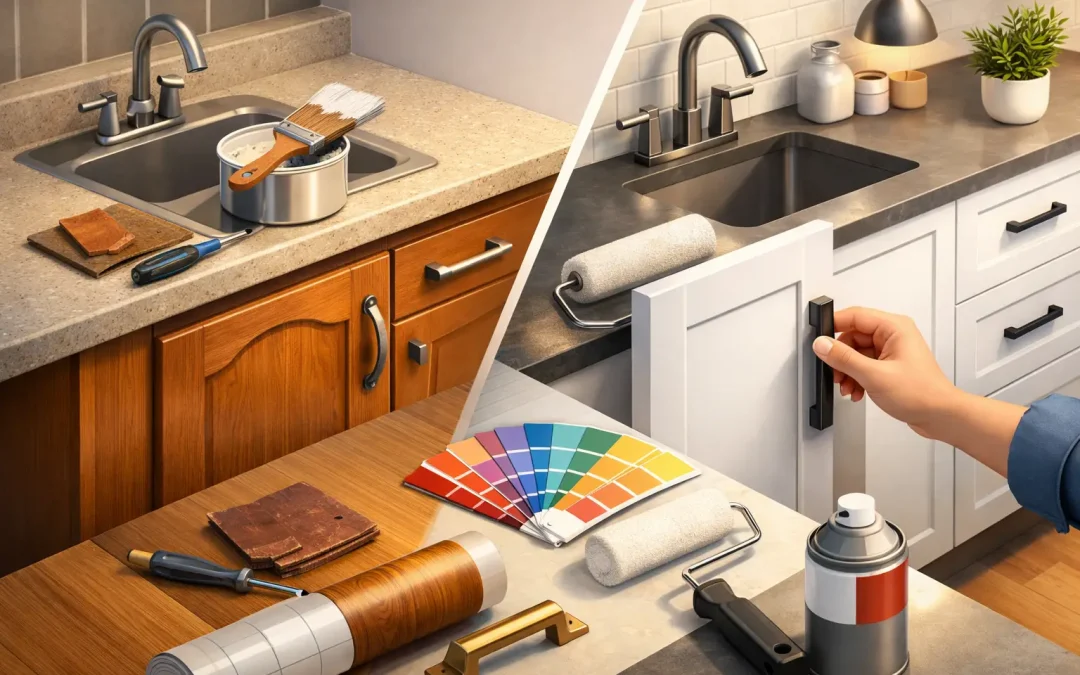
If your kitchen cabinets still work well but look tired, you do not always need a full tear-out to get a better kitchen. Homeowners often ask how to update old cabinets without replacing them, especially when the cabinet boxes are solid and the layout still makes sense. In many homes, the best value comes from improving what you already have rather than paying for a complete cabinet replacement.
That approach only works if you are honest about the starting point. Some older cabinets are great candidates for an update. Others are worn out, damaged by moisture, or built so poorly that fresh paint and new hardware will only hide the problem for a short time. The goal is not just to make them look newer. It is to make them look better and hold up.
How to update old cabinets starts with the cabinet condition
Before picking paint colors or shopping for pulls, check the basics. Open every door and drawer. Look for loose hinges, sagging shelves, swollen particleboard, water damage under the sink, and drawer boxes that no longer slide well. If the face frames and cabinet boxes are still sturdy, you are in good shape for an update.
This is where experience matters. A cabinet can look dated and still be worth saving. It can also look decent from the front and be failing underneath. Solid wood or plywood cabinets usually give you more options. Thin thermofoil, heavily damaged laminate, or cabinets with structural problems may push you closer to replacement, at least in part.
Paint is often the biggest visual upgrade
For many kitchens, paint does the most work for the least cost. Oak cabinets with orange tones, dark stained finishes from the 1990s, and worn white cabinets can all be transformed with proper prep and the right coating system. The keyword there is proper.
A rushed cabinet paint job tends to show every shortcut. Grease, hand oils, and cooking residue keep paint from bonding well. Doors need to be cleaned, sanded or deglossed, repaired where needed, primed correctly, and sprayed or finished carefully for a smooth, durable result. If you skip steps, you usually get chipping around knobs, visible brush marks, and a finish that starts failing long before it should.
Color choice matters too. White is still popular because it brightens the room and works with most counters and backsplashes. But it is not the only answer. Warm greige, soft taupe, muted green, and natural wood tones paired with painted lowers can feel more current while hiding everyday wear better than bright white. In busy family kitchens, that trade-off is worth considering.
New doors can change the whole look
If the cabinet boxes are solid but the door style feels dated, replacing only the doors and drawer fronts can make a dramatic difference. This is often a smart middle ground between painting and full replacement. You keep the existing layout and most of the cabinet structure, but the visible style changes substantially.
Raised-panel doors, arched profiles, and heavy detailing can make a kitchen feel older even when the finish is fresh. Swapping them for shaker-style or simple slab fronts usually creates a cleaner, more updated appearance. In some cases, homeowners want to keep the cabinet boxes but add soft-close hinges and new drawer glides at the same time. That combination improves both looks and daily function.
The main thing to watch is alignment and fit. New doors need to be sized correctly, and the old cabinet frames must be square enough to support a clean finished look. If they are not, the project can become more involved than it first appears.
Hardware is a small change that people notice immediately
Replacing knobs, pulls, and hinges is one of the fastest ways to refresh cabinets. It is also one of the easiest places to waste money if the rest of the cabinet finish is too far gone. Hardware works best as part of a broader update, not as a cover-up.
That said, it has real impact. Old brass knobs, dated wood pulls, or mismatched replacements can make cabinets feel older than they are. Simple black, brushed nickel, or warm metallic hardware can bring the cabinetry in line with the rest of the kitchen. Longer bar pulls tend to feel more current, while smaller knobs can look more traditional.
There is an it-depends factor here. If your cabinet doors only have one small knob hole, switching to a longer pull may require drilling new holes and filling old ones. That is not a problem when you are repainting doors, but it matters if you want to preserve the existing finish.
Add trim, panels, or molding for a more custom look
A lot of older cabinets look basic because they were installed as standard builder-grade boxes with minimal finish detail. That does not mean they have to stay that way. Adding crown molding, light rail, finished end panels, or toe-kick trim can make stock cabinets look more built-in and intentional.
This is especially useful when the cabinet layout is fine, but the kitchen feels plain. Trim details can visually connect the cabinets to the ceiling, clean up exposed cabinet ends, and give the room a more finished appearance. Even small millwork improvements can make a kitchen feel more custom.
The key is proportion. Not every kitchen needs heavy crown or decorative trim. In homes with lower ceilings or simpler architecture, cleaner lines often look better. Good cabinet updates should fit the house, not fight it.
Don’t ignore what happens inside the cabinets
Homeowners usually focus on what they see from the room, but interior improvements can make old cabinets feel much newer to use. If drawers stick, shelves waste space, or deep base cabinets are hard to reach, updating the storage function can be just as valuable as changing the finish.
Soft-close hinges, new drawer slides, pull-out trays, trash roll-outs, spice storage, and better shelf organization all improve the day-to-day experience. If you plan to stay in your home for years, these upgrades often matter more than a trend-driven color choice.
This is where a practical remodeling mindset helps. Sometimes the best cabinet update is not dramatic from across the room. It is the one that makes cooking, cleaning, and storage easier every day.
When countertops, backsplash, and cabinets need to work together
One common mistake is updating cabinets without thinking about the surfaces around them. A cabinet color that looks great on a sample can clash with old granite, busy tile, or warm flooring once it is installed. If you are putting money into cabinet upgrades, step back and look at the whole kitchen.
You do not always need to renovate everything at once. But the finishes should make sense together. Painted cabinets may need a new backsplash to fully look updated. New hardware may call attention to worn counters. In other kitchens, keeping the cabinets and replacing only the counters and backsplash gives the room the refresh it needed.
This is why planning matters more than impulse changes. A budget-conscious project still benefits from a clear sequence and a design direction.
How to update old cabinets and know when to stop patching
Not every cabinet should be saved. If boxes are badly warped, water damaged, moldy, or poorly laid out, an update can turn into money spent on a short-term fix. The same goes for kitchens where the cabinet footprint no longer works for the way the family uses the space.
Sometimes a partial replacement is the right answer. Maybe most of the kitchen can be refinished, but the sink base needs to be rebuilt. Maybe the perimeter cabinets stay, but the island gets replaced. A good contractor should be able to guide that conversation honestly instead of pushing the biggest project every time.
For homeowners in older Modesto-area homes, this comes up often. You may have solid cabinets worth restoring, or you may have years of wear that justify a bigger change. The right decision depends on condition, budget, and how long you plan to stay in the home.
Get the result, not just the cosmetic change
If you are thinking about how to update old cabinets, start with the outcome you want. Do you want a brighter kitchen, better storage, improved resale appeal, or simply cabinets that no longer make the whole room feel dated? Once that is clear, the right level of work becomes easier to choose.
Sometimes the answer is a careful paint and hardware update. Sometimes it is new doors, trim, and better interior function. And sometimes the smartest investment is admitting the cabinets have reached the end of the road. A well-planned cabinet update should look right, work better, and make the rest of your home feel more cared for. That is usually money well spent.
Recent Comments