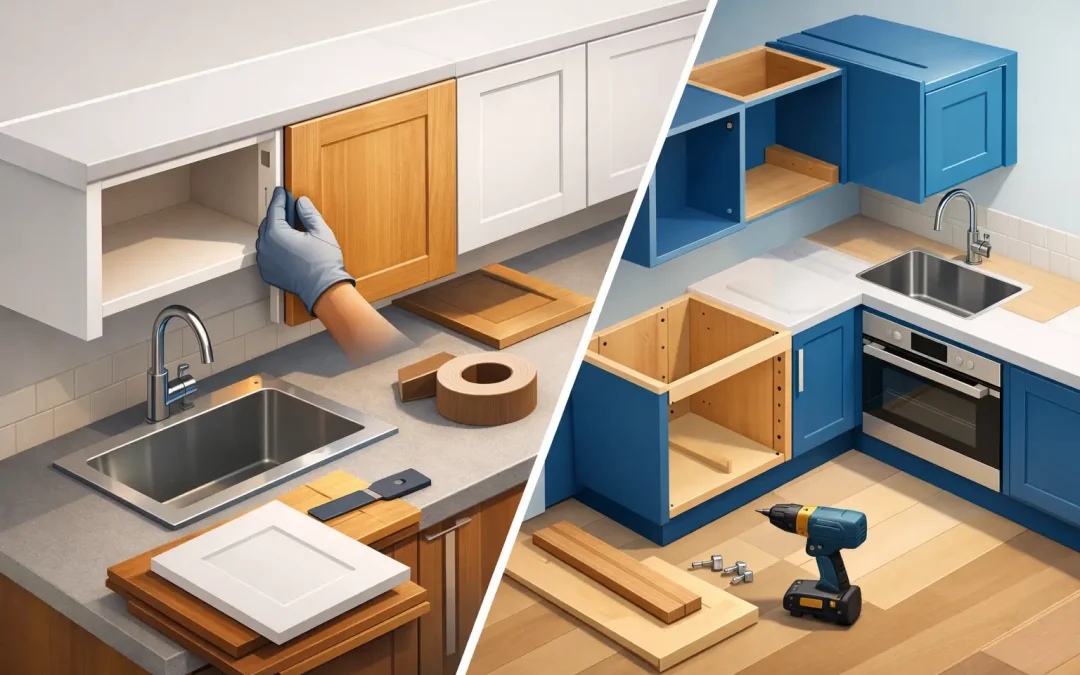
A kitchen can feel worn out long before it actually stops working. If your cabinets are dated, scratched, or simply no longer fit the look you want, the big question usually comes down to refacing cabinets vs replacing. Both can improve the space, but they solve different problems and come with very different costs, timelines, and results.
For many homeowners, the right choice is not about picking the cheaper option or the bigger project. It is about understanding what you have now, what you want the kitchen to do better, and how long you plan to stay in the home. A good cabinet decision should improve the way your kitchen looks and works without pushing you into unnecessary expense.
Refacing cabinets vs replacing: the basic difference
Cabinet refacing keeps your existing cabinet boxes in place and updates the visible surfaces. That usually means new doors, new drawer fronts, new veneer or laminate on exposed cabinet faces, and often new hardware. The cabinet layout stays the same, but the appearance changes significantly.
Replacing cabinets means removing the old cabinetry and installing new cabinets entirely. That opens the door to changing the layout, adjusting cabinet sizes, adding storage features, improving function, and correcting old installation issues. It is a more involved remodel, but it gives you more freedom.
At a glance, refacing is mostly a cosmetic upgrade. Replacing is a structural and functional reset. That difference matters more than most people realize.
When refacing makes the most sense
Refacing is a strong option when your existing cabinet boxes are still in good shape. If they are sturdy, level, and properly installed, there may be no reason to tear them out just because the doors look outdated. In that situation, refacing can give the kitchen a fresh, cleaner style without the disruption of a full cabinet replacement.
This approach tends to work well for homeowners who like their current kitchen layout. If the sink, stove, refrigerator, and traffic flow already work for your household, keeping the cabinet footprint in place can save money while still making the room feel updated.
Refacing can also make sense if your goals are mostly visual. Maybe you want to move from oak to a painted shaker look, replace worn drawer fronts, or give the kitchen a brighter and more current finish. If the bones are good, refacing can deliver a major visual improvement.
The biggest advantage is usually cost control. Because demolition and full cabinet installation are reduced, refacing is often more budget-friendly than replacement. It can also shorten the project timeline, which matters if the kitchen is heavily used every day.
When replacing cabinets is the better investment
There are times when refacing simply does not solve the real problem. If cabinet boxes are warped, water-damaged, poorly built, or showing years of wear inside and out, putting new doors on them may only delay a bigger repair. In those cases, replacement is usually the smarter long-term move.
Replacing cabinets also makes sense when the layout is the issue. If you need more storage, better drawer access, taller wall cabinets, a larger island, or improved spacing around appliances, refacing will not get you there. Keeping the same boxes means keeping the same limitations.
Older kitchens often have storage that does not match how families use the space now. Deep blind corners, wasted vertical space, narrow drawers, and awkward cabinet openings can make everyday cooking more frustrating than it needs to be. New cabinets give you the chance to correct that with better organization, more practical sizing, and custom details that fit your home.
For homeowners planning a larger kitchen remodel, cabinet replacement usually fits better with the scope of work. If you are changing countertops, moving plumbing or electrical, updating flooring, or opening up part of the room, replacing cabinets often provides a cleaner and more cohesive result.
Cost: where the real differences show up
In most cases, refacing costs less than replacing, but the gap depends on materials, kitchen size, and how much additional work is involved. A straightforward reface with quality doors and hardware may offer solid value if the cabinet boxes are worth saving.
Replacement costs more because it includes demolition, disposal, new cabinetry, installation, and sometimes related updates to countertops, backsplash, flooring, or wall repair. If the project also involves layout changes, the budget can rise further.
That said, cheaper upfront does not always mean better value. If your existing cabinets have hidden issues or the kitchen still will not function the way you need after refacing, you may end up paying twice – once for the cosmetic improvement and later for the full replacement.
A contractor who looks beyond the cabinet doors and checks the actual condition of the boxes can help you avoid that mistake.
Appearance matters, but so does function
This is where many homeowners get stuck. Refacing can absolutely transform the appearance of a kitchen. New door profiles, updated finishes, and modern hardware can make the room feel cleaner, brighter, and far more current.
But appearance and function are not always the same thing. If your cabinet doors look old but your storage works well, refacing may be the perfect answer. If your kitchen looks tired because it is hard to use, replacing cabinets may be the only option that truly fixes the problem.
A kitchen should support daily life. That means drawers where you need them, cabinet heights that make sense, accessible corners, and enough storage for the way your family cooks and lives. If the current setup falls short, new surfaces alone may not give you the result you want.
Refacing cabinets vs replacing for resale value
If resale is part of your thinking, both options can help, but the value depends on the condition of the rest of the kitchen and the expectations of local buyers.
Refacing can improve first impressions and make the kitchen feel more updated without overbuilding for the neighborhood. That can be a smart move if the existing layout is acceptable and the rest of the room is in decent shape.
Replacement tends to offer more value when the old cabinets are visibly worn, the layout is dated, or the kitchen feels functionally behind the market. Buyers notice storage, workflow, and quality. A kitchen that not only looks new but works better often has stronger appeal.
In homes around Modesto and the Central Valley, practical upgrades usually matter more than flashy ones. Buyers want kitchens that feel clean, useful, and well built. Whether refacing or replacing gives you that result depends on the starting point.
How to decide which option is right for your kitchen
The best decision usually comes down to four questions. First, are your cabinet boxes structurally sound? Second, do you like the current layout? Third, is your goal mainly cosmetic or do you also want better function? Fourth, how long do you want this solution to last?
If the boxes are solid, the layout works, and the main goal is a fresh look, refacing is often a practical and cost-conscious choice. If the cabinets are failing, the layout is inefficient, or you want a kitchen that works differently than it does now, replacement is usually worth the investment.
It also helps to think beyond the cabinets themselves. If countertops, backsplash, lighting, or flooring are also being updated, the cabinet decision should support the larger plan. A piecemeal approach can work in some kitchens, but in others it creates mismatched finishes or missed opportunities.
That is why an honest project assessment matters. A dependable contractor should not push replacement when refacing will do the job well, and should not recommend refacing when the existing cabinets are already at the end of their useful life.
The option that saves money is the one that fits the house
Home improvement decisions are rarely one-size-fits-all. Some kitchens only need a visual refresh. Others need a more complete reset to improve storage, layout, and long-term value. The smartest choice in refacing cabinets vs replacing is the one that addresses the real condition of the kitchen, not just the surface appearance.
If you are looking at your cabinets and wondering whether to update or start over, slow down and look at how the kitchen actually performs every day. A good remodel should not only make the room look better. It should make your home easier to live in for years to come.
Recent Comments