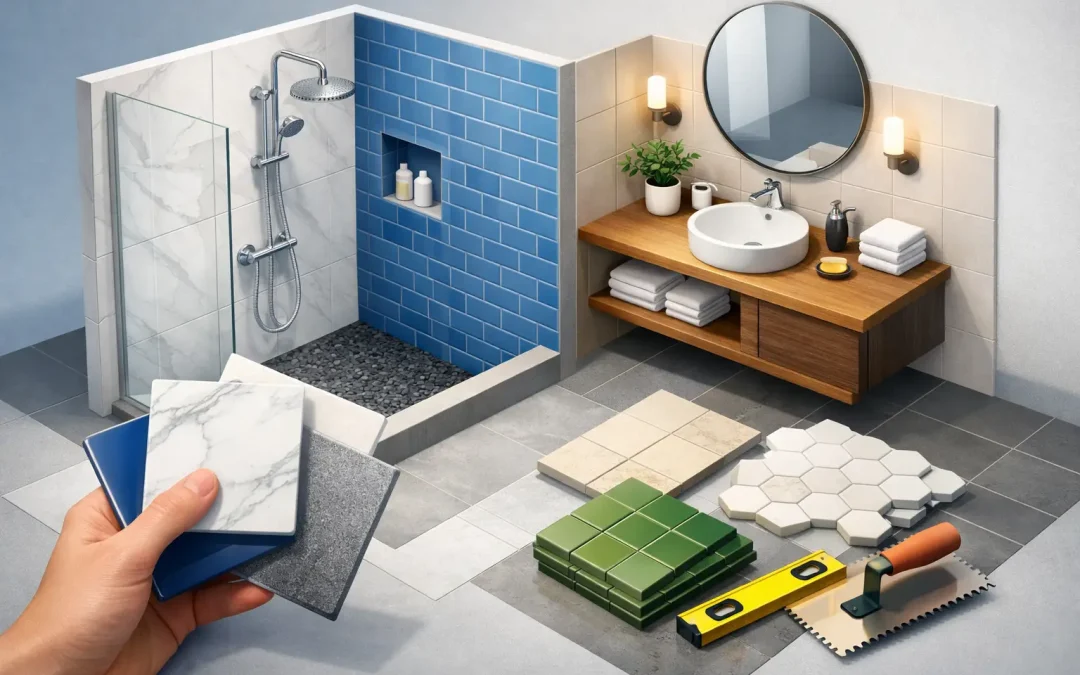
A bathroom can look great in a showroom and still be the wrong fit for your home. The tile that catches your eye under bright display lighting might feel cold, slippery, hard to clean, or too busy once it covers your floor and shower walls. That is why knowing how to choose bathroom tile starts with more than color. You need to think about where the tile is going, how the room gets used, and how much maintenance you are willing to live with.
For most homeowners, the best choice is not the most expensive tile or the trendiest pattern. It is the tile that holds up well, fits the size of the room, works with the lighting, and stays within budget once installation is included. A good bathroom remodel balances appearance with performance.
How to choose bathroom tile by location
One of the biggest mistakes homeowners make is shopping for tile as if every surface in the bathroom has the same job. It does not. Floor tile, shower tile, and wall tile all deal with moisture differently, and each area has its own practical demands.
Bathroom floor tile needs to handle foot traffic, moisture, cleaning products, and the occasional dropped item. That usually means durability and slip resistance matter more here than on a vanity backsplash or an accent wall. A polished tile may look sharp, but if it becomes slick when wet, it may not be the right choice for the main floor.
Shower tile has a different role. It needs to manage frequent water exposure and work well with the slope, waterproofing, and drain layout. Smaller tiles are often a smart option for shower floors because the extra grout joints can provide better traction and help the tile conform to the shower pan. On shower walls, you usually have more flexibility with size and finish.
Wall tile outside the shower is often where homeowners can have more fun with design. Since it is not walked on, you can focus more on appearance, texture, and the visual effect you want. That is where a decorative tile, stacked layout, or a larger-format look can make sense without creating practical problems.
Start with the right tile material
Material affects cost, maintenance, durability, and the overall feel of the bathroom. There is no one perfect option for every home, but there are a few reliable standards.
Porcelain is one of the most practical choices for bathrooms. It is dense, durable, and resists moisture well, which makes it a strong option for floors and showers. It also comes in a wide range of styles, including designs that resemble natural stone, concrete, and wood. If you want a hardworking tile that gives you a lot of design flexibility, porcelain is often the safest bet.
Ceramic can also work well, especially on walls and in lower-demand areas. It is usually more budget-friendly than porcelain, but it is not always as dense or as durable. For many homeowners, ceramic is a good value if it is used in the right place.
Natural stone has a high-end look, but it comes with more upkeep. Marble, travertine, and slate can all create a beautiful bathroom, but they typically require sealing and more careful maintenance. Stone also varies more from piece to piece, which some homeowners love and others find hard to control. If you want a clean, predictable finish, a stone-look porcelain tile may give you a similar style with fewer headaches.
Glass tile is usually best used as an accent rather than the main surface. It can add light and detail, but it is not always the most forgiving material for large applications, and installation can be more exacting.
Size changes the look of the room
Tile size matters more than many homeowners expect. It affects how large the room feels, how busy the finished space looks, and even how easy the surfaces are to maintain.
Large-format tile can make a bathroom feel more open because there are fewer grout lines breaking up the space. That can be especially helpful in a smaller bathroom that already feels tight. On walls, larger tiles often create a cleaner, more modern appearance.
Smaller tile brings more texture and visual movement. It is often used on shower floors, niches, and feature areas. Mosaic tile can add character, but it also means more grout joints, and more grout usually means more cleaning. If low maintenance is a top priority, that trade-off matters.
The size of the room should guide the choice, but it should not limit it too strictly. A small bathroom can still look great with larger tile if the layout is handled well. What matters is proportion, cuts at the edges, and making sure the tile selection supports the design rather than fighting it.
Do not overlook slip resistance and texture
When homeowners think about tile, they often start with color and pattern. In a bathroom, safety deserves equal attention. A floor that looks polished and elegant on a sample board can become a problem in everyday use.
This is especially important for households with children, older adults, or anyone planning to age in place. A matte or lightly textured finish often gives a better balance of style and traction than a highly polished surface. Shower floors deserve even more caution. That is one place where small tile and texture can work in your favor.
Texture also affects cleaning. Deeply textured tile may improve grip, but it can hold onto soap residue and dirt more easily. The right choice depends on who uses the bathroom and how much maintenance you want to take on.
Color and pattern should fit the home, not just the trend
Trends move fast. Tile is meant to stay put for years. That does not mean your bathroom has to look plain, but it does mean bold choices should be made carefully.
Light-colored tile can make a bathroom feel brighter and more spacious, which is often helpful in older homes with limited natural light. Dark tile can look rich and dramatic, but it may show water spots, soap residue, or dust more easily depending on the finish. Patterned tile can add personality, though it can also dominate a small room if it is used on every surface.
A good approach is to keep the main tile classic and bring in stronger design through one focused area, such as a shower niche, floor pattern, or backsplash. That usually gives you a bathroom that feels current without becoming dated too quickly.
If resale is part of the plan, neutral tile tends to have the widest appeal. In Modesto-area homes, many homeowners want bathrooms that feel clean, updated, and easy to live with rather than overly customized to one design moment.
Grout matters more than people expect
Tile gets most of the attention, but grout can make or break the finished look. The color of the grout changes how noticeable the tile pattern becomes. Matching grout creates a quieter, more blended appearance. Contrasting grout highlights the shape and layout of the tile.
Maintenance matters here too. White or very light grout can look crisp, but it often shows staining more quickly, especially on floors and in showers. Mid-tone grout can be a more forgiving choice for a busy family bathroom.
Joint size also affects the final appearance. Narrow joints feel cleaner and more modern, but they depend on consistent tile sizing and a quality installation. Wider joints can suit rustic or handmade tile better. This is one of those details that seems small at first and becomes very noticeable once the room is finished.
Budget for installation, not just tile
One of the most common budgeting mistakes is focusing only on the tile price per square foot. That number matters, but it is only part of the total. The shape, size, pattern, and material you choose can all affect labor costs.
Large-format tile may reduce grout lines, but it can require a flatter substrate and more careful installation. Small mosaics can be affordable as a material yet take longer to install. Intricate layouts, accent borders, niches, and specialty trims can all add time and cost.
This is where practical planning pays off. A straightforward tile selection installed well often gives better long-term value than a complicated design that stretches the budget and creates more opportunities for problems. Experienced installers can also help you avoid costly choices that look good in theory but create issues in a real bathroom.
How to choose bathroom tile that still looks right years later
The best bathrooms are not built around a sample board. They are planned around real use. Think about who uses the space every day, how much cleaning you want to do, and whether the tile fits the age and style of your home.
Bring samples into the bathroom before making a final decision. Look at them in morning light, evening light, and under the room’s actual fixtures. A tile that reads warm in the store may look gray at home. A glossy finish may reflect more than you expected. Small checks like these can save you from expensive second thoughts.
If you are torn between two options, the one that is easier to maintain and easier to live with is often the better investment. Good tile should not just photograph well on day one. It should still feel like the right choice after years of showers, cleaning, family traffic, and daily use.
A bathroom remodel is one of the places where details really matter, and tile is one of the biggest of those details. Choose with the room’s real life in mind, and you will end up with a bathroom that not only looks better, but works better every day.
Recent Comments