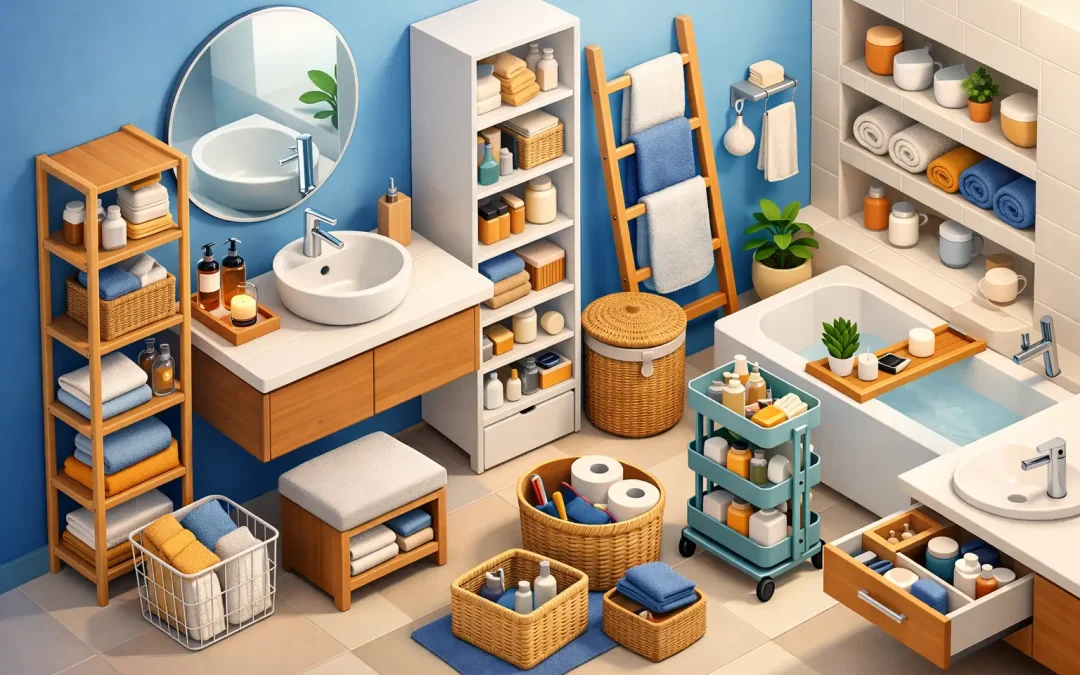
A bathroom usually tells on itself fast. If the counter is covered in bottles, drawers jam when they close, and extra towels end up in a hallway closet, the room is not necessarily too small – it is just not storing what you need in the right way. The best bathroom storage ideas solve that problem by making everyday items easier to reach, easier to hide, and easier to keep organized over time.
For most homeowners, the goal is not adding more stuff. It is getting better use out of the space already there. That might mean changing the vanity, adding recessed storage, using vertical wall space, or reworking a layout during a remodel so the room functions better from the start. Good storage should support how your household actually lives, not just how a staged bathroom looks in a photo.
What makes the best bathroom storage ideas actually work
The best storage choices do two things at once. They reduce visual clutter, and they make daily routines easier. If a storage feature looks clean but forces you to crouch, stack, or dig for basic items, it will not hold up well in real use.
That is why the right solution depends on the room, the people using it, and the amount of storage needed. A guest bath may only need a simple vanity and one medicine cabinet. A primary bathroom shared by two adults may need separate drawer zones, linen storage, and better countertop management. A family bathroom often needs more forgiving storage that can handle backup toiletries, kids’ bath items, and plenty of towels.
Start with the vanity before adding anything else
In many bathrooms, the vanity is the most important storage feature in the room. If it is undersized, poorly laid out, or built around a pedestal sink with no concealed storage, the rest of the bathroom has to work harder.
A drawer-based vanity is often more useful than one with a single open cabinet under the sink. Drawers give you easier access to smaller items and waste less space in the back. Deep lower drawers can hold hair tools, extra toilet paper, or cleaning supplies, while upper drawers are better for daily-use items. If plumbing placement limits full-width drawers, custom interior dividers can still make the available space work better.
This is one area where homeowners often see the benefit of remodeling instead of patching around a weak setup. A larger vanity, better cabinet design, or custom millwork can turn a frustrating bathroom into a much more functional one without needing a huge footprint.
Best bathroom storage ideas for wall space
When floor space is limited, the wall becomes your best opportunity. Vertical storage is one of the most practical ways to increase capacity without making the room feel crowded.
Recessed medicine cabinets
A recessed medicine cabinet gives you storage without the bulk of a surface-mounted cabinet sticking out into the room. It works especially well in smaller bathrooms where every inch matters. You get hidden storage at eye level, which is useful for daily toiletries, medication, and grooming products.
The trade-off is that not every wall has the depth or framing clearance for a recessed unit without some carpentry work. In older homes, that matters. But when it fits, it is one of the cleanest storage upgrades available.
Open shelving over the toilet
The wall above the toilet is often underused. Open shelves in that area can hold folded towels, baskets, and backup supplies. This can be a good budget-friendly improvement, especially when you need quick added storage without replacing cabinetry.
That said, open shelves work best when the items on them stay relatively neat. If you know your household tends to pile things up loosely, closed storage may serve you better. Open shelving is practical, but it does require some discipline to keep from looking cluttered.
Tall cabinets and linen towers
A narrow linen tower can provide a surprising amount of storage in a modest footprint. These are especially useful in primary bathrooms or larger hall baths where you need more than what a vanity can hold. Tall cabinets take advantage of height and help separate categories – towels in one section, supplies in another, personal care items in another.
If the bathroom layout is tight, placement matters. You do not want a tall cabinet making the room feel pinched or interfering with door swings and walking space.
Built-in storage is often the cleanest long-term solution
If you are already planning a bathroom update, built-in storage is worth serious consideration. It usually performs better than add-on pieces because it is designed around the room instead of squeezed into it afterward.
Shower niches
A shower niche keeps shampoo, soap, and body wash off the floor and out of the corners of the tub. It looks cleaner, makes cleaning easier, and gives the shower a more finished appearance. Compared with hanging caddies or suction shelves, a properly built niche is also more durable.
Size and placement matter here. A niche that is too small becomes frustrating, and one placed too high or too low is inconvenient. This is the kind of detail that benefits from thoughtful planning during a remodel.
Recessed wall cubbies
In the right location, recessed wall storage between studs can add useful capacity without taking up room depth. These built-ins can work near the vanity, beside a tub, or in a water closet area. They are especially helpful when you want storage but do not want the room to feel heavier with extra furniture or cabinetry.
Do not ignore under-sink and inside-drawer organization
Sometimes the biggest improvement does not come from adding more square footage. It comes from using existing storage better. A poorly organized vanity can feel too small even when the cabinet itself is adequate.
Pull-out trays, drawer dividers, and fitted organizers make a noticeable difference because they turn wasted interior space into usable zones. This is especially helpful for households with a mix of small items – razors, cosmetics, first aid, grooming tools, and travel products. Without some structure, those items spread quickly.
The key is matching the organizer to the cabinet, not forcing a one-size-fits-all insert into an awkward space. Custom cabinet interiors are ideal, but even simple upgrades can improve daily use when chosen carefully.
Small bathroom storage ideas need tighter priorities
In a small bathroom, every storage decision has to earn its place. Oversized furniture, wide shelving, or decorative baskets that eat up floor space can make the room feel more cramped.
The better approach is to focus on essentials. A compact vanity with smart drawers, a recessed medicine cabinet, one or two well-placed shelves, and a shower niche will usually outperform a collection of add-on pieces. In smaller bathrooms, less can truly work better – as long as the few storage features you choose are doing real work.
This is also where custom sizing matters. In many older homes around Modesto, Riverbank, and Turlock, bathrooms were not built with modern storage expectations in mind. Standard off-the-shelf pieces do not always fit cleanly, which is why tailored cabinetry or a smarter layout can provide a much better result.
Hidden storage usually ages better than visible storage
There is a reason many remodeled bathrooms feel calmer and cleaner. They rely more on concealed storage and less on surfaces doing storage duty.
Countertops should have room to breathe. If every daily item lives out in the open, the bathroom starts to feel busy no matter how attractive the materials are. Hidden storage behind cabinet doors, inside drawers, or within built-ins tends to age better visually and function better in day-to-day life.
That does not mean everything should be hidden. A few open elements can add convenience and character. But as a general rule, the more products your household uses, the more valuable closed storage becomes.
Match storage to the remodel, not the other way around
One common mistake is treating storage like a finishing touch. In practice, it should be part of the early design plan. Vanity size, mirror choice, wall framing, lighting, plumbing placement, and tile layout can all affect what storage options make sense.
That is especially true if you are trying to correct a bathroom that never worked well in the first place. A better vanity alone might solve the issue, or you may need a more complete update that improves both layout and storage capacity. The right answer depends on the room and your budget. What matters is building storage into the design instead of relying on temporary fixes later.
A well-organized bathroom does not need to feel oversized or expensive. It just needs the right features in the right places, built to handle how your household uses the space every day. If your bathroom still feels cluttered no matter how often you clean it, that is usually a design problem worth fixing properly.
Recent Comments