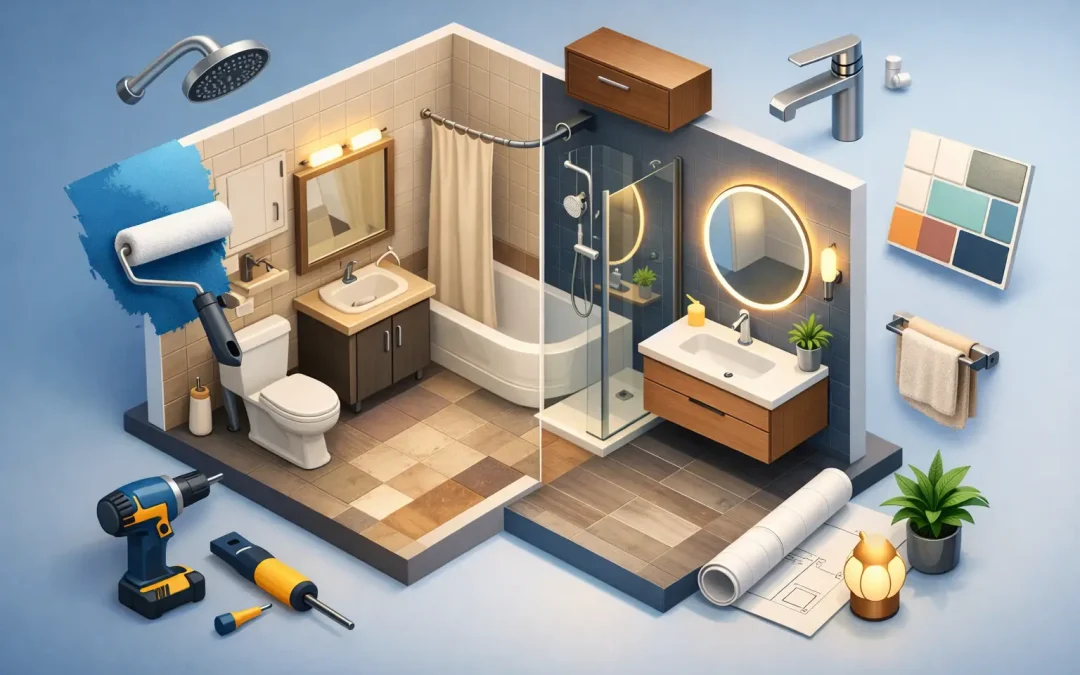
A small bathroom usually shows its age faster than any other room in the house. Worn flooring, dated fixtures, poor lighting, and limited storage all feel bigger when the space itself is tight. If you are wondering how to update a small bathroom without wasting money or making it feel even smaller, the best approach is to focus on changes that improve both function and visual space.
In many older homes, the problem is not just style. It is a bathroom that was built for a different time, with less lighting, less storage, and finishes that no longer hold up well to daily use. A good update should make the room easier to clean, more comfortable to use, and better suited to the way your household lives now.
Start with what is not working
Before choosing tile or paint, take a close look at the room as it functions today. A small bathroom does not give you much margin for poor planning. If the door bumps the vanity, if there is nowhere to put towels, or if the lighting makes the mirror hard to use, those issues should guide the remodel more than any trend.
This is where many homeowners save or lose money. If the layout works reasonably well, keeping plumbing and major fixture locations in place can control costs. Moving a toilet, shifting drain lines, or opening walls may be worth it in some bathrooms, but not in all of them. Sometimes a better vanity, a cleaner shower surround, and improved lighting do more for the room than a full layout change.
How to update a small bathroom without making it feel crowded
The biggest mistake in a small bathroom remodel is trying to fit in too much. Oversized vanities, bulky storage cabinets, and busy finish selections can make the room feel tighter, even when everything is new.
Scale matters. A vanity that is a few inches narrower or shallower can make a noticeable difference in walking space. A glass shower enclosure often feels lighter than a curtain or framed unit. Large mirrors reflect light and visually open the room, which is one of the simplest ways to make a small bathroom feel less boxed in.
Color also plays a role, but it is not as simple as saying everything should be white. Light colors generally help the room feel larger, yet too much flat white can look cold or unfinished. Soft warm neutrals, natural wood tones, and clean tile selections often give a smaller bathroom a fresher look without making it feel sterile.
Choose upgrades that solve everyday problems
A smart bathroom update should improve daily use, not just appearance. In a small space, every decision needs to earn its place.
Storage is often one of the first issues to address. If the current vanity has little usable room inside, replacing it with a better-designed cabinet can make the whole bathroom work better. Drawers are often more practical than deep cabinet voids where items disappear in the back. Recessed medicine cabinets and built-in shower niches can add storage without taking up floor space.
Lighting is another upgrade that changes the room immediately. Many older bathrooms rely on a single overhead fixture that casts shadows where you need the most visibility. Layered lighting works better – a balanced vanity light, adequate overhead lighting, and natural light when available. Even a small bathroom can feel more polished when the lighting is thoughtful instead of minimal.
Ventilation should not be overlooked. A new finish package will not hold up well if the room stays humid and traps moisture. Paint failure, mildew, and warped materials are common in bathrooms with weak exhaust fans or poor airflow. This is one of those behind-the-scenes upgrades that protects the investment.
Materials matter more in small spaces
Because a small bathroom has fewer square feet, homeowners often have room in the budget to choose better materials. That does not mean everything needs to be high-end. It means the finishes should be durable, easy to maintain, and well suited to a moisture-heavy environment.
Tile is one of the most visible choices. For floors, slip resistance matters as much as appearance. For shower walls, larger format tile can reduce grout lines and create a cleaner look, though it depends on the shape of the room and the condition of the walls. Smaller tile still has a place, especially for shower floors or design accents, but using too many patterns in a tight room can make it feel busy.
Countertops, plumbing fixtures, and hardware should also be chosen with longevity in mind. A bathroom gets heavy daily use, and lower-cost materials are not always cheaper if they wear out quickly or look dated within a few years. The best value usually comes from selecting products that are solid, straightforward, and easy to maintain.
When a layout change is worth it
Not every small bathroom needs a full reconfiguration, but sometimes the layout is the main problem. If the vanity blocks circulation, the tub is rarely used, or the room feels cramped because of awkward fixture placement, a more substantial remodel may be the right call.
One common improvement is replacing an old tub with a walk-in shower. That can open up the room visually and improve day-to-day convenience, especially for homeowners planning to stay in the home long term. The trade-off is resale considerations. In some homes, especially those with only one tub, removing it may not be the best decision. It depends on the household, the neighborhood, and the long-term goals for the property.
Pocket doors or better door swing planning can also make a small bathroom easier to use. These are not always simple changes, but they can improve the room more than decorative upgrades alone.
Budget for the work behind the walls
Homeowners often begin a bathroom remodel thinking mainly about finishes. But in older homes, the most important work may be hidden. Water damage, outdated plumbing, improper venting, or subfloor issues can all surface once demolition starts.
That is why realistic budgeting matters. If your plan only covers visible upgrades, there is little room to address problems properly when they appear. A well-managed remodel balances cosmetic improvements with the practical work that protects the home.
This is especially relevant in areas with older housing stock, including many homes around Modesto and the surrounding Central Valley. Bathrooms that look like they need a surface update sometimes need much more careful repair once walls and flooring are opened up. Good planning helps prevent rushed decisions in the middle of the job.
How to update a small bathroom on a moderate budget
A successful update does not always mean a complete gut remodel. If the layout is serviceable and the existing structure is sound, a moderate-budget project can still make a dramatic difference.
Refinishing or replacing worn surfaces, installing a new vanity and countertop, upgrading lighting, replacing dated fixtures, and adding better storage can transform the room. Fresh tile, modern hardware, a new mirror, and cleaner trim details often make the bathroom look fully remodeled even when the footprint stays the same.
The key is consistency. Mixing too many styles or trying to save old pieces that no longer fit the updated look can make the bathroom feel pieced together. A smaller room benefits from a clear design direction and fewer competing elements.
Think beyond trends
Bathroom trends change quickly. A small bathroom should feel current, but it should also age well. That is why it makes sense to choose classic base materials and bring personality in through mirrors, paint color, hardware, or lighting that can be updated more easily later.
The most successful remodels are not built around what is popular for the next year. They are built around what will continue to function well and look appropriate five to ten years from now. Quality workmanship matters here just as much as design. Even the best selections will disappoint if installation is rushed or underlying issues are ignored.
For homeowners who want a practical upgrade without overbuilding the space, that balance is where real value comes from. A small bathroom does not need to be extravagant to feel finished. It needs to be well planned, properly built, and designed around the way you actually use it.
If you are deciding how far to take the project, start with the problems you want solved and the budget you want to protect. The right update should leave you with a bathroom that feels cleaner, brighter, easier to use, and built to last.
Recent Comments