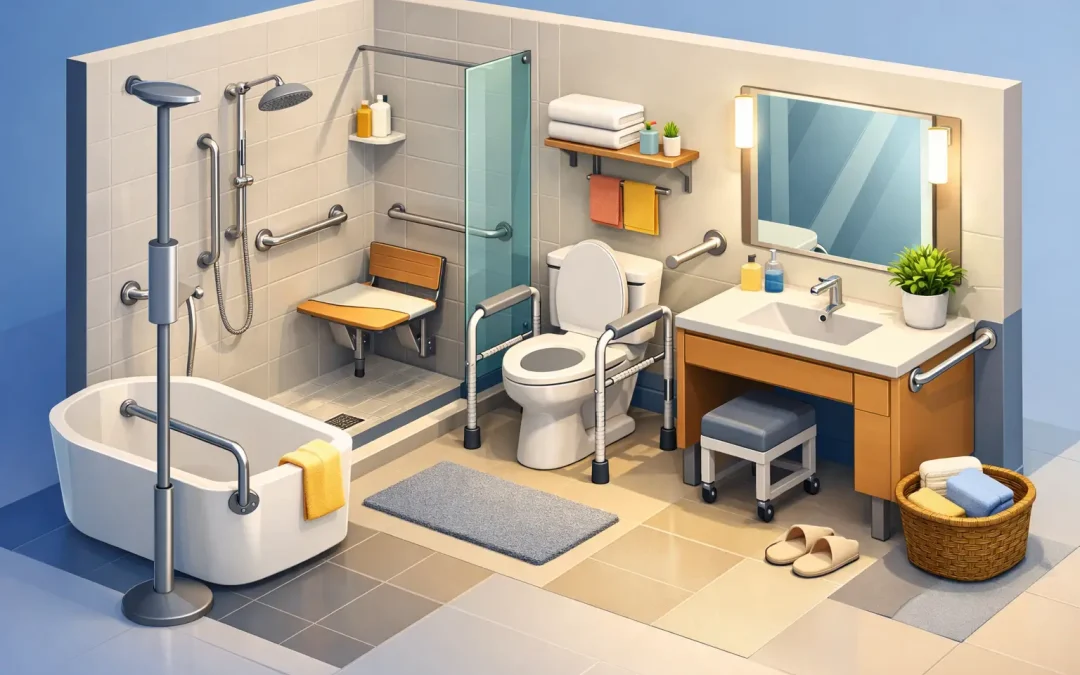
A bathroom that worked fine 20 years ago can start to feel risky in a hurry. A high tub wall, slippery tile, poor lighting, and tight clearances are easy to live with until one awkward step turns them into a real problem. That is why aging in place bathroom remodel ideas matter – not as medical-looking add-ons, but as smart upgrades that help you stay comfortable, independent, and safe in your own home.
The best aging-in-place bathrooms do not feel institutional. They feel clean, well planned, easy to use, and built for real life. If you are remodeling now, it makes sense to choose features that work today and still serve you well years from now.
What aging in place bathroom remodel ideas should actually solve
A good remodel starts by fixing the parts of the room that create strain or limit mobility. For some homeowners, the issue is stepping over a tub. For others, it is getting enough room around the toilet, finding stable support when standing, or seeing clearly at night.
This is where thoughtful planning matters more than trends. A stylish bathroom can still be hard to use if the layout is cramped or the floor gets slick. On the other hand, a practical bathroom can still look beautiful when the materials, fixtures, and finishes are chosen with care.
In many homes, the smartest approach is to improve safety without overbuilding. You may not need every accessibility feature right now. But adding the right structural backing, widening key pathways, and choosing easier-to-use fixtures can save money and disruption later.
1. Replace the tub with a walk-in shower
For many homeowners, this is the single biggest improvement. A walk-in shower with a low or no threshold removes one of the most common tripping hazards in the bathroom. It also makes the space easier to enter with limited mobility now and easier to adapt later if needs change.
The details matter. A curbless shower looks clean, but it needs proper slope and waterproofing to work well. A low-threshold shower can still offer a big improvement if the room structure or budget makes a fully curbless design less practical. Either option is usually safer and easier to use than climbing into a standard tub.
Add a built-in bench and handheld shower
A bench gives you the option to sit while bathing, shave safely, or simply rest. A handheld showerhead adds flexibility and makes cleaning easier too. These are small decisions that have a big effect on everyday comfort.
2. Choose slip-resistant flooring
Bathroom falls often start at the floor, not the shower. Smooth polished tile may look sharp in a showroom, but it can become slick fast with water on it. For aging in place, the better choice is a floor material or tile finish with more grip underfoot.
Smaller tile can help because the extra grout joints add traction. Textured porcelain is another popular option because it is durable, low maintenance, and available in styles that still feel updated rather than overly utilitarian.
The trade-off is cleaning. More texture and more grout can mean a little more upkeep. That is usually worth it if the floor is safer to walk on every day.
3. Install grab bars that look intentional
Grab bars have come a long way. They no longer need to make the room feel clinical. Many are available in finishes and profiles that blend in with faucets, shower trim, and towel bars.
The key is placement and proper installation. A grab bar only helps if it is anchored correctly into framing or secure blocking. That is why it is smart to plan for them during the remodel, even if you only install a few now.
Good locations often include inside the shower, just outside the shower entry, and near the toilet. Some homeowners also choose reinforced backing behind the walls so additional bars can be added later without opening tile.
4. Improve lighting where it counts
Poor lighting makes every bathroom harder to use. Shadows at the vanity, dim shower lighting, and dark nighttime pathways can increase the chance of slips and mistakes.
A well-lit bathroom usually combines overhead light, task lighting at the mirror, and a softer option for evening use. Vertical vanity lighting often works better than a single overhead fixture because it reduces shadows on the face. That matters for grooming, but it also helps with visibility overall.
For homeowners planning long-term use, motion-sensor night lighting can be a very practical upgrade. It adds convenience without requiring you to search for a switch in the dark.
5. Make the toilet area easier to use
Toilet height and clearance are often overlooked until they become a daily frustration. A comfort-height toilet can make sitting and standing easier for many adults, especially those with knee or hip limitations.
Space around the toilet matters too. If the room feels tight, a remodel may be the right time to adjust the layout and create better access. That does not always require a major expansion. Sometimes shifting a vanity, changing the door swing, or selecting a different toilet profile is enough to improve movement through the room.
If you are already opening walls, it can also make sense to add blocking nearby for future support bars, even if you do not need them yet.
Aging in place bathroom remodel ideas for easier daily use
The best upgrades are often the ones you notice every morning. They reduce bending, reaching, twisting, and fumbling with controls.
6. Use lever-style faucets and easy controls
Knob handles can be hard on arthritic hands. Lever-style faucets are easier to operate and usually feel more natural for all ages. The same goes for shower controls with simple temperature adjustment and clear markings.
If your budget allows, consider placing shower controls where they can be reached before stepping into the spray. That small layout choice can make the shower more comfortable and safer.
7. Pick a vanity that supports comfort and storage
A good vanity should do more than look nice. Drawer storage is often easier to use than deep cabinet space because items are visible and easier to reach. Hardware should be easy to grip, and countertop height should fit the user rather than follow a one-size-fits-all rule.
For homeowners thinking ahead, a wall-hung vanity or open knee space can create future flexibility. That is not necessary in every remodel, but it is worth discussing if long-term accessibility is a priority.
8. Widen doorways and improve clearances
Not every bathroom has room for dramatic layout changes, especially in older homes. Still, widening a doorway, choosing a pocket door, or reworking fixture placement can make the room much easier to navigate.
This is one of those areas where it depends on the house. In some homes, structural limitations or plumbing locations affect what is realistic. An experienced remodeler can help you weigh what is possible against what gives you the most value.
9. Add comfort without adding clutter
Aging in place design should not turn the bathroom into a storage zone full of temporary fixes. Built-in niches, recessed medicine cabinets, and towel storage placed at an easy height help keep the room functional and open.
Comfort also includes temperature and ventilation. A warm room, a properly vented shower, and materials that are easy to clean all contribute to a bathroom that feels better to use. These are not flashy upgrades, but they matter over time.
10. Build for the future, even if you do not need everything today
One of the smartest aging in place bathroom remodel ideas is planning for needs before they become urgent. That might mean adding wall blocking for future grab bars, choosing a shower large enough for a bench, or reinforcing the floor while the room is already under construction.
This kind of planning is especially valuable in older homes around Modesto, where bathrooms were often built with tighter layouts and fewer safety considerations. A remodel gives you the chance to correct those limitations once, rather than patching around them later.
That does not mean overspending on features you may never use. It means spending carefully on the hidden parts of the project that protect your options. Good remodeling is not just about what you see on the finished day. It is also about how well the room serves you five, ten, or fifteen years from now.
A better bathroom should still feel like home
The right bathroom remodel balances safety, comfort, style, and budget. Some homeowners need a full layout change. Others can get meaningful results from a better shower, improved flooring, stronger lighting, and smarter fixture choices. What matters most is building around how you actually live.
At Thiel Construction, that kind of planning starts with honest conversations about your home, your priorities, and what makes sense for the space. The best result is not a bathroom filled with features for the sake of features. It is a room that feels natural to use, easier to maintain, and ready to support you for years to come.
If you are thinking about remodeling, start with the hazards and frustrations you deal with now. The right fixes can make everyday life simpler, and that is usually the kind of upgrade that pays off right away.
Recent Comments