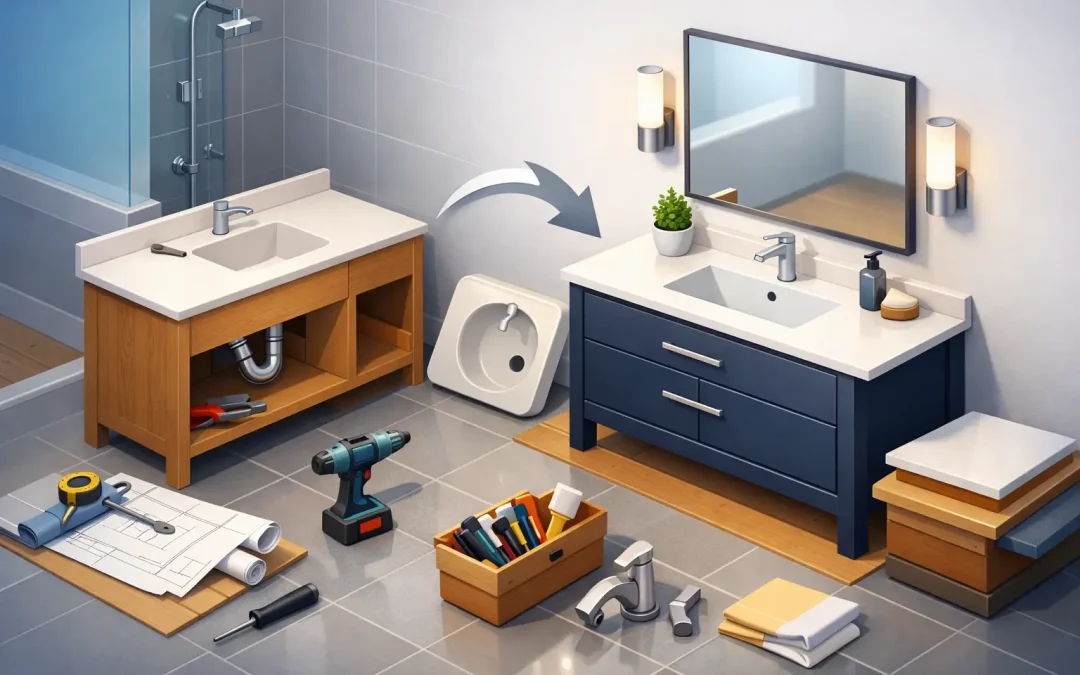
That old vanity usually tells on the whole bathroom. Swollen side panels, chipped laminate, stained tops, drawers that stick, and a sink set too low for comfort can make the room feel dated even if everything else is still serviceable. A smart guide to bathroom vanity replacement starts with one simple idea – this is not just a cosmetic swap. The right vanity can improve storage, fix layout problems, protect against moisture damage, and make the room easier to use every day.
For many homeowners, vanity replacement sits in the sweet spot between a full remodel and a minor refresh. It can deliver a noticeable upgrade without tearing the whole room apart. But it still needs careful planning, because plumbing locations, wall condition, flooring transitions, and countertop choices all affect the final result.
Why bathroom vanity replacement deserves more planning than people expect
A vanity looks like a cabinet with a sink on top, but it touches several parts of the room at once. It connects to plumbing, meets the wall and floor, supports the countertop, and often anchors the mirror and lighting layout above it. If one piece is off, the whole installation can look rushed.
That is why bathroom vanity replacement is often less about picking a style and more about balancing size, function, and condition. A beautiful cabinet will not help much if the drawers hit the toilet, the plumbing does not line up, or the top overhang makes a narrow bathroom harder to move through. Good planning protects the budget and avoids those frustrating mid-project surprises.
Start with the vanity you have
Before choosing a new model, look closely at what is not working with the current one. In some bathrooms, the problem is obvious – water damage, loose hardware, or a cracked top. In others, the issue is more about daily use. Maybe there is not enough counter space, maybe the sink bowl is too small, or maybe the cabinet style makes the room feel boxed in.
Measure the width, depth, and height of the existing vanity, then measure the room itself. Check door swings, toilet clearance, and how much room you have in front of the drawers. If you want a larger vanity, make sure the added width or depth will not create a tighter traffic path. If you are downsizing, consider whether you are giving up storage you actually use.
It also helps to inspect around and behind the old vanity if possible. Soft drywall, stained baseboards, uneven flooring, or old plumbing shutoffs can all change the scope of the work.
Keep or move the plumbing?
This choice affects cost more than many homeowners realize. Replacing a vanity in the same width and keeping the sink in roughly the same location is usually the most budget-friendly path. Once you start shifting the sink left or right, changing from one sink to two, or moving supply and drain lines inside the wall, labor goes up quickly.
Sometimes moving plumbing is worth it. A better-centered sink, more useful drawer layout, or improved fit for two users can make the bathroom work much better. But if your goal is a clean update at a reasonable price, keeping plumbing close to its current location is often the better value.
Choosing the right size and layout
Most vanity mistakes happen with sizing, not style. A vanity that looks great in a showroom can feel oversized in a modest hall bath. One that seems compact online may leave too little usable storage in a primary bathroom.
Width is usually the first number people focus on, but depth matters just as much. Standard depths work well in larger bathrooms, while shallow-depth vanities can help in tighter spaces. Height is another detail worth paying attention to. Many older vanities sit lower than what most homeowners prefer now. A comfort-height vanity can make everyday use feel noticeably better.
Single-sink vanities are still the right choice in many bathrooms, even larger ones. They leave more uninterrupted counter space and often provide better storage. Double-sink vanities make sense when two people regularly use the bathroom at the same time and the room is large enough to support the added width without feeling crowded.
Freestanding vs. floating vanity
A freestanding vanity is the most common choice because it works in a wide range of bathrooms and generally offers more enclosed storage. It also tends to be simpler when the floor is not perfectly level or the wall needs minor adjustment during installation.
A floating vanity creates a more open look and can make a small bathroom feel less heavy. It also allows easier floor cleaning underneath. The trade-off is that wall support becomes more important, and storage capacity may be reduced depending on the design. If the wall framing is not ideal, installation can get more involved.
Materials matter in a bathroom
Bathrooms are hard on cabinets. Humidity, splashing water, and cleaning products all take their toll. That makes material selection more important than it might be in a dry space.
Solid wood can look great and hold up well when properly finished, but it can also move with moisture. Plywood construction is often a strong middle ground because it offers good durability without some of the weaknesses of low-grade particle board. MDF can provide a smooth painted finish, but quality varies, and poor moisture protection can shorten its lifespan.
Countertop choice matters too. Quartz is popular for good reason – it is durable, low maintenance, and consistent in appearance. Natural stone offers a premium look, but it may require more care depending on the material. Cultured marble and solid-surface tops can still be practical options for homeowners who want an attractive finish at a more controlled price point.
What this project usually includes
A straightforward vanity replacement may sound simple, but a proper installation often includes more than just removing one cabinet and setting another in place. The work may involve disconnecting plumbing, patching and painting wall areas, adjusting supply lines or drains, installing a new faucet and sink, trimming around the cabinet, reconnecting plumbing, and sealing all joints correctly.
If the old vanity sat on top of existing flooring, the floor underneath may be unfinished. If the new vanity is a different footprint, that missing flooring can become visible. Backsplash height can also reveal old paint lines or wall damage. These are common issues, not unusual ones, and they should be accounted for before the project starts.
Budget expectations and trade-offs
Bathroom vanity replacement can be a cost-effective upgrade, but the final number depends on product quality and how much hidden work shows up once the old unit is removed. The cabinet itself is only one part of the budget. Countertops, sink, faucet, plumbing updates, mirrors, lighting adjustments, and finish repairs can all add to the total.
There is also a difference between value and lowest price. A lower-cost vanity may save money upfront, but thin materials, weak drawer hardware, and poor moisture resistance can lead to early replacement. On the other hand, not every bathroom needs a fully custom cabinet. In many homes, a well-chosen semi-custom or stock vanity with a quality top and proper installation gives the best return.
For homeowners in Modesto, Riverbank, or Turlock with older homes, it is wise to leave some room in the budget for minor plumbing or wall repairs. Houses that have seen years of use often reveal a few things once the vanity comes out.
DIY or hire a pro?
If you are replacing a vanity with one of the exact same size, keeping the plumbing in place, and dealing with a level floor and sound walls, this can be manageable for a skilled DIY homeowner. But that is the ideal version of the project.
Many jobs become more complicated once demolition starts. Shutoff valves may fail, drain locations may not align with the new cabinet, walls may need repair, and tops may need careful fitting to avoid gaps. If the vanity is part of a larger bathroom update, professional coordination usually saves time and reduces the chance of costly rework.
That is especially true when homeowners want the finished result to look clean and intentional rather than simply functional. Proper installation shows in the small details – tight scribe lines, level tops, smooth plumbing connections, secure mounting, and finish work that does not call attention to itself.
How to get the best result from your bathroom vanity replacement
The most successful projects begin with realistic priorities. Decide what matters most: more storage, a better look, easier cleaning, improved countertop space, or a layout that fits your routine better. Once that is clear, product decisions become easier.
Bring measurements, photos, and a rough sense of your budget into the planning process. Think about the mirror, light fixture, wall color, and flooring as part of the same visual field. A vanity should fit the bathroom, not compete with it. If the room has good bones, this single upgrade can carry more impact than people expect.
A company like Thiel Construction can help homeowners sort through those choices without overcomplicating the job. That matters when you want practical guidance, solid workmanship, and a finished bathroom that looks better and works better.
If your current vanity has become the weak point in the room, replacing it is not just about making the bathroom newer. It is a chance to fix what has been bothering you every morning and every night, and that is usually money well spent.
Recent Comments