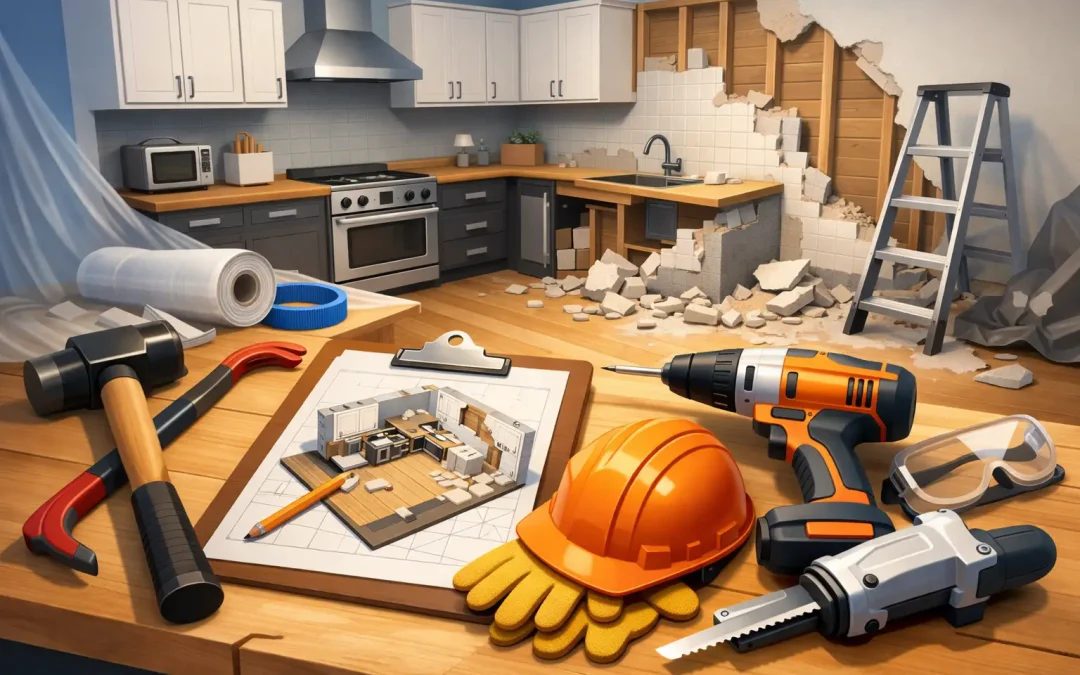
The day before demolition is when most kitchen remodel stress shows up. Cabinets are still full, the refrigerator is humming, and suddenly every drawer feels like a decision you should have made two weeks ago. If you are wondering how to prepare for kitchen demolition, the goal is simple: protect your home, avoid delays, and make the first phase of your remodel cleaner, safer, and more predictable.
Kitchen demolition moves fast once it starts. Good preparation gives your contractor room to work, helps prevent damage outside the kitchen, and reduces the chance of surprise costs tied to access, storage, or hidden conditions. Some issues cannot be avoided – older homes can reveal plumbing repairs, electrical updates, or framing problems once walls and cabinets come out – but a well-prepared homeowner can still keep the project on better footing.
How to Prepare for Kitchen Demolition Before Work Begins
Start by clearing the kitchen completely. That includes cabinets, drawers, pantry shelves, countertops, and the area on top of upper cabinets where people often stash trays, serving pieces, or small appliances. Even if your contractor plans to handle demolition from start to finish, a fully emptied space saves time and prevents breakage.
Do not stop at the visible kitchen area. If the path from the front door or garage to the kitchen is narrow, remove rugs, console tables, wall decor, and anything fragile along the route. Demolition crews carry tools, debris, and sometimes large cabinet sections. A clean path protects your belongings and helps the job move more efficiently.
It also helps to decide what is staying. In some remodels, everything is removed down to the studs. In others, flooring may stay, a wall may remain, or appliances may be reused. Marking those items clearly with your contractor ahead of time avoids confusion on demo day. A five-minute conversation before the first swing of a hammer can prevent expensive mistakes.
Set Up a Temporary Kitchen That Actually Works
One of the biggest mistakes homeowners make is treating the temporary kitchen like an afterthought. If your remodel will last more than a few days, set up a usable space somewhere else in the house. A laundry room, dining room, garage extension area, or even part of a family room can work if you plan it well.
Move the essentials first: microwave, coffee maker, toaster oven, paper towels, dish soap, and a few basic dishes and utensils. If your refrigerator stays connected, great. If not, make a plan for cold storage. Many families get through this phase with a mini fridge, an ice chest for short periods, or more frequent grocery runs.
Keep this setup simple. You do not need to recreate a full kitchen. You need enough to make breakfast, pack lunches, heat dinner, and wash a few things without turning every meal into a project. If you have young kids, older family members at home, or work-from-home schedules, this step matters even more because daily disruption adds up fast.
Protect Nearby Rooms From Dust and Debris
Kitchen demolition is rarely contained as neatly as homeowners expect. Dust travels through doorways, settles in nearby rooms, and can move through HVAC systems if precautions are not taken. Your contractor may use plastic barriers and floor protection, but there are still smart steps you can take beforehand.
Remove items from open shelving or furniture in adjacent spaces, especially fabric items, electronics, and decorative pieces. Close interior doors near the work zone if possible. If your kitchen opens directly into a living area, cover furniture that cannot be moved.
Ask how dust control will be handled. Some projects need heavier containment than others. A small cabinet and countertop tear-out is different from full demolition involving drywall, flooring, and layout changes. If you live in an older home in Modesto or the surrounding area, this is worth discussing early because older materials and tighter floor plans can create more cleanup challenges.
Plan for Utilities, Appliances, and Shutoffs
Before demo starts, confirm which utilities need to be disconnected and who is handling that work. Water lines, gas lines, electrical circuits, and appliance hookups all need a clear plan. Never assume an appliance can just be unplugged and moved without preparation.
If you are keeping appliances for reuse, protect them. Some homeowners move them to the garage or another room during demolition. Others schedule removal and storage. Either way, know where each item is going and who is responsible for moving it.
This is also the right time to ask whether power or water will be interrupted in other parts of the home. In many cases, outages are temporary. Still, if someone in the home needs consistent power for medical equipment, works remotely full-time, or depends on specific plumbing access during the day, your contractor should know before work begins.
Make Decisions Early to Avoid Delays
Demolition may be the first visible phase of a remodel, but schedule problems often start with unfinished decisions. If you have not finalized cabinets, countertops, tile, fixtures, hardware, or appliance specs, do that as early as possible. Waiting too long can leave your project stalled after demolition is complete.
Some products have longer lead times than homeowners expect. Custom cabinetry, specialty tile, and certain appliance models can push the schedule out significantly. Even smaller items like sink size, faucet placement, or under-cabinet lighting choices can affect framing, plumbing, and electrical rough-in.
This is where experience matters. A contractor who handles kitchens regularly can help you spot decision points before they become problems. Thiel Construction approaches remodel planning with that practical mindset because good craftsmanship starts well before installation.
Talk Through What Demo Might Reveal
Every homeowner wants a clean demolition and a straight path to the finished kitchen. Sometimes that happens. Sometimes demolition uncovers water damage under a sink base, ungrounded wiring, patched-over drywall, uneven subfloor, or plumbing that was never installed properly in the first place.
That does not always mean major cost overruns, but it does mean flexibility is wise. Ask your contractor how hidden conditions are handled, how changes are documented, and how quickly repair decisions need to be made if something unexpected comes up. A realistic conversation upfront is better than a stressful one with the kitchen half torn apart.
Older homes especially deserve a little extra caution. If your home has gone through multiple remodels over the years, there may be layers of prior work behind the finishes. Some of it may be fine. Some of it may need correction to meet current standards or support the new design properly.
Prepare Your Household for the Disruption
Kitchen demolition is noisy. It creates foot traffic, temporary inconvenience, and days that do not run on your normal schedule. Preparing the house is one part of the job. Preparing the people in it is just as important.
If you have children, decide ahead of time which areas are off limits and how they will move through the house safely. If you have pets, plan for noise and secure spaces away from work zones. Many pets do better with a closed room on the far side of the house or a temporary stay elsewhere during the loudest demo days.
You should also think through parking and access. Crews may need driveway space, room for debris removal, or easy entry for materials and tools. If you live on a tighter lot or busy neighborhood street, discuss logistics before the job starts instead of the morning demolition begins.
What to Keep on Hand During Kitchen Demolition
A few supplies can make the week easier. Keep disposable plates and utensils, basic cleaning wipes, trash bags, phone chargers, and a small bin of daily-use kitchen items in your temporary space. If demolition affects sink access, having a utility basin or backup cleanup option can help.
This is also a good time to store important paperwork, mail, and medications away from the work area. Dust has a way of reaching places homeowners do not expect. So do accidental bumps from materials moving in and out.
A Good Start Sets the Tone for the Whole Remodel
Knowing how to prepare for kitchen demolition is really about reducing avoidable problems. Clear the space, make decisions early, protect nearby rooms, and work through the day-to-day impact before the first cabinet comes out. The better the preparation, the easier it is for your contractor to focus on doing quality work instead of solving preventable access and logistics issues.
A kitchen remodel asks your home to be patient for a while. If you give the demolition phase a little planning and respect, the rest of the project usually feels a lot more manageable.
Recent Comments