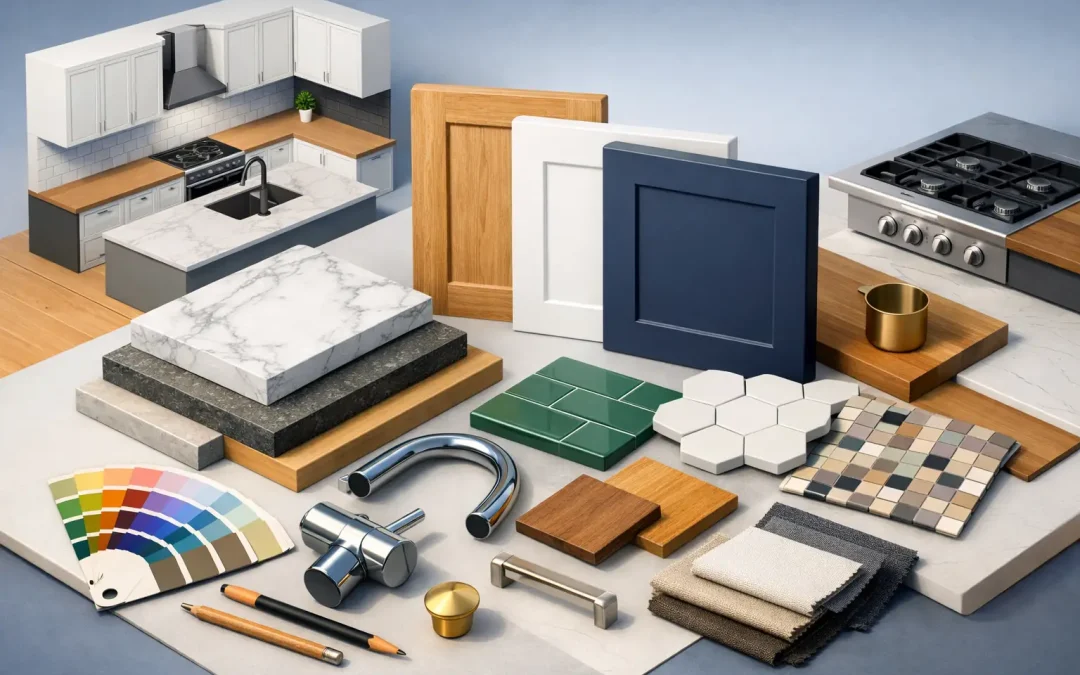
A kitchen can look great in a showroom and still be the wrong fit for your home. The real test comes six months later, when the cabinet finish shows fingerprints, the floor highlights every crumb, or the countertop stains faster than expected. That is why a kitchen remodel material selection guide matters – not as a design trend checklist, but as a practical way to choose materials that match how your household actually lives.
For most homeowners, the challenge is not finding options. It is narrowing them down without wasting money on the wrong upgrade. Good material choices come from balancing four things at once: appearance, durability, maintenance, and budget. If one of those gets ignored, the project usually feels off after the excitement wears down.
How to use a kitchen remodel material selection guide
Start with function before finish. A busy family kitchen with daily cooking, kids, pets, and frequent cleanup has different needs than a lightly used kitchen in a home where entertaining matters more than heavy wear. Both deserve quality materials, but not necessarily the same ones.
It also helps to separate “want” from “worth it.” Some upgrades earn their cost because they improve daily use and hold up well over time. Others look impressive on day one but need more care, cost more to repair, or do not add much practical value. A dependable remodel plan weighs both the visual result and the long-term ownership experience.
Cabinets set the tone and the budget
Cabinetry is usually one of the largest material decisions in a kitchen remodel because it affects both function and appearance. Homeowners often compare stock, semi-custom, and custom cabinets, but the better question is how much flexibility your space really needs.
Stock cabinets can work well if your layout is straightforward and your goal is a clean update without heavy customization. They are generally more budget-friendly, but sizes, finish options, and storage features can be limited. If your kitchen has unusual dimensions or you want features like deep drawer storage, appliance panels, or built-in organizers, semi-custom or custom cabinetry often makes better sense.
Material matters too. Solid wood doors are a strong choice for durability and repairability, but they can cost more and may move slightly with seasonal changes. Plywood cabinet boxes are generally a better long-term option than particleboard because they resist moisture and hold fasteners more reliably. Thermofoil can lower cost, but in a kitchen with heat exposure and heavy use, it may not age as well as painted or stained wood finishes.
Painted cabinets remain popular, especially in lighter colors, but they tend to show chips and wear more readily than stained wood. That does not mean painted cabinets are a bad choice. It means they are better for homeowners who prioritize a specific look and understand the trade-off.
Countertops should fit your cooking habits
Countertops get a lot of attention, and for good reason. They are one of the most used surfaces in the room. Still, the best countertop is not always the most expensive one.
Quartz is often the practical favorite because it is low maintenance, consistent in color, and resistant to staining. For many families, it offers the best mix of durability and appearance. It works especially well for homeowners who want a polished look without regular sealing.
Granite remains a strong choice too, especially for people who like natural variation and a more one-of-a-kind look. It handles heat well, but it does require periodic sealing depending on the stone. Some granites are denser and easier to maintain than others, so not every slab performs the same.
Laminate has improved over the years and can be a smart budget-conscious option, particularly in secondary kitchens, rental properties, or modest remodels where cost control is a priority. It does not offer the same lifespan or heat resistance as stone, but that does not make it the wrong choice. It depends on your goals.
Butcher block adds warmth and character, especially in farmhouse or transitional kitchens. It is softer and can be refinished, which some homeowners appreciate. It also needs more maintenance and is more vulnerable to water damage near sinks if not cared for properly.
If your kitchen sees heavy daily use, ease of maintenance should carry real weight in the decision. A beautiful material that makes you worry every time someone sets down a glass is usually not the right fit.
Flooring has to survive real life
Kitchen flooring takes more abuse than most surfaces in the house. It deals with spills, dropped pans, chair movement, foot traffic, pet nails, and regular cleaning. That is why appearance alone should never drive the flooring choice.
Tile remains one of the most durable options for kitchens. It holds up well to moisture and wear, and it offers a wide range of looks. Porcelain tile, in particular, performs well because it is dense and tough. The downside is that tile can feel hard underfoot, and grout lines need attention over time.
Luxury vinyl plank has become a popular option for good reason. It offers strong water resistance, a softer feel than tile, and a lower installed cost in many cases. Quality matters here. A thicker, better-made product typically performs much better than bargain-grade material.
Hardwood can still work in kitchens, especially when homeowners want continuity with surrounding living spaces. It brings warmth that many people prefer over tile or vinyl. The trade-off is maintenance. Wood is more vulnerable to standing water, dents, and finish wear. Some homeowners accept that because they value the appearance enough to live with a little patina. Others would rather avoid the worry.
If comfort matters, especially in homes where people spend a lot of time cooking, the feel of the floor matters just as much as the look. A material that photographs well but feels unforgiving every day can become a regret.
Backsplash and wall finishes should support the whole room
A backsplash is where many kitchens pick up personality, but it should still connect to the larger material plan. If cabinets and countertops already have a lot of movement or pattern, a quieter backsplash often creates a cleaner result. If the rest of the kitchen is simple, backsplash tile can bring in texture or contrast.
Ceramic and porcelain tile are reliable choices because they are easy to clean and available in a broad range of price points. Natural stone backsplashes can look beautiful, but they may require more upkeep. Glass tile can brighten a space, though installation tends to be less forgiving and sometimes more expensive.
This is one area where trend chasing can backfire. A very specific pattern or color may feel dated faster than homeowners expect. That does not mean you need to play it safe to the point of boring. It means bold choices should be intentional and balanced.
Fixtures and hardware are small details with big impact
Sinks, faucets, pulls, and knobs often get treated as finishing touches, but they affect how the kitchen works every day. A deep single-bowl sink may be ideal for large cookware, while a double-bowl sink may suit homeowners who like separate prep and wash areas. Neither is universally better.
Stainless steel sinks remain a practical standard because they are durable, easy to maintain, and fit most kitchen styles. Fireclay sinks offer a classic look, but they are heavier and usually cost more. Faucet finish matters too. Matte black can look sharp but may show water spots differently than brushed nickel or stainless.
Cabinet hardware should feel solid in the hand and match the style of the room, but comfort counts. Handles that catch on clothing or feel awkward during daily use get annoying fast. This is one of those details where seeing and touching samples helps.
Budget decisions should be deliberate, not reactive
One of the smartest ways to use a kitchen remodel material selection guide is to decide early where to spend and where to save. Most kitchens do not need every finish to be premium. They need the right materials in the right places.
Cabinet construction, countertop durability, and flooring performance usually deserve more attention than chasing the most expensive decorative accent. If the budget is tight, it often makes more sense to keep the backsplash simple and invest in better cabinet boxes or more durable counters. Homeowners in Modesto area homes with older layouts often get the best value from choices that improve function first, then style.
This is also where working with an experienced remodel contractor helps. Material selections do not exist on paper only. They interact with installation methods, existing conditions, lead times, and the way the whole kitchen comes together. A product that looks like a bargain can become expensive if it is harder to install, slower to source, or more likely to fail.
A practical way to choose with confidence
If you feel overwhelmed by samples, you are not alone. The simplest way forward is to pick your non-negotiables first. Decide what matters most in your kitchen: low maintenance, a warmer look, stronger resale appeal, or the best use of a fixed budget. Then narrow each material category through that lens.
The right kitchen is not built from the most popular materials. It is built from materials that fit your home, your habits, and your priorities. When those choices are made carefully, the finished space does more than look updated. It works better every day, and that is what makes a remodel feel worth it.
Recent Comments