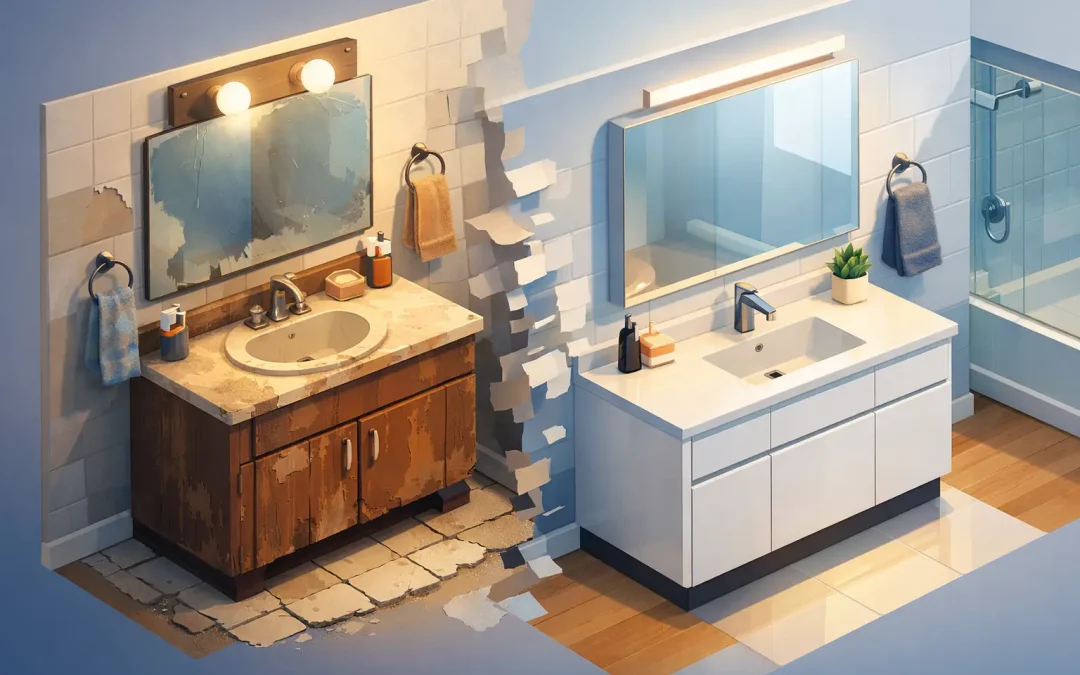
If you keep looking at your sink cabinet and wondering, should I replace old bathroom vanity, you are probably already seeing the warning signs. Maybe the drawers stick, the finish is peeling, the countertop is stained, or the whole room still feels dated no matter how often you clean it. A bathroom vanity is one of those features that affects how the room looks, how it functions, and how well it holds up to daily use.
For many homeowners, the real question is not just whether the vanity looks old. It is whether keeping it is costing you comfort, storage, and future repair money. Sometimes a vanity can be updated with a new top, hardware, or paint. Other times, replacing it is the better investment.
Should I replace old bathroom vanity or keep it?
The answer depends on condition, layout, budget, and what you want out of the space.
If your vanity is structurally solid, the cabinet boxes are in good shape, and the size still works well for the room, a refresh may be enough. New faucets, a new countertop, updated mirrors, and fresh paint can go a long way when the base cabinet itself is still sound.
But if the cabinet has water damage, soft spots, swelling particleboard, mold concerns, loose joints, or failing drawers, replacement usually makes more sense. Bathrooms are hard on materials. Moisture, leaks, and years of daily use can quietly break down a vanity even when the damage is not obvious at first glance.
A good rule is simple. If the vanity is only cosmetically outdated, consider updating it. If it is worn out, poorly built, or no longer meeting your needs, replacement is usually the smarter long-term move.
Signs your old bathroom vanity is ready to go
Some vanities make the decision easy. Others sit in that gray area where homeowners keep putting off the choice. Here are the situations where replacing an old vanity is often worth it.
Water damage is showing up
This is the biggest red flag. If the bottom of the cabinet is swollen, the side panels are bubbling, or the area around the sink cutout feels soft, moisture has already started to win. You can patch small issues, but once the cabinet material breaks down, repairs tend to be short-lived.
Water damage also raises a second concern. What looks like a cabinet problem can be tied to an old faucet, drain leak, bad caulking, or wall moisture. Replacing the vanity gives you a chance to address the source instead of covering it up.
Storage no longer works for your household
A vanity might still be standing, but that does not mean it is working well. Older vanities often waste space with awkward shelving, shallow drawers, or poor sink placement. If your bathroom counter is always cluttered because the cabinet does not hold what your family uses every day, replacement can improve daily life more than you might expect.
This is especially true in family bathrooms, primary bathrooms, and homes where older layouts did not account for modern storage needs.
The height feels too low
Many older bathroom vanities were built several inches lower than today’s comfort-height options. If you are constantly bending down to wash your hands or get ready in the morning, the vanity may simply be outdated in a way that affects usability.
This is not a cosmetic issue. Better height can make the bathroom more comfortable for adults and can make the room feel more custom and current.
The style dates the entire room
A vanity takes up a lot of visual space. Even if the tile and paint are acceptable, an old cabinet with yellowed cultured marble, worn oak, or dated hardware can make the whole bathroom feel tired.
When homeowners in Modesto update bathrooms for resale or for their own enjoyment, the vanity is often one of the first features that changes the look of the room without requiring a full gut remodel.
When repairing or updating makes more sense
Replacement is not always the right answer. If you are trying to improve the bathroom on a tighter budget, keeping the existing vanity can be a reasonable choice when the cabinet is still solid.
Painting a well-built wood vanity, replacing the hardware, installing a new faucet, or swapping out the countertop can stretch your remodeling dollars. In some bathrooms, especially guest baths or powder rooms, that may be all you need.
There is a trade-off, though. Cosmetic updates only go so far if the vanity was cheaply made to begin with. Homeowners sometimes spend money refreshing an old cabinet, only to replace it a year or two later when the drawers fail or moisture damage spreads. If you already know the cabinet is near the end of its life, putting money into surface-level fixes may not be the best value.
Cost matters, but so does what you are getting
One reason homeowners hesitate is simple: replacing a vanity can feel like a bigger project than it sounds.
That concern is fair. A vanity replacement may involve plumbing adjustments, sink and faucet installation, countertop work, backsplash updates, flooring touch-up, and paint repair. If the old vanity is a non-standard size, the project can also lead to wall patching or layout choices that need careful planning.
Still, replacing a vanity is often one of the more cost-effective bathroom upgrades because it improves function and appearance at the same time. You are not just buying a cabinet. You are improving storage, usability, and the overall impression of the room.
The key is matching the solution to the bathroom. A hall bath used by kids has different needs than a primary bath you want to age in comfortably. A budget-conscious replacement can still look clean and updated if the materials are chosen well and installed properly.
Should I replace old bathroom vanity before selling?
Often, yes, especially if the current vanity makes the bathroom look neglected.
Buyers notice bathrooms quickly. An old vanity with stained tops, chipped doors, rusted hardware, or visible water wear can suggest larger maintenance issues, even when the rest of the home is in good condition. A new vanity gives the space a cleaner, more cared-for appearance, and that matters during showings.
That does not mean you need high-end custom cabinetry to get value from the upgrade. In many cases, a well-chosen mid-range vanity with quality installation is enough to make the bathroom feel more current and move-in ready.
If you are selling soon, focus on broad appeal. Neutral finishes, practical storage, durable tops, and easy-to-clean surfaces usually make more sense than highly personal design choices.
What to think about before replacing your vanity
Before you commit, think beyond color and style. The best vanity replacement solves practical problems too.
Start with size. A larger vanity can improve storage, but only if it does not crowd the room or interfere with door swing and traffic flow. In small bathrooms, a slightly smarter layout often matters more than simply installing the widest cabinet that fits wall to wall.
Next, consider countertop material and sink type. Some homeowners want the lowest maintenance option possible. Others care more about appearance or custom details. There is no single right answer, but there should be a clear match between your budget, your household habits, and how long you plan to stay in the home.
Construction quality matters as well. Solid drawers, durable finishes, good hardware, and moisture-resistant materials can make a major difference in how well the vanity holds up. This is one of those places where cheaper can become more expensive if the cabinet starts failing early.
Finally, think about the surrounding bathroom. A new vanity can stand alone as a smart upgrade, but it should still feel connected to the flooring, mirror, lighting, and wall finishes. The goal is not necessarily a full remodel. It is a bathroom that feels intentional instead of patched together.
The best decision is usually the one that solves the real problem
If your vanity is damaged, outdated, and frustrating to use, replacement is usually worth serious consideration. If it is solid and the problem is mostly cosmetic, a targeted update may do the job. What matters most is being honest about whether you are extending the life of a good cabinet or postponing the replacement of a bad one.
A bathroom should work well every day, not just look acceptable from the doorway. When your old vanity starts getting in the way of storage, comfort, cleanliness, or confidence in the condition of the room, that is usually your sign to make a change. A thoughtful upgrade now can save money, improve daily use, and make the whole bathroom feel better every time you walk in.
Recent Comments