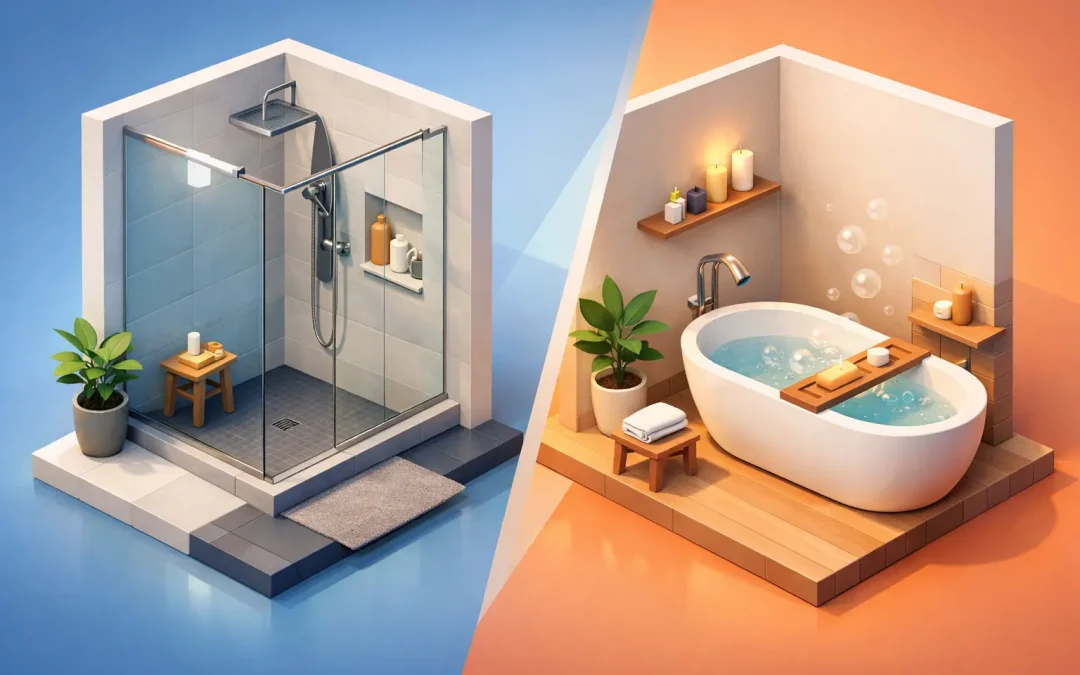
When homeowners start weighing a walk in shower vs tub, the real question usually is not which one looks better in a showroom. It is which one will work better for the way your household actually lives. A bathroom remodel is one of those projects where the right choice can make the space feel easier, cleaner, safer, and more valuable every single day.
In older homes, especially throughout areas like Modesto and the Central Valley, bathrooms often were built around layouts that no longer fit modern routines. A bulky tub may take up half the room and barely get used. On the other hand, removing the only tub in the house can be a decision some homeowners regret later. The best answer depends on your space, your budget, and who uses the bathroom now and in the years ahead.
Walk in shower vs tub: start with how you use the room
A lot of remodel decisions get easier once you stop thinking in terms of features and start thinking in terms of habits. If no one in your home takes baths, a tub may be giving up valuable square footage for no practical reason. A well-designed walk-in shower can open up the room, improve accessibility, and create a more current look.
If you have young children, a tub often makes daily life easier. The same can be true for homeowners who enjoy soaking at the end of the day or who want at least one bathroom in the house that serves a wider range of needs. The question is not whether showers or tubs are better in general. It is whether a specific bathroom should prioritize one over the other.
That is where good planning matters. A contractor with remodeling experience can help you look beyond the fixture itself and think about drainage, waterproofing, tile layout, storage, lighting, and traffic flow. Those details shape whether the finished room feels like an upgrade or a compromise.
Space and layout often decide the winner
In a smaller bathroom, a walk-in shower usually gives you more flexibility. It can make the room feel less crowded and easier to move through. Frameless glass, larger tile, and a curbless or low-threshold entry can create a cleaner visual line, which helps the room feel bigger than it is.
A standard tub-shower combo can still be a smart use of space, especially in a hall bathroom or guest bathroom. It offers more function in one footprint and can be the most cost-conscious option if the layout already supports it. But when a homeowner wants a more open and updated primary bath, replacing a rarely used tub with a dedicated shower is often one of the most effective changes.
When a walk-in shower makes more sense
A walk-in shower is often the better fit when the goal is ease of use, a more modern appearance, and better movement in the room. It also works well for aging in place. Lower entries, built-in benches, grab bar support, and handheld showerheads can make the bathroom much more comfortable without making it feel institutional.
This is especially useful for long-term homeowners who want to improve the home now and avoid another remodel later. In many cases, thoughtful shower design gives you a bathroom that looks current while still preparing for changing mobility needs.
When keeping a tub is the smarter move
If the bathroom is the only full bath in the home, keeping a tub deserves serious consideration. Families with small children generally appreciate having one. Buyers often do too. You do not need a large soaking tub in every bathroom, but having at least one tub somewhere in the house can protect flexibility.
That does not mean you have to settle for an outdated fiberglass insert or an awkward builder-grade setup. A tub area can still be remodeled with quality tile, better storage, improved lighting, and upgraded fixtures so the room feels fresh and functional.
Resale value is real, but it is not one-size-fits-all
Homeowners often ask which option adds more resale value. The honest answer is that value depends on the house and the neighborhood. In many primary bathrooms, buyers respond well to a spacious walk-in shower. It feels updated, practical, and easier to maintain. In that setting, removing a large unused tub can actually make the room more attractive.
But removing the only tub in the house can narrow your buyer pool. Families with young kids may see that as a drawback right away. So if resale matters, think less about broad rules and more about balance across the whole home.
A smart remodeling plan often looks at all bathrooms together. If one bathroom keeps a tub, another may be the perfect place for a walk-in shower. That kind of planning protects daily function and long-term appeal at the same time.
Cost depends on more than the fixture
A tub can be less expensive if you are simply replacing an existing tub in the same location. A walk-in shower can also be straightforward, but costs rise when the project includes moving plumbing, expanding the footprint, adding custom glass, building a bench, or installing detailed tile work.
This is where homeowners benefit from realistic guidance. The lowest bid is not always the best value if waterproofing, prep work, or finish details are skipped. In bathrooms, shortcuts have a way of turning into leaks, cracked tile, or expensive repairs later.
A budget-conscious remodel does not mean cutting corners. It means choosing the right improvements for the room and investing in the parts that matter most, especially behind the walls and under the tile. Quality workmanship matters just as much as the visible finish.
Maintenance and cleaning matter more than people expect
A walk-in shower is often easier to use, but not always easier to clean. Large glass panels can show water spots quickly. More grout lines mean more surfaces to maintain. Natural stone may need more care than porcelain tile. These are not reasons to avoid a shower, but they are worth discussing before materials are selected.
Tubs have their own maintenance issues. Stepping over the side to clean the inside is not ideal, and older tub-shower combos can trap moisture in corners or around worn caulking. In either case, material choices and installation quality make a big difference.
Good design can reduce maintenance. Larger-format tile, solid surface surrounds, practical fixture placement, and proper ventilation all help the bathroom stay cleaner and perform better over time.
Safety and comfort deserve equal weight
For many homeowners, the walk in shower vs tub decision comes down to safety. A high tub wall can become harder to step over with age, after surgery, or with limited mobility. A low-threshold shower is easier to access and generally safer for daily use.
That said, comfort matters too. Some people simply want a place to soak. If that is part of how you unwind, a shower-only bathroom may feel like a loss no matter how good it looks. This is why remodeling should reflect the people living in the home, not just current design trends.
The best bathroom remodels solve practical problems without creating new ones. That takes careful planning, honest conversation, and craftsmanship that respects both budget and long-term use.
How to make the right choice for your bathroom
If you are deciding between a walk in shower vs tub, start by answering a few simple questions. Is this the only bathroom with a tub? Who uses the space every day? Are you remodeling for long-term living, resale, or both? Does the current layout feel cramped, outdated, or difficult to use?
From there, think about the whole room. Storage, lighting, tile, ventilation, and fixture placement often matter just as much as whether you choose a shower or tub. A good remodel is not about forcing a trend into the space. It is about building a bathroom that works better and holds up over time.
At Thiel Construction, that kind of practical planning is what helps homeowners avoid expensive missteps and get more value from the finished project. The right choice is the one that fits your home, your routine, and your plans for the future.
If you are on the fence, do not rush the decision. The better path is usually the one that solves how the room functions first, because a bathroom that works well every day will always feel like money well spent.
Recent Comments