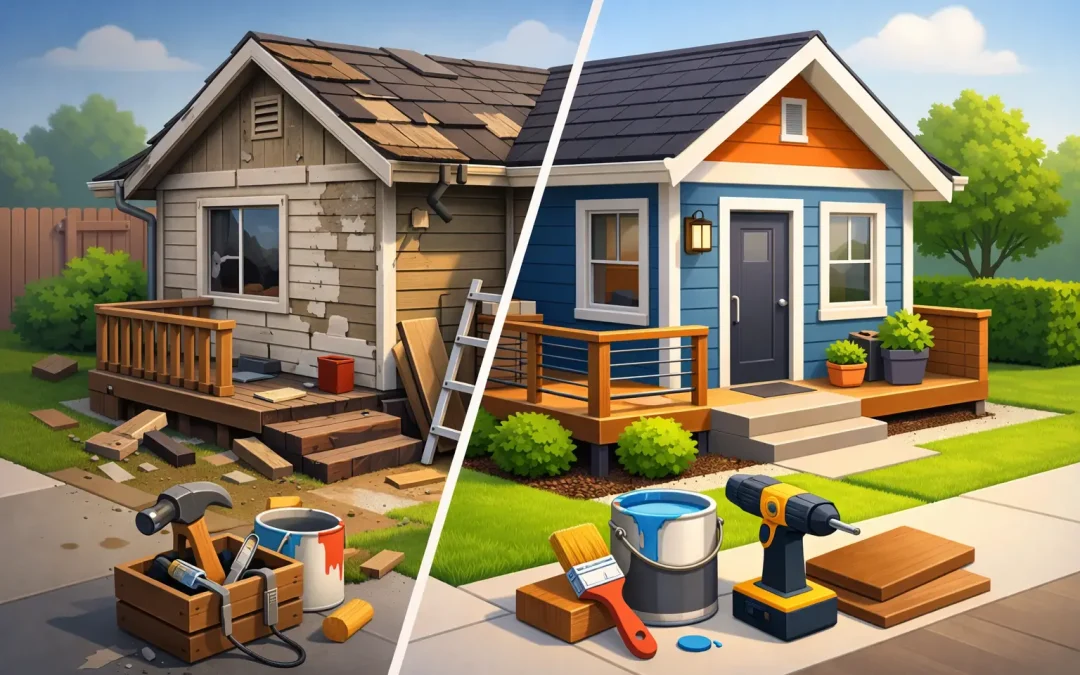
A sticking door, cracked tile, soft drywall near the tub, or cabinets that no longer close right can make a home feel older than it is. The best home repair before after results are not just about fresh finishes. They come from fixing the real problem, choosing materials that fit the home, and making improvements that hold up over time.
That difference matters when you are deciding whether to patch, repair, or invest a little more for a better long-term outcome. A repair that looks good for a month but fails a year later is not much of a win. Homeowners usually get the best results when appearance and proper construction go hand in hand.
What makes a strong home repair before after result?
A true before-and-after improvement solves something visible and something hidden. The visible issue might be chipped counters, damaged trim, worn flooring, or outdated fixtures. The hidden issue is often the reason the damage happened in the first place, such as moisture, movement, poor installation, or years of deferred maintenance.
Take a bathroom wall with peeling paint. Before, it may look like a cosmetic problem. After, it should not just have new paint. It should have the moisture issue addressed, the damaged area repaired correctly, and finishes installed that can handle normal use. That is the kind of repair that protects your investment.
The same goes for kitchens, entryways, and living spaces. A before-and-after project should leave the room looking cleaner, working better, and requiring less attention afterward. If it only improves the photo, it misses the point.
The repairs that usually show the biggest payoff
Some home improvements create an immediate visual change because they affect the parts of the house people use every day. Kitchens are a good example. Replacing damaged countertops, updating old backsplashes, repairing cabinet faces, or improving storage can change how the entire room feels without always requiring a full gut remodel.
Bathrooms also tend to deliver strong before-and-after value. Fixing water-damaged subareas, replacing worn tile, updating a vanity, or improving the shower surround can make a small room feel dramatically newer. In many homes, the bathroom looks tired because several small problems have stacked up over time. When those issues are handled together, the after result feels much bigger than any one repair.
Trim work, doors, and custom millwork are another area where craftsmanship shows. Clean casing lines, repaired baseboards, better-fitting doors, and updated built-ins can make a home feel better maintained and more finished. These are not flashy upgrades, but they change the character of a room in a way homeowners notice every day.
Flooring repairs and replacements are similar. A cracked tile floor, sagging transition, or worn-out surface affects both appearance and function. Once corrected, the room often feels cleaner, quieter, and easier to live in.
Why some before-and-after projects disappoint
The biggest reason is simple: the repair was too shallow. Cosmetic fixes have their place, but they are often asked to cover conditions they were never meant to solve. New caulk does not correct loose tile. Fresh paint does not fix damaged drywall. A replacement fixture does not address old plumbing problems.
Another common issue is poor material matching. Not every repair needs the highest-end finish, but it should fit the age, use, and style of the home. A patch that stands out, a cabinet repair with the wrong profile, or tile that clashes with the surrounding space can make the after result feel pieced together instead of complete.
Budget also plays a role. Homeowners are right to watch costs, but there is a difference between saving money and postponing the part that actually matters. In many cases, the best value comes from targeted work that fixes the right things the first time.
Home repair before after planning starts with priorities
Most homeowners are not dealing with just one issue. They may have a guest bath that needs attention, kitchen cabinets showing wear, and trim damage in a hallway. Trying to tackle everything at once is not always realistic, so it helps to rank projects by urgency, visibility, and long-term value.
Urgent repairs involve water, safety, structural wear, or anything likely to get worse quickly. Visible repairs are the ones that affect daily comfort and make the home feel neglected. Long-term value projects improve use, protect the property, or support resale later on.
Sometimes those categories overlap. A leaking shower that has damaged framing is urgent, visible, and valuable to fix properly. Other times, a repair may be mostly cosmetic but still worthwhile because it changes how a heavily used room feels. The right approach depends on your home, your budget, and how long you plan to stay.
When a repair should become a remodel
This is where experience matters. Not every repair needs to grow into a larger project, but sometimes a localized problem reveals a bigger opportunity. If you are replacing damaged vanity areas, worn flooring, and failing shower tile in the same bathroom, it may make more sense to update the room as one coordinated project.
The same logic applies in kitchens. If countertop damage, aging cabinets, poor layout, and outdated finishes are all part of the picture, repeated spot repairs may cost more in frustration than moving forward with a broader upgrade.
That does not mean bigger is always better. Many homeowners in Modesto and surrounding communities want practical improvements, not unnecessary scope. The goal is to choose the level of work that gives you a clean, durable result without overspending. Sometimes that is a focused repair. Sometimes it is a remodel with better long-term value.
Craftsmanship is what makes the after last
Good before-and-after work is easy to recognize in person. Lines are straight. Transitions make sense. Surfaces feel solid. Doors and drawers operate properly. Tile layout looks intentional. Trim fits the room instead of hiding gaps. The finish is what people see, but the quality underneath is what keeps the repair from becoming a repeat problem.
That is especially true in older homes, where nothing is perfectly square and previous work may have created complications. An experienced contractor knows how to correct what needs correcting and work around what should be preserved. That kind of judgment is hard to fake, and it shows in the final result.
Thiel Construction has built its reputation around that practical side of home improvement. Homeowners do not just want a nicer-looking room. They want to know the work was done right, the materials were chosen carefully, and the result will serve them well for years.
How to judge before-and-after value in your own home
Start by asking a few plain questions. Does this repair solve a problem I live with every day? Will it prevent additional damage? Will it make the space easier to maintain? Will it improve how the room functions, not just how it looks?
If the answer is yes to most of those, the project is probably worth serious consideration. If the repair is mainly cosmetic, that does not automatically make it a bad choice. It just means the value is more personal than protective. For many homeowners, that still matters. A home should feel cared for, comfortable, and current enough to enjoy.
It also helps to think beyond photos. The best after result is one you notice six months later because nothing is failing, nothing feels temporary, and the room works better than it did before.
Small repairs can change the whole house
There is a tendency to think only major remodels create meaningful transformation. In reality, a series of well-planned repairs can have a major effect. Repaired drywall, updated trim, new tile, better cabinetry, and corrected problem areas add up. The home feels tighter, cleaner, and more maintained.
That is especially useful for homeowners preparing to sell, settling into an older property, or finally catching up on deferred maintenance. You do not always need a dramatic overhaul to create a noticeable shift. You need the right repairs, done with care, in the right order.
A good home repair before after story is rarely about a miracle fix. It is about identifying what is worn, damaged, outdated, or poorly functioning and improving it in a way that makes sense for the home and the budget. When that work is done well, the result looks better on day one and keeps proving its value long after the project is finished.
If you are looking at a part of your home and wondering whether it needs a simple repair or something more, that question is worth asking before the damage spreads or the frustration grows. The right improvement does more than change the before and after. It makes daily life easier inside the home you already have.
Recent Comments